When cancer cannot wait: protecting childhood cancer treatment through Lebanon’s years of crisis
From financial collapse and medicine shortages to displacement and conflict, Hana Chaar Choueib, General Manager of CCCL and UICC Board Member, explains how the CCCL board and team have been adapting for nearly seven years to protect continuity of care, supports families, and sustain hope when each crisis creates another.
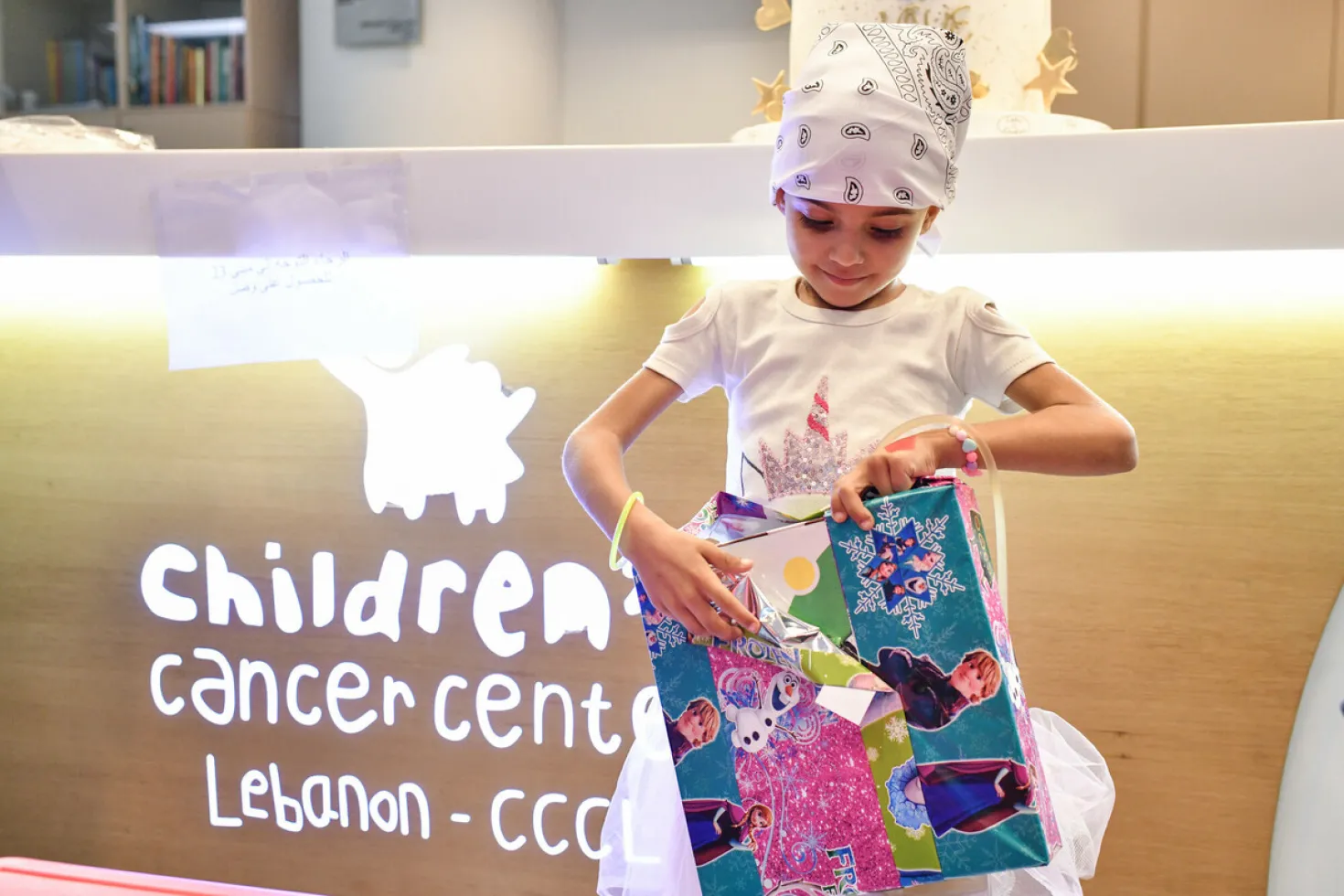
Childhood cancer does not wait for a country to regain stability. It does not pause when banks restrict access to funds, medicines become scarce or families are forced from their homes.
Since 2019, the Children’s Cancer Center of Lebanon (CCCL), a UICC member organisation, has navigated financial collapse, the Beirut port explosion, shortages of essential medicines, repeated displacement caused by conflict and continuing uncertainty about the country’s future. Through every upheaval, it has held fast to one commitment: children with cancer must be able to continue treatment, and their families must not face the crisis alone.
“What we are witnessing today is not only related to the current conflicts in the region,” emphasises Hana Chaar Choueib, General Manager of CCCL, a UICC Board Member, and recipient of the UICC CEO Award in 2022. “We are facing the cumulative challenges of nearly seven years of continuous crises.”
Through it all, CCCL has continued funding treatment and supporting children with cancer and their families across Lebanon.
The financial collapse of 2019 transformed the conditions in which care had to be delivered. Funds held in Lebanese banks, including money intended for the treatment of children with cancer, became effectively inaccessible as severe banking restrictions froze foreign currency deposits. Families and charities could no longer freely access the dollars needed to pay for vital therapies.
Hospitals faced severe shortages of electricity, specialised medicines and imported equipment. Choueib highlights how CCCL turned outward for support: “At CCCL, we responded by raising funds through events in Dubai, Abu Dhabi and London and using them to pay for treatment.”
The Lebanese pound lost just over 98% of its value between 2019 and 2023, placing further pressure on the health system. As the currency collapsed, the Ministry of Health could no longer subsidise medicines and medical bills at anything close to its previous level.
Reflecting on how this affected CCCL’s ability to fund care, Choueib explains: “Before the crisis, the Ministry covered around 30% of medical bills. After the devaluation, that share fell to around 5% to 6%. At the same time, we were experiencing shortages of cancer medicines. To carry this growing financial burden and keep treatment going, we had to secure additional support from international partners and donors.”
When conflict spread across the region after October 2023 and fighting escalated in Lebanon, the challenge was no longer only how to pay for care. It was also how to reach children who had been displaced from their homes.
Describing CCCL’s immediate response to displacement, Choueib recounts: “Around 30% of the children supported by CCCL were forced to leave their homes. We immediately created two task forces: one for fundraising and one for patient care. We contacted families, mapped where they had relocated and worked across our hospital network to direct each child to the nearest clinic where treatment and care could continue.”
That coordination extended beyond the hospital network. CCCL worked with the Red Cross and other partners to help families reach treatment centres, while internal referral pathways connected paediatric oncologists across its network. Wherever a family had found safety, the child’s treatment pathway had to follow.
Choueib also stresses the importance of caring for families’ emotional wellbeing: “Supporting families emotionally was also crucial. We coordinated with psychologists at our partner hospitals and expanded programmes designed to help children and caregivers cope with anxiety and uncertainty. Through art, music, wellness sessions and other activities, families had space to express what they were going through. We want to provide the best care, both medical and emotional.”
When reaching care becomes the obstacle
Conflict has affected more than the continuity of ongoing treatment. It has also changed when children first reach the health system.
For more than two decades, CCCL has invested in awareness campaigns and early-diagnosis initiatives. More recently, it has supported preventive efforts including HPV vaccination. Yet the current crisis is eroding hard-won progress.
Turning to the barriers affecting early diagnosis, Choueib observes: “Even when people recognise that something may be wrong, during ten to fifteen days of non-stop conflict across Lebanon, you cannot expect them to focus on their wellbeing.”
Choueib describes the alarming pattern this creates: “It is not a question of ignorance. We are seeing cancers diagnosed later because families cannot access the health system as early as they did before. Parents may not be able to reach the right hospital or doctor. During the most intense periods, two or three weeks may pass with almost no new patients. Then, as conditions ease, ten children may arrive at once.”
The pattern is a stark reminder that fewer hospital arrivals during conflict do not mean fewer children need care. Often, it means that care has temporarily moved out of reach.
Looking beyond the immediate crisis response, Choueib outlines CCCL’s plans for stronger international collaboration: “We are currently exploring additional work, with our longstanding partners, St. Jude Children’s Research Hospital focused on awareness, capacity building, access to medicines and strengthening childhood cancer services.”
At the same time, Choueib warns that regional instability is disrupting the fundraising networks on which CCCL relies: “A growing share of our funds has come from events and supporters abroad. Last year, we were able to organise our projects and events and meet our financial targets. But many activities take place in Gulf countries, and with conflict affecting the whole region, some have been postponed or cancelled. This has created a significant funding gap. If the situation continues into 2027, it will become even more difficult.”
CCCL is shifting fundraising efforts towards other regions, but building new networks takes time, and time is precisely what children in treatment do not have.
Despite these pressures, Choueib remains hopeful and affirms the team’s hard-earned ability to adapt: “What matters most is the continuous follow-up of every patient. Years of crisis have given our team valuable experience. We know how to adapt, coordinate and manage difficult situations. It is how quickly we respond that allows us to continue caring for the children who depend on us.”
In Lebanon, that speed of response has become part of care itself. Every family reached, every referral coordinated and every treatment kept on course is a reminder of what sustained solidarity can make possible: not only continuity of care, but continuity of hope.
This article is part of UICC’s “Cancer in zones of unrest” series, highlight the extraordinary work that UICC members are doing under extremely challenging circumstance.
Last update
Tuesday 08 September 2026