Cancer Planners Forum 2026

The Cancer Planners Forum is an invitation-only event, dedicated to positioning national cancer control plans as strategic investments in the future of countries. This second edition will be held on 13-15 May 2026 in Geneva, Switzerland — at the Pavillon Gallatin.
Cancer Planners Forum 2026 brings together national cancer control planners from around the world for a focused, invitation-only exchange on strengthening cancer strategies as long-term investments in health systems. Initiated by UICC in 2025, and organised in partnership with the World Health Organization (WHO), the International Agency for Research on Cancer (IARC), the International Atomic Energy Agency (IAEA), and the International Cancer Control Partnership (ICCP), the Forum offers a dedicated space for peer learning and practical collaboration.

Building on the success of its inaugural edition, the second Cancer Planners Forum will take place from 13–15 May 2026 in Geneva, Switzerland, at the Pavillon Gallatin. The 2026 edition will welcome around 120 participants, including cancer control planners from approximately 40 countries joining the initiative for the first time, alongside international experts and partners.

Through interactive discussions, case studies and peer exchange, participants will explore practical approaches to strengthening national cancer control plans and advancing access to essential cancer services for all.
A diverse group of professionals engaged in discussion around a large round table in a well-lit conference room. Participants are seated, with some taking notes and others using laptops. A number "5" is displayed on a stand at the center of the table. In the background, additional attendees are visible, interacting in a collaborative environment. Large windows allow natural light to fill the space, creating an open and inviting atmosphere.

2026 Programme

The Forum will be highly interactive and will combine plenary sessions, country case studies, and facilitated group discussions.

Key themes include:

  • Core elements of effective NCCPs and alignment with global initiatives.
  • Setting objectives and priorities for cancer control.
  • Policy, advocacy, and legal frameworks supporting the implementation of cancer control plans.
  • Data, cancer registries and measuring inequalities to inform decision-making processes.
  • Investment, implementation and monitoring, including stakeholder engagement and evaluation.

The programme was developed by a Programme Advisory Committee with input from UICC, WHO, IARC, IAEA, and ICCP partners.

Schedule

13–15 May 2026
WELCOME DAY – WED 13 MAY

WELCOME DAY

  • 17:00 – 17:30 – Participants arrival  

  • 17:30 – 17:50 – Welcome addresses 

  • 17:50 – 20:00 – Welcome reception
FORUM DAY 1 – THU 14 MAY

FORUM DAY 1

  • 07:45 – 08:45 – Participants arrival 
  • 08:45 – 09:00 – Welcome coffee
  • 09:00 – 17:00 – Presentations, networking time, on-stage country experiences, table discussions on:
    • Core elements of the NCCP 
    • Setting objectives and priorities
    • Alignment with global initiatives
    • Policy/Advocacy/Legal Frameworks 
    • Measuring inequalities 
    • Making the investment case
  • 17:00 – 19:00 – Reception at Jardin des Penthes 
FORUM DAY 2 – FRI 15 MAY

FORUM DAY 2

  • 08:00 – 08:25 – Welcome coffee
  • 08:25 – 17:35 – Presentations, Networking time, on-stage country experiences, table discussions on:
    • Identification of key stakeholders
    • Developing an implementation framework 
    • Data and registries
    • Effective monitoring, evaluation and learning process
    • NCCP development and AI use
  • 17:40 – Closure of the Forum 

Contact us for more information

For enquiries regarding the Cancer Planners Forum: Union for International Cancer Control (UICC) at events@uicc.org

Contact us


Organised by

Founded in 1933 and based in Geneva, UICC has over 1150 member organisations in 172 countries and territories. The membership base includes the world’s major cancer leagues and societies, research institutes, treatment centres, hospitals, ministries of health, public health agencies and patient support groups. UICC’s mission is to both unite and support the cancer community in its efforts to reduce the global cancer burden, promote greater equity and ensure that cancer control remains a priority on the global health and development agenda. 


In partnership with

Founded in 1948, WHO is the United Nations agency that connects nations, partners and people to promote health, keep the world safe and serve the vulnerable – so everyone, everywhere can attain the highest level of health. WHO leads global efforts to expand universal health coverage. They direct and coordinate the world’s response to health emergencies. And they promote healthier lives – from pregnancy care through old age.

Read more

The International Agency for Research on Cancer (IARC) is part of the World Health Organization. Its mission is to coordinate and conduct research on the causes of human cancer, the mechanisms of carcinogenesis, and to develop scientific strategies for cancer control. 

Read more

The IAEA is the world's centre for cooperation in the nuclear field, promoting the safe, secure and peaceful use of nuclear technology. It works in a wide range of areas including energy generation, health, food and agriculture and environmental protection.

Read more

ICCP is a group of organisations engaged in supporting country cancer control planning efforts. Through the ICCP, these organisations, including the WHO, CDC, NCI-USA, and UICC, are committed to working together to ensure that all countries have a well-resourced, quality cancer control plan, integrated with non-communicable disease control efforts. One of the primary examples of this is the ICCP Portal – a one-stop shop for cancer prevention and control planning.


Supported by

The mission of The University of Texas MD Anderson Cancer Center is to eliminate cancer in Texas, the nation, and the world through outstanding programs that integrate patient care, research and prevention, and through education for undergraduate and graduate students, trainees, professionals, employees and the public.

Learn more

Founded in 1951 to support cancer research, the Swedish Cancer Society is an independent non-profit organization with the vision of finding cures for cancer. The overall aim of the Society is to achieve a higher survival rate and a reduction in the incidence of cancer. Their main task is to raise and distribute money for cancer research. As one of the largest financiers of cancer research in Sweden, the Swedish Cancer Society essentially acts as a national research council. Thanks to the organization’s extensive knowledge about cancer, the Swedish Cancer Society is also active in areas such as public opinion and spreading knowledge about cancer, as well as results of cancer research.

Mission Early brings together organisations, experts, and advocates to give everyone the best possible chance when facing cancer by improving prompt access to early detection and timely diagnosis and treatment services. It works by developing practical policy guidance, gathering evidence, and creating spaces for partners to exchange learning and experience.

St. Jude Children’s Research Hospital is a global leader in the research and treatment of childhood cancer, sickle cell disease and other life-threatening pediatric diseases. Treatments developed at St. Jude have helped push the U.S. childhood cancer survival rate from 20% to more than 80% since the hospital opened in 1962.

Learn more

Vital Strategies helps governments strengthen their public health systems to contend with the most important and difficult health challenges. Vital Strategies design solutions that can scale rapidly and improve the lives of millions of people. Vital Strategies' mission is to work in partnership to reimagine evidence-based, locally driven policies and practices to advance public health. 

City Cancer Challenge (C/Can) supports cities around the world as they work to improve access to equitable, quality cancer care. 

At Pfizer, we apply science and our global resources to bring therapies to people that extend and significantly improve their lives through the discovery, development and manufacture of healthcare products. Our global portfolio includes medicines and vaccines, as well as many of the world’s best-known consumer healthcare products. We work across developed and emerging markets to advance wellness, prevention, treatments and cures that challenge the most feared diseases of our time. We collaborate with healthcare providers, governments and local communities to support and expand access to reliable, affordable healthcare around the world.

Learn more

AstraZeneca is a global, science-led biopharmaceutical company that focuses on the discovery, development and commercialisation of prescription medicines, primarily for the treatment of diseases in three main therapy areas - Oncology, Cardiovascular & Metabolic Diseases and Respiratory. The Company also is selectively active in the areas of autoimmunity, neuroscience and infection. AstraZeneca operates in over 100 countries and its innovative medicines are used by millions of patients worldwide.  

Learn more

For more than a century, MSD, a leading global biopharmaceutical company, has been inventing for life, bring forward medicines and vaccines for the world’s most challenging diseases.  MSD is a trade name of Merck & Co., Inc., Kenilworth, N.J., USA. Through their prescription medicines, vaccines, biologic therapies, and animal health products, they work with customers and operate in more than 140 countries to deliver innovative health solutions. MSD also demonstrates their commitment to increasing access to healthcare through far-reaching policies, programs and partnerships. Today, MSD continues to be at the forefront of research to advance the prevention and treatment of diseases that threaten people and communities around the world - including cancer, cardio-metabolic diseases, emerging animal diseases, Alzheimer’s disease and infectious diseases including HIV and Ebola.

Learn more

Latest articles about National Cancer Control Planning

Second edition of the Cancer Planners Forum to be held 13-15 May 2026 in Geneva, Switzerland

Diverse group of participants in a seminar posing outside a building
Read more

Experts met in Geneva to strengthen cancer planning efforts at the Cancer Planners Forum

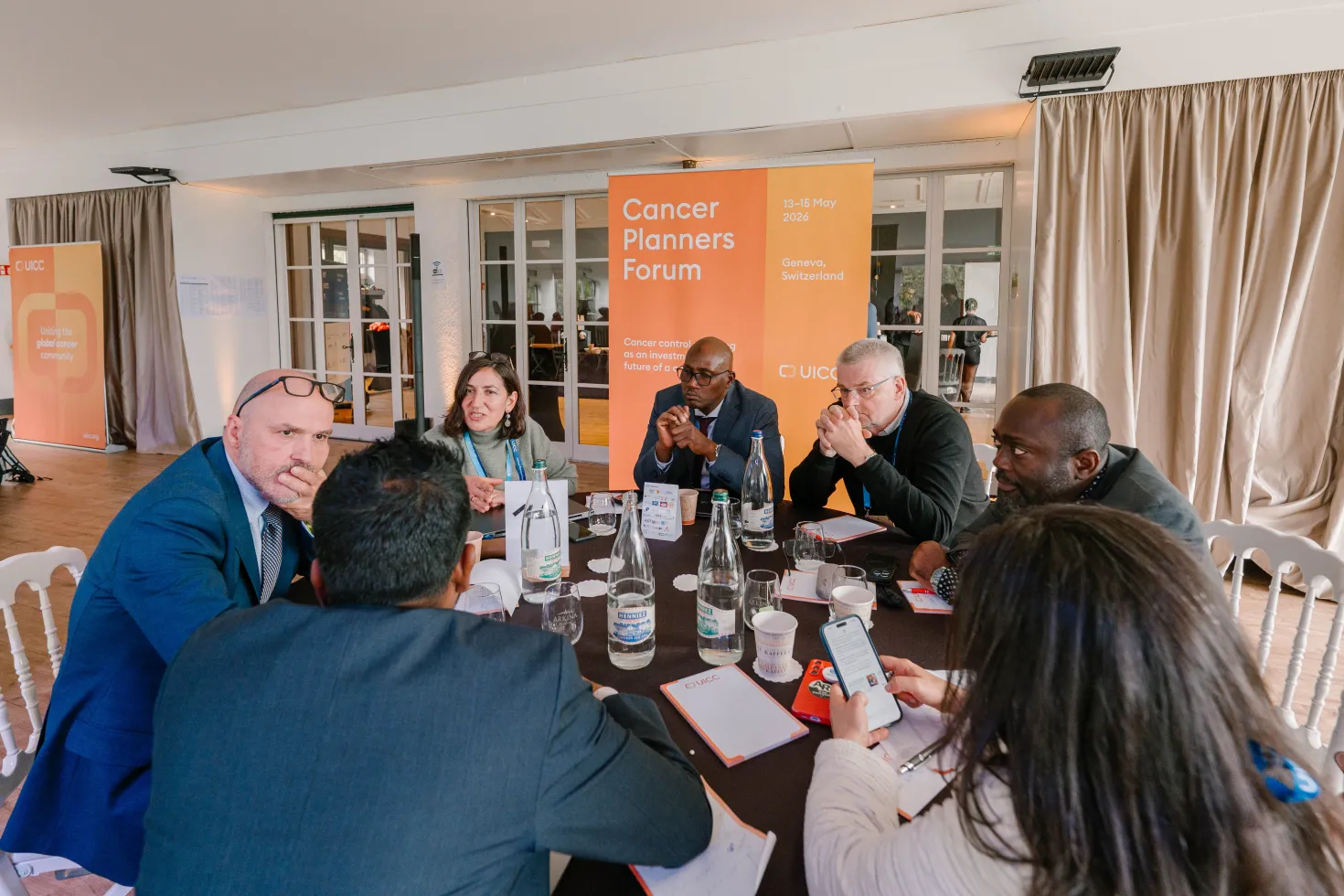
Diverse group of people at a professional seminar around a table, "Cancer Planners Forum" on a banner in the background
Read more

Transforming fractured health systems

Rows of hospital beds in Sri Lanka
Read more
View more news and blog articles

Past Forum: Cancer Planners Forum 2025

The first edition of the Cancer Planners Forum was held in 2025 and marked the first global meeting of its kind dedicated specifically to cancer control planners.

The Forum brought together over 100 participants, including 44 cancer planners representing 40 countries, alongside experts from international organisations, ICCP partners and the wider cancer control community.

97% of participants reported gaining valuable insights to support their work in developing and implementing National Cancer Control Plans.

Explore more

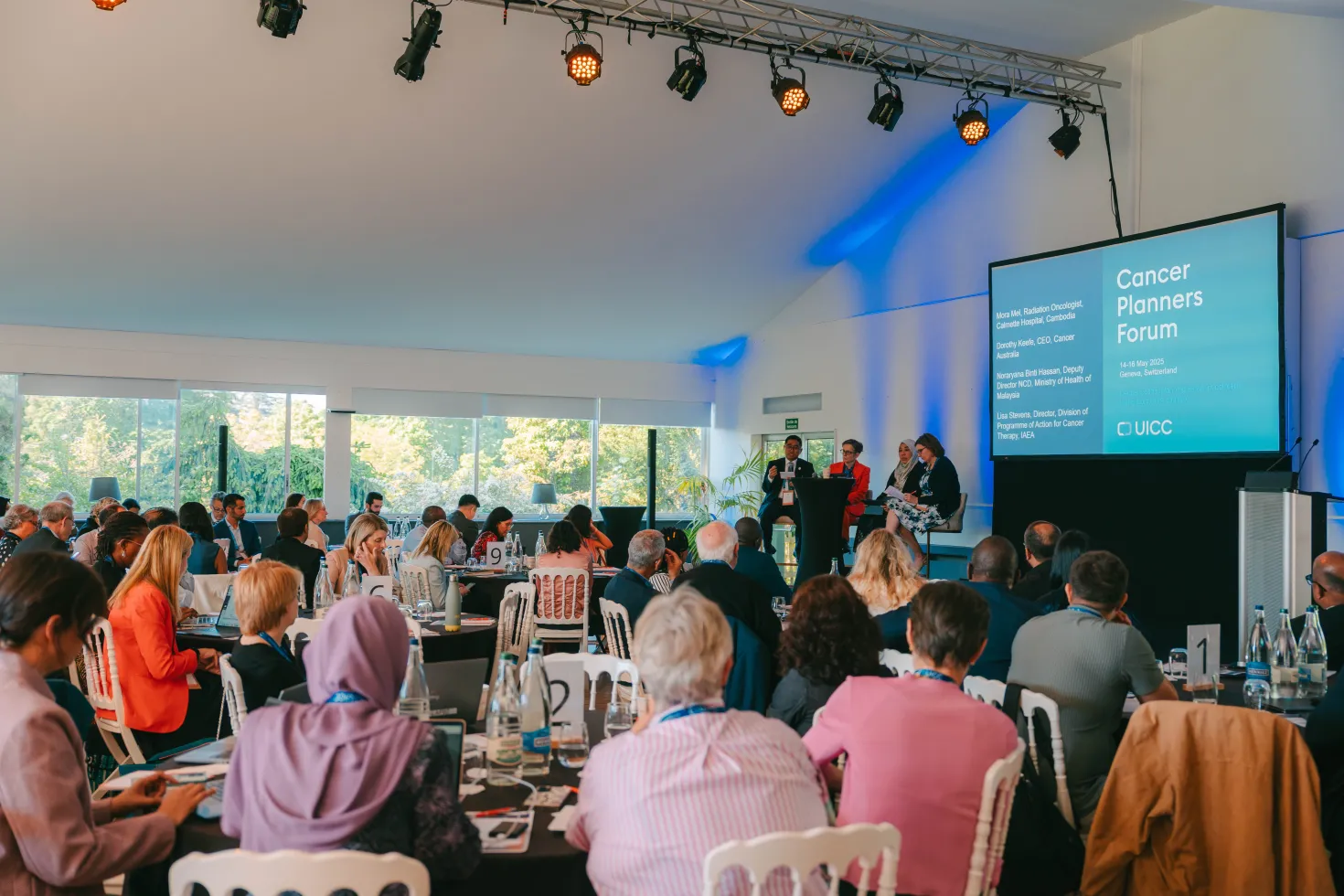
Alt text: A conference setting featuring a panel discussion at the Cancer Planners Forum. Attendees are seated at tables, engaged in the presentation. A large screen displays information about the forum, while speakers are positioned on stage. The room is well-lit with a modern design, and various attendees are seen taking notes or listening attentively.

The first edition of the forum took place from 14-16 May 2025 at Pavillon Gallatin, Geneva, Switzerland, under the theme “Cancer control planning as an investment in the future of a country”.

Read more

Last update

Friday 24 April 2026

Share this page