
From rooftop to ward: how an oncology hospital in Egypt is redefining what sustainable cancer care looks like
A UICC member hospital in Luxor has built one of Egypt's most ambitious green hospital programmes, combining solar energy, waste-free medical waste processing, and community outreach.
HIGHLIGHTS
Shefaa Al Orman Cancer Hospitals, a UICC member, meets around 38% of its energy needs through a phased 1.3 MW solar programme.
Medical waste is sterilised and repurposed instead of incinerated, preventing toxic emissions and delivering major cost savings. The hospital is creating a model for replication across Egypt and beyond.
Will Clark, a sustainability consultant who advises the Geneva Sustainability Centre (GSC), highlights energy efficiency, waste segregation and procurement as key drivers of greener healthcare.
He also points to strong leadership and staff engagement as key to implementing and maintaining sustainability into daily operations.
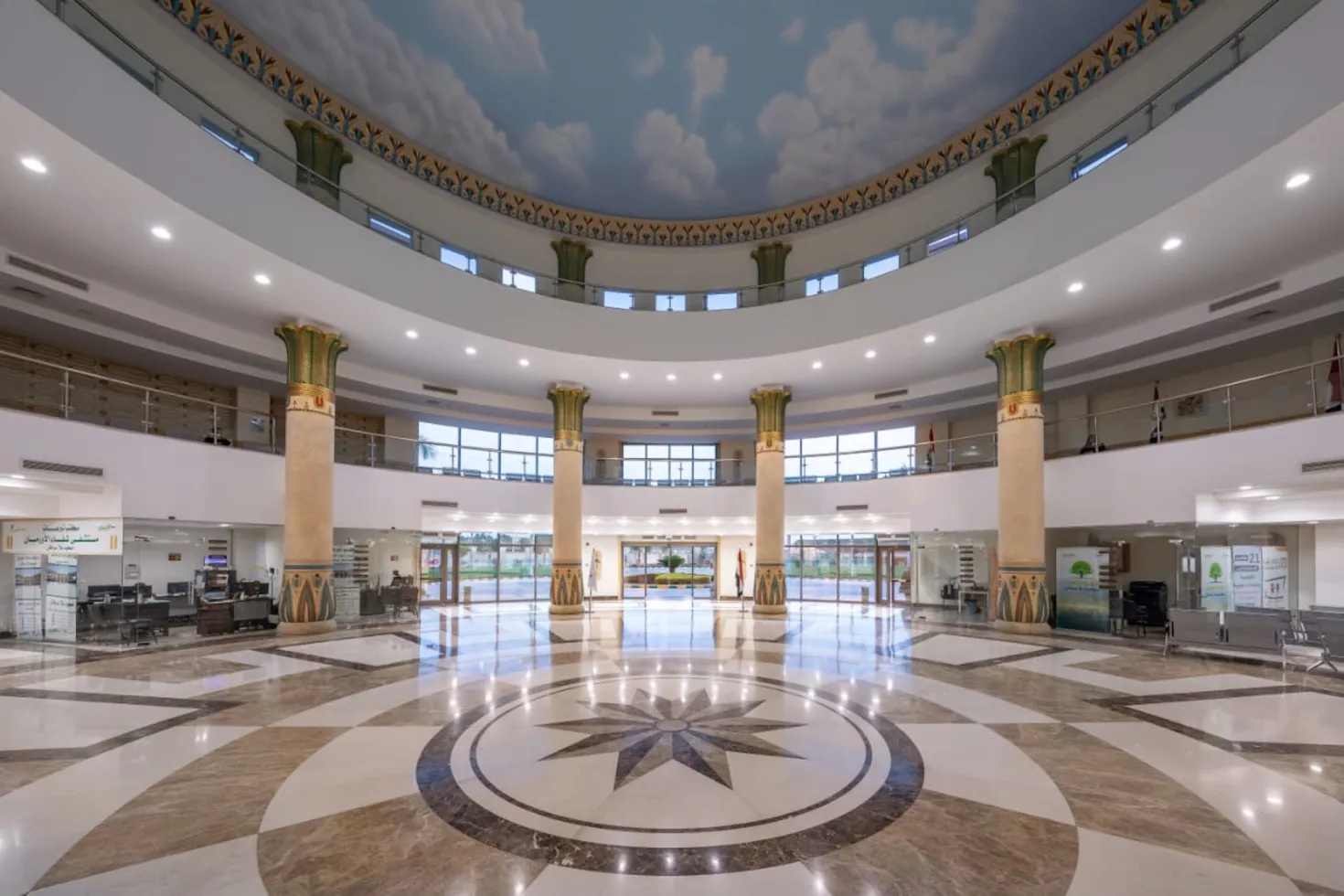
In a city well known for its ancient temples, Shefaa Al Orman Cancer Hospitals in Luxor, southern Egypt, has quietly become something of a case study in what it means to run a cancer centre that takes its environmental impact as seriously as its clinical outcomes.
The hospital is a non-governmental, non-profit institution and UICC member, which provides free cancer care to adults and children across six governorates with a combined population of 15 million people. Until the hospital opened in 2016, the region had no local cancer centre. People had to travel hundreds of kilometres to Cairo for diagnosis and treatment, a journey that imposed heavy economic and psychological costs on families, and increased the risks of delayed, interrupted, or abandoned treatment.
Today, the hospital runs 286 beds across adult and paediatric facilities, performs thousands of surgical operations annually, and offers services ranging from radiotherapy and nuclear medicine to bone marrow transplantation and palliative care – all under one roof.
Since 2022, it has also held the distinction of being recognised as Egypt's first accredited green hospital. This shift was driven in part by the interest in sustainability of Prof. Dr Hany Hussein, the hospital’s CEO, though environmental idealism was not his primary motivation.
"We are a charity-funded hospital that treats cancer patients for free, and we are looking to sustain this project, so managing costs is essential,” explains Nashwa Kamal Kordy, head of biostatistics and epidemiology at the hospital. “By 2021, our annual electricity consumption stood at around 6,500 megawatts. That was an unsustainable financial burden.”
Will Clark, a sustainability consultant who advises the Geneva Sustainability Centre (GSC), the sustainability platform of the International Hospital Federation, identifies three areas where hospitals can make the fastest and most measurable gains.
“Energy efficiency, such as upgrading building controls, lighting, and cooling systems, typically addresses around 20% of a hospital’s carbon footprint and pays back quickly even when capital costs are high,” Clark explains. “Waste segregation, in other words making sure that non-hazardous waste is not disposed of as hazardous, has a lower carbon impact, but is usually a good cost-saving opportunity, and requires relatively simple changes to ward-level infrastructure and staff training.”
Clark has spent more than 15 years working in healthcare sustainability – including nine years as sustainability director within the NHS and six years leading Health Care Without Harm Europe.
He also points to procurement – which accounts for between 60-70% of a typical hospital's carbon footprint through emissions in goods, equipment, and pharmaceuticals – is a more complex but increasingly tractable area. “Clinicians and procurement professionals now have access to tools such as the MedZero database, published last year by the Lancet, which allows them to compare the carbon profiles of individual medical products.
A solar programme built in phases
Between December 2022 and early 2025, Shefaa Al Orman installed photovoltaic solar panels across four phases: on the rooftop of the children's hospital, the adult hospital, a neighbouring commercial building, and the rooftop of an adjacent staff and visitor car park. “The car park installation serves a double purpose, providing electricity while also shading the area, offering relief from the intense Luxor sun to families waiting outside,” adds Salma Mahmoud, a laboratory specialist and researcher at Shefaa Al Orman.
Together, the four phases total 1.3 megawatts of installed capacity and now cover roughly 38% of the hospital's electricity needs. The system avoids an estimated 1,455 tonnes of carbon dioxide equivalent from entering the atmosphere each year, while also preventing around 2,900 kilograms of sulphur dioxide and 1,900 kilograms of nitrogen oxide emissions – gases linked to respiratory disease and, according to growing scientific evidence, to cancer risk.
The solar programme reflects a long-term commitment to sustainability championed by Engineer Hossam El Kabbany, Chairman of the Orman Association. Today, the system supplies around 54% of the hospitals' electricity needs, generating power during daylight hours and significantly reducing reliance on the conventional grid. By diversifying energy sources and lowering operating costs, the initiative has helped strengthen the hospital’s financial and environmental sustainability.
“There are also significant savings from the solar programme can be redirected to cancer care. The shredder installed for medical waste sterilisation alone has reduced costs by an estimated six million Egyptian pounds over the last three years,” says Salma Mahmoud. This amounts to about EUR 115,000 or USD 131,000.
The positive environmental impact goes beyond energy generation. The hospital has also eliminated open incineration of medical waste entirely, replacing it with shredding and sterilization technology. The processed material is then supplied to a cement factory in the Qena governorate, where it serves as a fuel alternative to coal in conditions that destroy any remaining organic residues without producing toxic by-products.
“Since the system was introduced, 314 tonnes of hazardous medical waste have been processed without burning, preventing 1.2 grams of toxic dioxins and furans – classified as Group 1 carcinogens by the International Agency for Research on Cancer – from entering the environment,” says Salma Mahmoud.
Other measures include sensor-operated taps, irrigation using water recovered from air conditioning units, drought-resistant plants, LED lighting throughout, automatic shutoff of administrative lighting after working hours, a fleet of vehicles converted to run on natural gas, and the replacement of mercury-containing equipment in line with the WHO's Global Mercury Free Healthcare Initiative.
To ensure that the programme was implemented effectively and adopted by staff, Mahmoud Abdel Sattar, the hospital's health, safety, and environment manager, explained that it had been necessary to address concerns around sterilisation, room temperature, and work schedules.
“Our response involved a combination of staff awareness sessions and continuous monitoring of air quality and heat indicators to demonstrate that clinical safety and comfort were not being compromised,” Sattar says.
In 2026, the hospital received a greenhouse gas emission verification statement confirming its energy and emissions practices comply with ISO 14046 environmental management standards. It has also won two consecutive Gold Awards in Climate Leadership from Health Care Without Harm, and was listed among the top ten global leaders in climate action in the healthcare sector. Earlier this year, it received the Stephanie Davis Award for Waste Reduction and Pollution Prevention – described as one of a small number of high-level global honours given to institutions making exceptional progress in this area, as explained by Dr Ahmed Safwat, Quality and Patient Safety Department Director.
“The hospital is now a recognised model for others in Egypt, receiving visits from institutions across the country – from Alexandria to Cairo – looking to understand how the solar programme and waste management system work. It is also a member of the Global Green and Healthy Hospitals network and has published two case studies and a research paper in collaboration with Assiut University,” says Dr Ahmed Safwat.
The leadership factor and how climate change impacts hospital operations
In Will Clark’s view, what distinguishes hospitals that make meaningful progress from those that do not is how much the issue is prioritised by senior leadership.
“If you've got somebody at the top of the organisation who's defining strategy, defining policy, determining how money is spent, then everything follows,” says Clark. “And the inverse is true too. Without that commitment at executive level, sustainability programmes tend to remain ‘side projects’. While sustainability may be considered valuable, it remains disconnected from the core strategy and governance of the organisation.”
Chief Sustainability Officers, he noted, rarely sit on executive boards. Their influence depends on persuasion. They need to make the case to leadership that sustainability is not an additional burden but a driver of operational and cost improvement, staff morale, and, ultimately, better outcomes for people with cancer.
Beyond reducing emissions, Clark argues that hospitals also need to plan for the consequences of a changing climate on their own operations. He believes this aspect of sustainability has been underemphasised until now.
“They're going to face changing disease patterns, they may have people presenting with more acute or different kinds of illnesses. We need to help hospitals understand what the risks are to their operations, what the clinical risks are, and plan for them.”
In lower-resource settings, he notes, the two imperatives – cutting emissions and building resilience – are often the same investment. A hospital that installs renewable energy capacity both reduces its carbon footprint and protects itself against unreliable grid supply.
At the policy level, the WHO’s Alliance for Transformative Action on Climate and Health (ATACH), established following COP26 in Glasgow, has secured commitments from over 100 countries to pursue low-carbon, resilient healthcare systems. Funders and insurers are also beginning to attach sustainability conditions to grants and contracts.
“This model proves transformative,” says Clark, “particularly in settings where hospitals depend on external financing.”
The Healthcare Sustainability Certification, developed jointly by GSC and Joint Commission International, is the first global standard of its kind for health facilities. Only a small number of hospitals have achieved it so far, but Clark sees certification as a potential mechanism for linking sustainability performance to funding flows – and for enabling hospitals to position themselves as leaders within their own health systems.
________________________________________
Also contributed to this article on behalf of Shefaa Al Orman Cancer Hospitals:
Engineer Mostafa Sayed Beshary, Projects & Maintenance Manager
Dr Mahmoud Abdelsatar Mohamed Amin, Health, Safety & Environment Manager
Last update
Monday 13 July 2026