Radiotherapy in cancer care: bridging the gap between need and access
HIGHLIGHTS
- Dr Surbhi Grover, Co-Director of the Center for Global Oncology at the University of Pennsylvania and a UICC Technical Fellow, explains why radiotherapy is often excluded from national cancer control planning despite being a highly cost‑effective treatment.
- Misconceptions about radiotherapy’s complexity, limited exposure in medical training, and fragmented financing continue to delay investment worldwide.
- Dr Abdikani Jeylani, NCD Cancer Focal Person at Somalia’s Ministry of Health & Human Services, a new UICC member, outlines the country’s current lack of radiotherapy services and the consequences for cancer mortality.
- Somalia is working to align policy leadership, workforce training and infrastructure through its first national cancer control plan and collaboration with international partners.
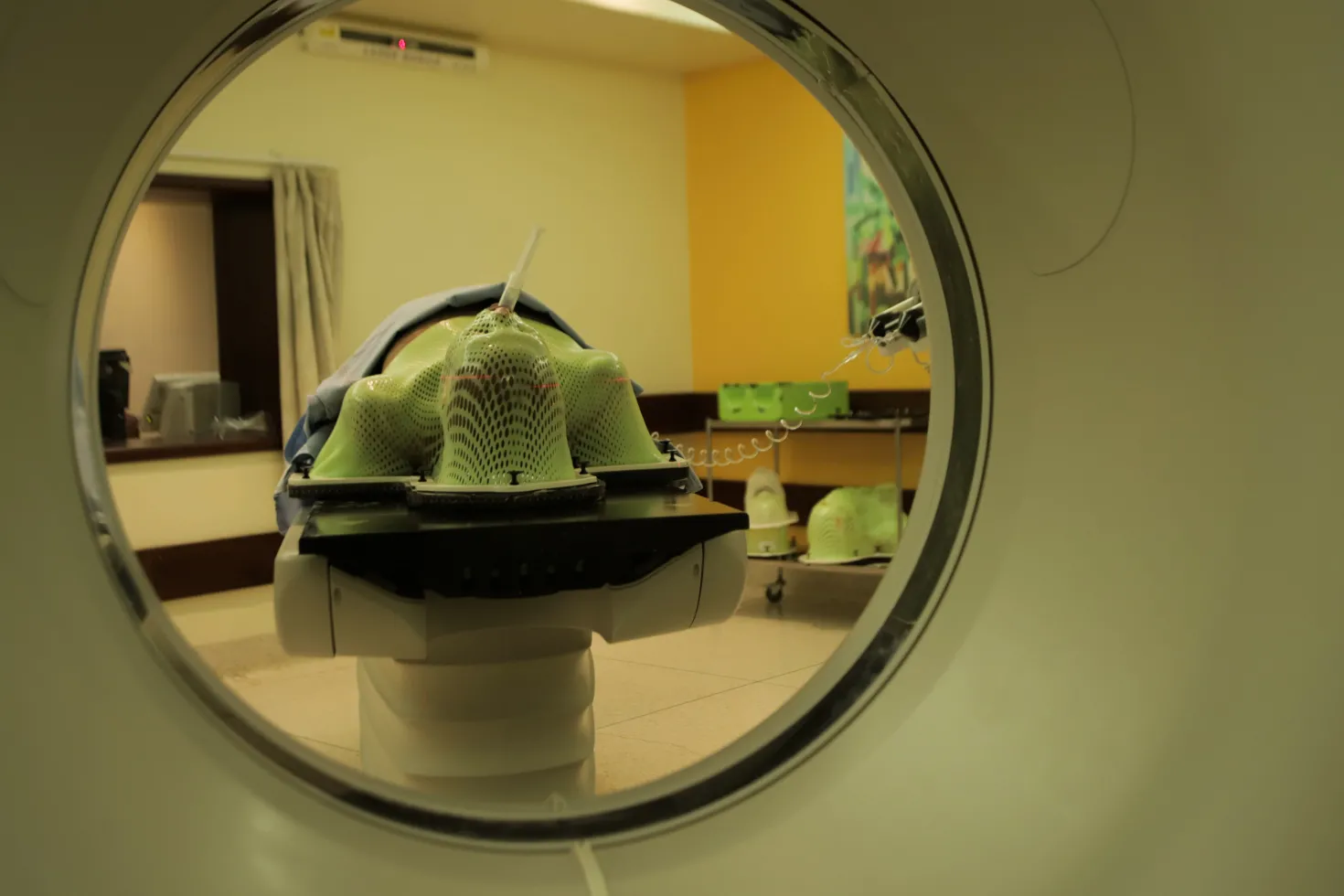
Radiotherapy is one of the three main pillars of cancer treatment, alongside surgery and chemotherapy. It is used in around half of all cancer cases, and up to 40% of cancers are cured through radiotherapy, compared to approximately 11% through chemotherapy alone. At the same time, radiotherapy accounts for only around 5% of total cancer care costs, making it a highly cost-effective intervention.
Despite this, access remains uneven and often limited. Around half of all people with cancer worldwide – and 90% of those living with cancer in low-income countries – cannot access radiotherapy services.
According to the International Atomic Energy Agency’s Directory of Radiotherapy Centres, high-income countries have approximately one machine per 120,000 people, compared to more than one million people per machine in middle-income countries. In low-income countries, a single machine may serve up to five million people.
These gaps are not only technical or financial but systemic, driven by shortages in equipment, trained professionals, and radiation oncology facilities.
“60 to 70% of people with cancer will require radiotherapy at some point,” explains Dr Surbhi Grover, Co-Director of the Center for Global Oncology at the University of Pennsylvania and a UICC Technical Fellow. “In low-income countries, that’s probably closer to 80-85%, because people often present with advanced stages of the disease.”
Why radiotherapy remains underprioritised
The issue, according to Dr Grover, is that radiotherapy is frequently not prioritised alongside other treatment modalities. She works on expanding access to radiotherapy in low- and middle-income countries, and her experience across settings, including Botswana and South Africa where she is now based, points to a consistent disconnect between need and planning.
Radiotherapy is often not fully integrated into national cancer control plans, according to Dr Grover, but treated as a standalone investment rather than a core component of care. “This can limit its impact, because when we think about cancer care, we can't really separate out chemo and surgery and radiotherapy,” she said. “We need to think about them as a package if we want to optimise the chances of cure.”
This lack of integration is compounded by persistent misconceptions, which can delay investment and planning. “Radiotherapy has been kept as this very complicated, highly technical specialty, even in high-income countries, and part of that is because there are not that many radiation oncologists.”
“But in reality, it’s one machine, supported by a trained team. It’s not inherently more complex than other parts of cancer care. It’s just been perceived that way because of limited exposure and understanding.”
This does not reflect the broader reality of cancer care systems, however, as the infrastructure required for surgery and systemic treatment is equally complex, if not more so, according to Dr Grover. “The greater challenge lies in how cancer care is financed and organised,” she explained.
Limited exposure during medical training also contributes to low awareness among policymakers and health professionals. Even in high-income settings, radiotherapy is often only briefly covered during medical school, reinforcing the perception that it is a highly specialised field rather than a central component of cancer treatment.
Expanding access to radiotherapy therefore depends on more than procuring equipment. It requires building functional systems that include trained professionals, supporting infrastructure, and coordinated services across the cancer care continuum – an approach that is particularly relevant in countries building cancer services from the ground up.
Building radiotherapy from the ground up in Somalia
Somalia is one such example, currently working to build its cancer care system from the ground up. The Ministry of Health joined UICC as a member in early 2026 and is actively collaborating with UICC and its partners at the International Cancer Control Partnership (ICCP) to strengthen oncology services.
The country’s healthcare system has been operating under extremely challenging conditions due to decades of political instability and conflict. Medical infrastructure is limited the healthcare workforce faces serious shortages, and only 35% of Somalia's population has access to essential health services.
“Currently, cancer treatment options in Somalia remain limited,” said Dr Abdikani Jeylani, NCD Cancer Focal Person at the Ministry of Health & Human Services in Somalia. “Public sector services are largely restricted to surgical interventions, while chemotherapy is available only in a small number of private facilities – approximately two centres – with no radiotherapy services available in the country.”
Late diagnosis further complicates the situation. With little to no national screening or awareness programmes, many people seek care only at advanced stages of the disease. “Mortality is high. We estimate over 10,000 cases every year, and around 8,000 deaths,” said Dr Jeylani.
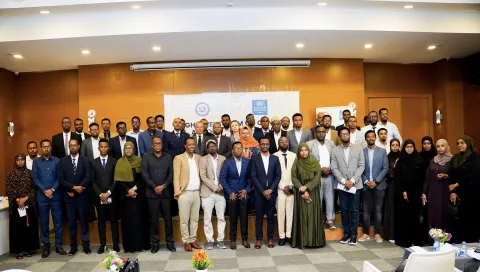
Seeking to address these challenges, the Ministry of Health is widening efforts to efforts to strengthen cancer data and governance, notably establishing a national cancer registry and developing the country’s first national cancer control plan (2026–2030) to ensure a more accurate picture of the country’s burden of disease.
The national cancer registry is expected to support evidence-based decision-making, while the national cancer control plan will define priorities across prevention, diagnosis, and treatment. “We are at an early and formative stage, and we need to translate planning into practical national action,” said Dr Jeylani.
The Ministry is also coordinating with the World Health Organization and the International Atomic Energy Agency to establish training programmes and plan infrastructure in parallel.
“In a low-resource and fragile setting, institutional continuity is critical,” said Dr Jeylani. “We need institutional continuity and technical ownership so that what is planned can actually be implemented and sustained.”
This early-stage coordination reflects an effort to avoid gaps between policy commitments and implementation. This is a common challenge that has affected radiotherapy development in many settings, as radiotherapy services depend not only on equipment, but on systems that function as a whole.
This includes diagnostic services, pathology, surgery, and systemic treatment, as well as the workforce needed to operate and maintain equipment. Where these elements are not developed in parallel, services may be delayed or underused.
“Our intention is to ensure that both policy leadership and technical planning are aligned in real time. That is how we can build something that is functional.”
Somalia’s focus on coordination also reflects the importance of timing. In many countries, professionals are trained through international programmes but return to settings where infrastructure is not yet ready, limiting their ability to practise.
Avoiding gaps between policy commitments and implementation is therefore a central consideration for the Ministry of Health. Efforts to develop radiotherapy services are being planned alongside broader system strengthening, with the aim of ensuring that trained professionals can return to functional environments where they are able to deliver care.
“Joint participation should allow us to translate outcomes more effectively into practical national action,” Dr Jeylani said, referring to collaboration with international partners.
Where trained professionals are able to work in functional environments, with the tools and support they need, they are more likely to remain and contribute to the development of services, Dr Grover confirmed.
“People don't necessarily leave because the salary is higher elsewhere,” she said. “If people have job satisfaction, a system that works, and machines that are functioning, people want to stay put and do good work.”
There are, however, further and broader resource constraints and challenges that continue to shape how health systems are built. These may include unreliable electricity supply and limited digital connectivity, which can affect both the delivery and maintenance of radiotherapy services.
Building a solid foundation of reliable infrastructure and coordinated systems is also essential to ultimately introducing new technologies, such as automated treatment planning and artificial intelligence, which are increasingly integrated into radiotherapy.
For countries such as Somalia, for instance, they have the potential to improve efficiency and expand access by addressing workforce limitations and increasing treatment capacity.
For Somalia, these constraints are part of the planning process from the outset. “We want to ensure that policy and technical planning move together,” Dr Jeylani said. “That is how we can build something that is functional, not just planned.”
Last update
Friday 10 April 2026