New report from UICC shows impact of air pollution on cancer risk and mortality
A major global review commissioned UICC finds that long-term air pollution exposure significantly raises cancer risk and mortality across multiple types, disproportionately affecting vulnerable populations.
HIGHLIGHTS
- Long-term exposure to polluted air (small particles or PM2.5) raises the overall risk of an individual developing cancer by 11%, with the sharpest rises for liver and colorectal cancer.
- It also increases the overall risk of dying from cancer by 12%, and specifically from breast cancer by 20%, from liver cancer by 14%, and from lung cancer by 12%.
- The heaviest burden falls on women, children, and low-income communities with the fewest protections.
- Effective responses include stricter emissions standards, transition to clean energy and cooking, improved urban design, and integrating air quality into national cancer control plans.
Long-term exposure to air pollution significantly increases both the risk of developing cancer and the likelihood of dying from the disease, according to a new global evidence report released by UICC, Clean air in cancer control: An overview of the evidence.
Drawing on data from 42 meta-analyses and systematic reviews published between 2019 and 2024 – the first review of this type – the report quantifies the scale of cancer incidence and mortality attributable to polluted air and shows that its impact extends far beyond lung cancer, disproportionately affecting the most vulnerable populations worldwide.
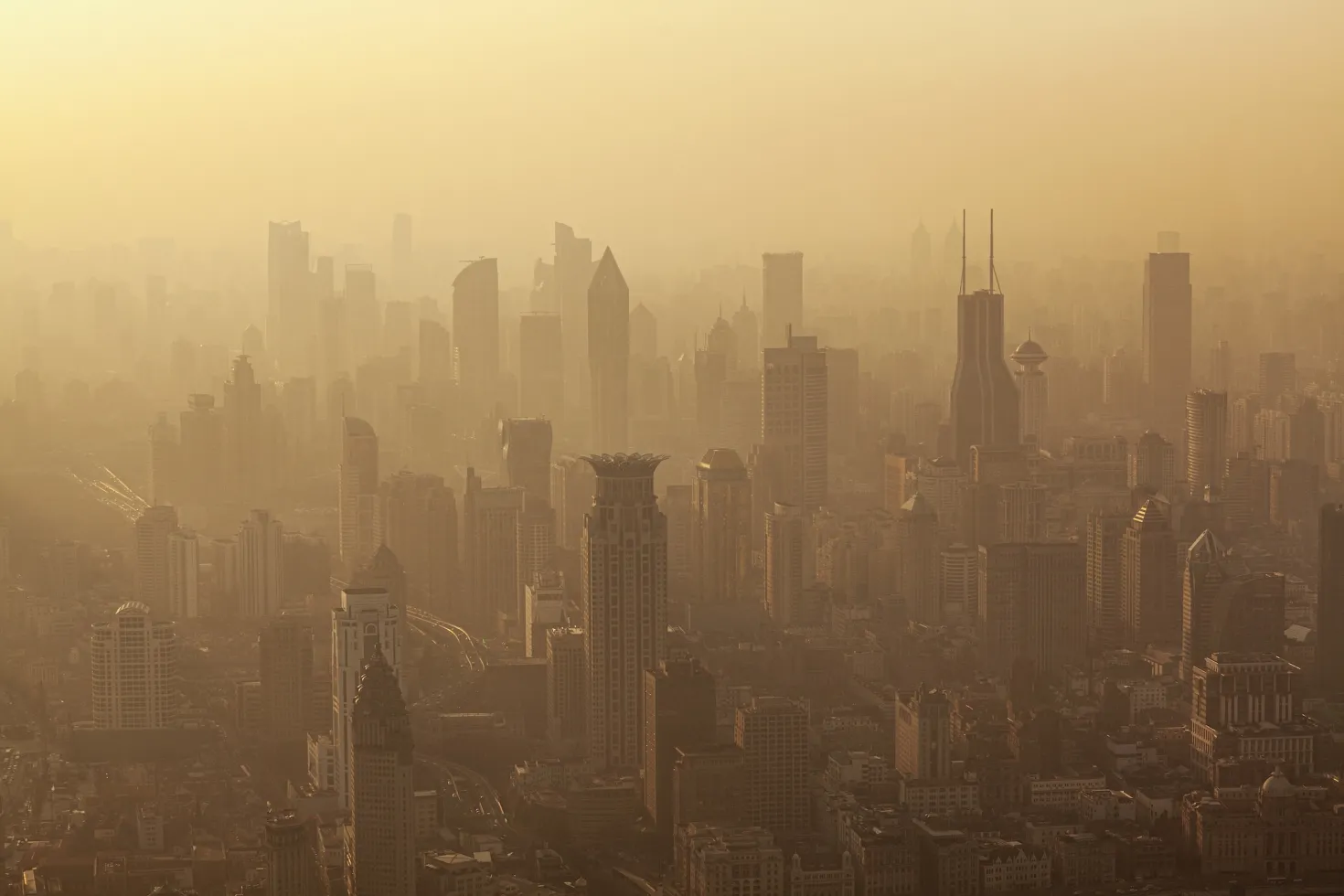
While air pollution has long been recognised as a serious public health threat, the report provides one of the clearest pictures to date of its impact across cancer incidence and survival. It shows that people exposed over the long term to fine particulate matter (PM2.5) face an 11% higher overall risk of developing cancer compared with those living in cleaner environments.

There are particularly strong associations for liver, colorectal, breast, and lung cancers, with rising levels of PM2.5 associated with a 32% higher incidence of liver cancer and an 18% increase in the odds of developing colorectal cancer.
Mortality risks also rise as pollution levels increase, with a 12% higher overall risk of dying from cancer, including a 20% higher risk of death from breast cancer, 14% from liver cancer, and 12% from lung cancer. Regarding lung cancer specifically, recent estimates indicate that ambient air pollution contributes to around 434,000 related deaths each year, accounting for more than a quarter of preventable lung cancers in women and nearly one in six in men.
An unequal burden
The report is introduced by a foreword from Rt Hon. Helen Clark, former Prime Minister of New Zealand and Co-Chair of Our Common Air, who emphasises how the cancer burden linked to air pollution is not shared equally.
“Cancer cases are rising fastest in developing countries least equipped to manage them. Now vulnerable and underserved populations – particularly those cooking with solid fuels or living near industrial facilities – bear a disproportionate share of the burden associated with air pollution. These are the human faces of environmental injustice.”
– Rt Hon. Helen Clark, former Prime Minister of New Zealand and Co-Chair of Our Common Air
Women and children are among those most exposed, particularly in settings where solid fuels are used for cooking and heating. Women exposed to household air pollution face a 69% higher risk of lung cancer, alongside increased risks of cervical cancer. Outdoor workers and communities living near industrial facilities are also at heightened risk, with exposure often concentrated in economically deprived areas.
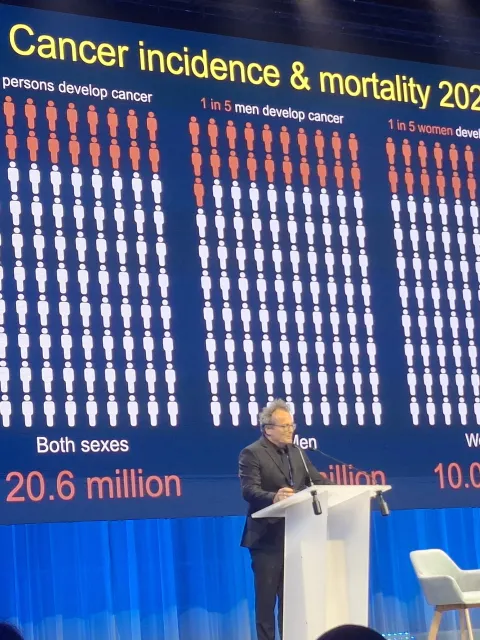
Low- and middle-income countries bear the greatest overall burden. These settings frequently lack the resources to reduce pollution at source or to provide timely access to cancer prevention, diagnosis and treatment. The challenge is compounded by the projected rise in global cancer cases, expected to increase from 20 million in 2022 to 35 million by 2050.
“We have made huge strides in reducing deaths from cancer, but polluted air is silently undermining that progress. It is a risk people cannot opt out of, and one that disproportionately affects women, children and people living in poverty.”
– Cary Adams, CEO, UICC
Evidence strong enough to act
Another foreword by Dr Elisabete Weiderpass, Director of the International Agency for Research on Cancer (IARC), underscores that the evidence presented in the report is already sufficient to justify decisive action to reduce exposure to polluted air.
“The cancer community continues to make progress in addressing other major risk factors, including tobacco use, alcohol consumption, and viral, bacterial, or parasitic infections such as HPV and HBV that cause cervical and liver cancers. It is increasingly clear that air pollution must also be recognised as a major and preventable factor that increases the risk of developing cancer and of dying from the disease.”
– Dr Elisabete Weiderpass, Director, IARC
Because individuals cannot realistically avoid the air they breathe, reducing cancer risk from air pollution depends on policy choices across energy, transport, industry and urban planning.
Effective interventions are well established. Stronger emissions standards, a transition to clean energy and clean cooking, improved urban design, and expanded air-quality monitoring can deliver rapid health gains. Examples from cities such as Barcelona and Bogotá demonstrate that measures to reduce traffic and prioritise walking, cycling and clean public transport are linked to measurable reductions in preventable deaths.
Despite progress in setting air-quality standards, implementation remains uneven. While more than 140 countries have adopted standards, only around one third consistently enforce them, leaving large populations exposed to avoidable cancer risks.
A central message of the report is the need to embed air-quality goals within national cancer control plans. Aligning air-quality standards with WHO guidelines, expanding monitoring in highly exposed communities, and integrating environmental risk reduction into cancer prevention strategies are essential steps to protect public health.
“Air pollution is now responsible for more deaths every year than tobacco. It requires as much political attention from national leaders and Ministers of Health. Cleaner air is urgently needed to head off the expected rise in cancer in the coming decades, especially in low- and middle-income countries. Clean air is essential to both cancer prevention and improving survival.”
– Nina Renshaw, Head of Health, Clean Air Fund
The report was commissioned by UICC, with research conducted by The George Institute for Global Health and support from Clean Air Fund. It reinforces the role of cancer organisations, governments and civil society in advocating for cleaner air as a critical component of effective and equitable cancer control.
Last update
Wednesday 22 April 2026