UICC members drive progress on cervical cancer prevention
A new UICC video brings together voices from its membership reflecting on lessons from efforts to eliminate cervical cancer, and highlighting how UICC has convened organisations to strengthen HPV vaccination in practice.
From 2024–2025, UICC supported 10 community‑led projects to strengthen uptake and access to HPV vaccination, responding to needs identified by civil society organisations in UICC’s landscaping report. In their first year, these initiatives reached more than 720,000 people, helping to lay the groundwork for stronger HPV vaccination coverage.
A new UICC video captures insights from these organisations, drawing on discussions at a dedicated workshop held during UICC’s World Cancer Leaders’ Summit 2025, and situating HPV vaccination within broader efforts to eliminate cervical cancer.
Featuring in UICC’s video alongside UICC President-Elect Dr Zainab Shinkafi-Bagudu are several individuals from UICC member organisations who attended the workshop in Melbourne.
Inesa Huivaniuk from the Global Medical Knowledge Alliance in Ukraine speaks about delivering HPV prevention in a conflict setting, where trust in institutions is fragile and vaccine misinformation spreads quickly.
Karen Christelle at the Ministry of Health in Malaysia shares how the insights and knowledge shared at convening events such as the Summit have supported her own efforts in cervical cancer elimination.
Eve Naminsango from the African Palliative Care Association explains how palliative care teams visiting households began identifying unvaccinated girls and linking them to prevention services, using routine care visits as an entry point.
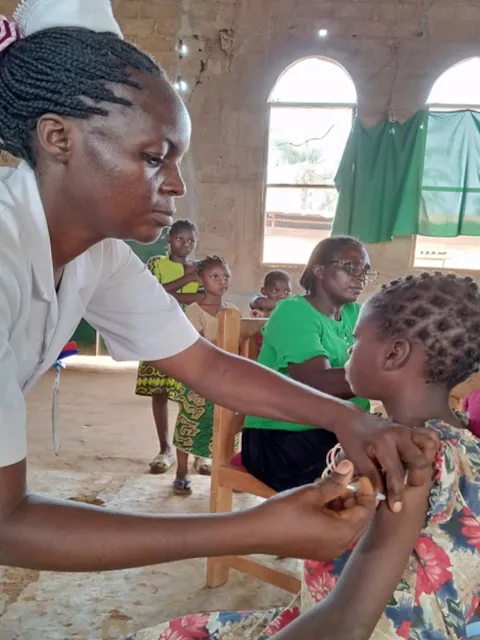
Jayashree Natarajan from the Adyar Cancer Institute in India shares simple, low‑cost ideas to normalise vaccination, such as giving girls bracelets after vaccination, prompting conversations and peer‑to‑peer information sharing when they return to school or college.
The power of convening to strengthen HPV vaccination in practice
The WHO has set clear targets for eliminating cervical cancer, including reaching 90% HPV vaccination coverage among girls by age 15. There has been a significant effort in recent years to extend access, including through a targeted three-year investment from Gavi, the Vaccine Alliance, with an additional estimated 86 million girls now protected against cervical cancer as a result.
This effort has helped to make the vaccine available in countries where 89% of global cervical cancer cases currently occur, helping to protect an estimated 86 million girls in the world’s highest-risk countries from cervical cancer, thereby preventing an estimated 1.4 million future deaths.
This work will continue in the coming years; however, there remain many challenges that must be addressed to ensure sustainability of coverage: health system weaknesses, vaccine hesitancy driven by misinformation, challenges of reaching adolescent girls, cost, and logistics of delivery. This requires a whole-of-society effort, with civil society playing a crucial role.
More on UICC’s HPV vaccination work is available here.
Last update
Friday 10 July 2026