Improving cancer diagnosis and treatment by adapting care to local realities
Drawing on experience gained through a UICC Technical Fellowship, Sanjit Kumar Agrawal of UICC member Tata Medical Center has helped develop approaches to breast cancer diagnosis and treatment that respond to local healthcare challenges and resource constraints.
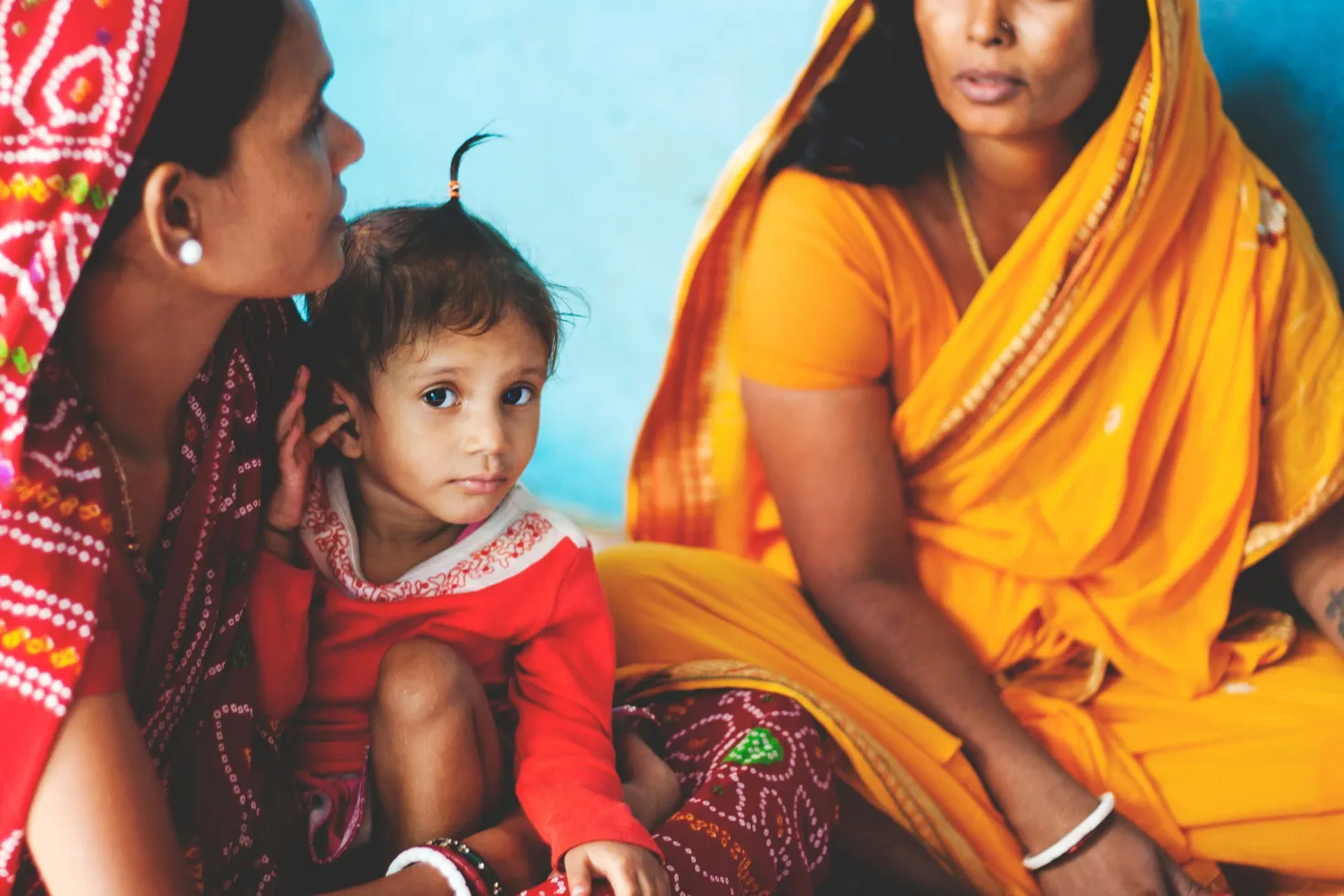
Dr Agrawal works on adapting evidence-based breast cancer care to local realities in India, where people are often diagnosed later, with limited screening, specialist services, and resources, and where treatment pathways may differ from those in countries with established screening programmes.
HIGHLIGHTS
- Dr Sanjit Agrawal, a breast cancer surgeon at Tata Medical Center, a UICC member organisation in Kolkata, has helped adapt innovative breast cancer treatment approaches to the realities of care in India.
- Following a UICC Technical Fellowship in Finland, he helped establish oncoplastic breast surgery programmes and expand training opportunities for surgeons across India.
- A study led by Dr Agrawal showed that more than 1,500 patients has demonstrated that effective breast cancer treatment approaches can be adapted safely to lower-resource settings, while earlier diagnosis remains a key priority.
- His work has focused on developing more practical and affordable diagnostic and treatment pathways, helping make quality breast cancer care accessible to more people, with progress in reducing the number of people presenting a late stage of disease.
For many people living with cancer in lower resource settings, the path from diagnosis to treatment is far from straightforward. Even when effective therapies are available, delays in diagnosis, difficulties navigating healthcare systems, financial barriers, and unequal access to specialist services can all affect outcomes in terms of survival and quality of life.
Dr Sanjit Agrawal, Senior Consultant in the Department of Breast Oncosurgery at Tata Medical Center in Kolkata, a UICC member, has focused for more than a decade not only on improving treatment techniques, but also on finding practical ways to make diagnosis and treatment pathways work more effectively in the context where people receive care.
He built this work in part on experience gained through a UICC Technical Fellowship at Helsinki University Central Hospital in Finland in 2015, where he trained in specialised breast cancer surgery and reconstruction techniques that he would later help adapt and disseminate in India.
The problem of late detection in breast cancer outcomes for women
Breast cancer is the most common cancer among women in India, accounting for roughly 27% to 32% of all female cancer diagnoses, as well as the second leading cause of cancer-related death and the first for women.
“A major cause is the late detection of the tumour, with around 40% to 50% of women with breast cancer presenting in the latest stage,” Sanjit Agrawal explained. “While treatment options have improved considerably over the past decade, late presentation continues to have significant implications for treatment and survival.”
Dr Agrawal noted that specialist cancer services, mammography facilities, radiotherapy services, and trained oncology professionals are now available in far more centres than they were ten years ago. Nevertheless, many people still enter the healthcare system later than clinicians would like. “The absence of a universal screening programme remains a major obstacle to earlier detection,” he says.
Diagnosis itself is only part of the challenge, however, according to Dr Agrawal. Delays can also occur between diagnosis and treatment, particularly for people living far from specialist centres or facing financial constraints. Some may struggle to complete treatment because of travel costs, loss of income, family responsibilities, or limited local healthcare infrastructure.
The lack of clear guidance on where to seek care can further complicate the situation. “Improving outcomes means looking at the entire care journey rather than focusing only on treatment itself,” Dr Agrawal says. “Many people rely on informal advice from relatives, friends, or local contacts to decide where to seek treatment, rather than having access to a clear and consistent source of information. This also contributes to delays in receiving appropriate and timely care.”
At Tata Medical Center, Dr Agrawal explains, people commonly present first to the surgical team, which coordinates the diagnostic process. Clinical examination, imaging, and pathology are combined in what clinicians refer to as a triple assessment. This helps establish an accurate diagnosis and identify the stage and characteristics of the disease.
The results are then reviewed through multidisciplinary discussions involving surgeons, medical oncologists, radiation oncologists, radiologists, and other specialists to determine the most appropriate treatment plan.
“We plan treatment based on clinical, radiological, and pathological findings. The case is then discussed by the tumour board with the medical oncologist, radiation oncologist, and radiologist to decide the best treatment approach.”
Determining the most appropriate treatment, however, is only part of the challenge. Delivering that treatment often requires adapting established approaches to the realities people face in accessing care – from later-stage diagnosis and larger tumour sizes to financial constraints and limited access to specialist services.
This became a particular focus of Dr Agrawal’s work after returning from his UICC Technical Fellowship in Finland, where he encountered approaches that he would later seek to adapt to the Indian context.
Adapting innovative surgical techniques to local needs
The challenge was not simply introducing new techniques but adapting them to the realities of local practice. “People often present with larger tumours than are typically seen in countries with population-based screening programmes,” Dr Agrawal explains. “Our median tumour size is around 3.5 centimetres, meaning that approaches developed in settings where cancers are often detected earlier frequently need to be modified.”
At the same time, he says, the costs and practical challenges associated with numerous hospital visits, which can require not only travel time and expense but also finding accommodation near the clinic, can make repeated procedures difficult. “Adapting treatment to local realities therefore means balancing effectiveness, cost, and practicality while maintaining quality of care,” he says.
The knowledge he gained through international training contributed to a wider focus on training and knowledge-sharing. After returning to India, Sanjit Agrawal helped establish oncoplastic breast surgery programmes at Tata Medical Center and later developed workshops and training opportunities through the Association of Breast Surgeons of India and other professional networks.
One result of this approach was the adaptation of chest wall perforator flap (CWPF) reconstruction techniques for women with breast cancer who might otherwise require mastectomy. In settings where people often present with larger, non-screen-detected tumours and where small- to moderate-sized breasts are common, the technique has helped expand the possibility of breast-conserving surgery while maintaining oncological safety.
Dr Agrawal has helped pioneer the adoption of CWPF techniques in India and other low- and middle-income countries, adapting the approach to local patterns of disease presentation and treatment. He subsequently reported one of the largest Indian clinical series on the technique and contributed to research examining its safety, versatility, and potential role in expanding access to breast conservation surgery. (Agrawal et al., ecancermedicalscience, 2024; Agrawal et al., World Journal of Surgery, 2026.)
Another example of adapting treatment pathways to local circumstances involved sentinel lymph node biopsy (SLNB), a less invasive procedure used to determine whether breast cancer has spread to nearby lymph nodes.
Although widely used internationally, a national survey led by Dr Agrawal confirmed that the unavailability of radioactive tracers in India was the most commonly reported barrier to wider use of SLNB among Indian surgeons, due to cost and logistical constraints.
As Dr Agrawal explained, the traditional approach depends on a radioactive tracer injected before surgery and handled through specialised nuclear medicine services. “We need to send the patient to the radioactive department. They inject the tracer, or dye, and, after around two hours, the patient comes for surgery,” he says. “This means coordinating between multiple departments and relying on specialised facilities.”
To address these challenges, Dr Agrawal conducted research into alternatives to conventional radioactive tracers with a 2020 study that found that indocyanine green (ICG) fluorescence imaging offered diagnostic performance comparable to conventional radioisotope-based methods.
“The approach is one-tenth of the cost of the radioactive dye procedure and is purely surgeon dependent. This reduces costs and simplifies logistics by removing the need for nuclear medicine facilities, separate appointments for radioactive tracer injections, and the management of radioactive materials, making sentinel lymph node biopsy feasible in more centres.”
Another response has been to strengthen diagnosis before surgery. “At Tata Medical Center, suspicious lymph nodes identified on ultrasound may undergo needle sampling before treatment decisions are made,” says Dr Agrawal. “This helps ensure that people receive the most appropriate surgical approach from the outset.”
The work formed part of a broader effort to understand how evidence-based cancer care can be adapted to local realities. In 2022, Dr Agrawal and colleagues published results from 1,521 people with breast cancer treated at Tata Medical Center, providing some of the largest evidence to date on SLNB in a low- and middle-income country.
Rather than reproducing results from high-income settings, the study helped demonstrate that the procedure can be implemented safely and effectively in lower income settings, where people are often diagnosed later, with limited screening, specialist services, and resources, and where treatment pathways may differ from those in countries with established screening programmes.
“We are definitely seeing progress,” said Dr Agrawal. “The proportion of people presenting with advanced disease has reduced by 10 to 15 percent in the last 10 years, which means more people with breast cancer have a chance of being treated successfully. But we still have a long way to go. We need to improve screening and we need to improve diagnosis. Only then will we really see an impact on survival rates and quality of life.”
Last update
Monday 03 August 2026