Podcast "Let’s Talk Cancer" – The vital role of oncology nurses and patient navigators
In this episode:
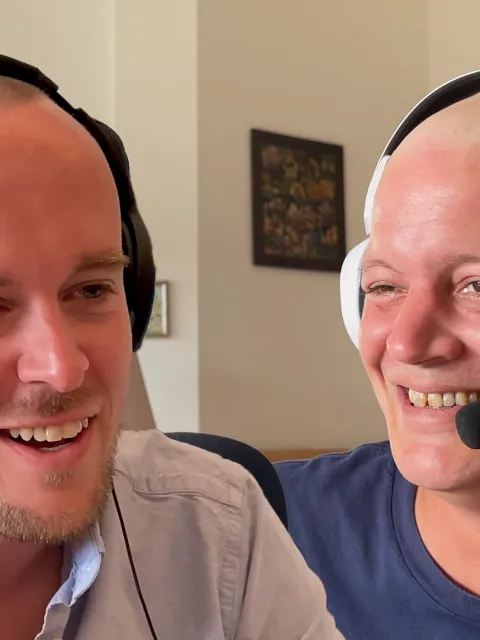
In this new episode of Let’s Talk Cancer, Cary Adams speaks with Rani Khetarpal, President of AONN+ (the Academy of Oncology Nurses and Patient Navigators), a UICC member, about the critical — and often overlooked — role of oncology nurses and patient navigators in supporting people through the cancer journey.
Together they explore what patient navigation means in practice, how navigators and oncology nurses work side by side across the cancer care continuum, and why this human connection is increasingly important as cancer care becomes more complex. The conversation highlights how navigators help patients and families overcome clinical, psychosocial and financial barriers, ensure continuity of care, and support better outcomes by keeping people on treatment and connected to services.
The episode also looks at the pressures facing the navigation and nursing workforce, including burnout, workforce shortages and sustainability challenges, as well as emerging policy and financing developments — such as the reimbursement of navigation services — that are beginning to change how navigation is valued and scaled within health systems.
See podcast transcript below
Listen on:
Spotify | Stitcher | Apple Podcasts | Amazon Music | Audible | Deezer
Podcast transcript
Cary Adams: Welcome to a new episode of Let's Talk Cancer. The podcast where we explore the latest developments, stories, and insights in cancer control worldwide. I'm your host, Cary Adams, the CEO of the Union for International Cancer Control, an organisation that unites and supports the cancer community to reduce the global cancer burden. What does a patient navigator do? How do they work with oncology nurses? Let’s have a discussion about those particular issues and see the value of those individuals who help a patient through their journey. Aligned with our World Cancer Day theme, United by Unique, where every person is unique in their journey through cancer, but we are united in making a difference. Let’s find out what role the patient navigator has in helping the cancer patient go through their treatment. Our guest today is Rani Khetarpal, CEO and co-founder of NavPoint Health and president of AONN+, the Academy of Oncology Nurses and Patient Navigators, a UICC member. Drawing on her leadership experience across oncology services and health systems operations, we'll explore the contribution of oncology nurses and patient navigators across the cancer care continuum. We'll also talk about the stresses and strains that patient navigators and oncology nurses face in fulfilling their role. Rani, it's great to have you on this podcast. Thank you very much for giving us your time. Could you just recount your professional journey and describe what the AONN+ role is and how it supports oncology nurses and patient navigators in practice?
Rani Khetarpal: So, to tackle the first part of your question, my professional journey in terms of navigation has been somewhat not your traditional journey. I actually started out working for the pharmaceutical industry. I was in the industry off and on for about 20 years, doing various things both in research and development, commercial leadership, etc. One of those roles had me work with advocacy, patient advocacy. And so really leading that for one of the organisations that I worked for, and I was introduced to AONN+, the Academy of Oncology Nurse and Patient Navigators, in 2015, 2016. Prior to that role, I had actually started a medical practice around clinical translational medicine and had operated that for a few years. And so that was my first sort of foray into what we call navigation. So when I found AONN and I walked into the first annual conference that I was privileged to attend, I was blown away. And I thought, wow, I found my people. And what Lillie Shockney, our founder, really had created was a home for navigators. AONN+ was formed in 2009. Lillie Shockney had a vision of really expanding the credibility of navigation and really establishing that credibility. She knew way back then that navigation was truly what patients are going to need, and our healthcare ecosystem is going to need.
Cary Adams: When we talk about health systems strengthening or investment in cancer treatment and care, we tend to talk about radiotherapy, cancer centres, technology, medicines, and that sort of thing. And it's not often that the issue of navigation comes in or the value of navigators as you describe them. So, I mean, from your perspective, why are they so critical, and why should we make sure we keep them in the mix when we're having those discussions?
Rani Khetarpal: Well, that is a very loaded question, and I wish we had more than just the minutes that we have here, because I could talk all day on that. I think when we first looked at navigation, and when you go back to the 90s, when navigation was first started by, you know, who is credited with the first navigation programme in inner-city Harlem, he recognised the need for patients, for guidance and education. So you walk into a physician's office, you get a devastating diagnosis of cancer. It doesn't matter what stage of cancer, you hear the word cancer and you just immediately lock up, right? I mean, your head immediately goes to how much time do I have? I have kids, I have responsibilities, I can’t have cancer. This is devastating. And not just the clinical diagnosis of it, but also when you're looking at the psychosocial barriers and socioeconomic barriers that many patients face just in their daily lives. And then you throw a cancer diagnosis into the mix, it really is one of those moments where you just feel like, I can't handle this. And there are so many things being thrown at you, both from a clinical perspective and a financial perspective, all of the things.So he really recognised the need; what he saw was that folks were not coming in for appointments. They were not coming in to follow up with test results, etc. And so he actually got folks from the community to sit down on a Saturday morning at a clinic and have peer support actually walk them through. And these were breast cancer patients specifically who had that diagnosis and had been through that journey. And really, he didn't call it navigation, he just called it peer support, and helped these patients through their journey. It made a tremendous difference in the outcomes that he saw as a physician within his practice. And it just sort of spiralled from there. So when you think about the ecosystem now, and even in the last 10–15 years, our therapies have become amazingly wonderful. But also with that come complexities, right? I mean, these are longer treatments, very involved treatments. You think about cellular therapy, that is the most involved treatment we have currently, and it is quite expensive. Outcomes are wonderful if they happen, but how do you choose to do that? As our therapies and our cancer journeys become more complex, this part of navigation, that guidance and support, both from a clinical perspective as well as those psychosocial barriers, is really important, not just to forecast them, but also to work to remove them. You need support to do that. You need resources to do that. How are you to find those and support those resources? How do you navigate where to go next? You know, that’s where the navigator role becomes extremely critical to ensure that the patient is finding their way through all of those different barriers.
Cary Adams: You're the president of the organisation AONN+, it does say oncology nurses and patient navigators. Presumably there needs to be a really close relationship between the two with regard to a patient's journey. I mean, different skill sets, different approaches, etc. And is that partnership really important?
Rani Khetarpal: It is absolutely critical. And what's very interesting, Cary, is that right now navigation, I like to say, is having a moment. So when navigation first started, we talked about Harold Freeman's programme being peer navigators, right? That has evolved. So navigation, there are four types that we really recognise. There's the clinical navigator, which is that nurse navigator, who really focuses on your clinical journey, explaining therapies and ensuring side effects are being recognised and flagged, and all the different choices that you have, and explaining what the doctor has already explained to that patient, and just helping that patient make those clinical decisions. And then there's the patient navigator, which, you know, the easiest way to explain it is a non-clinical navigator. They might be a social worker. They might just be a certified patient navigator who doesn't have an RN background, but has the ability and has been trained in ensuring that those psychosocial barriers are recognised and helped to be removed. And these are, again, anything from transportation to food to childcare, etc. The third is clinical trial navigation. So these are your navigators who actually focus on identifying clinical trials and navigating patients into clinical trials, but also keeping them in those trials. And then the fourth pillar, which is really, really important in today's day and age, is our financial navigators, especially in certain economic areas of the world. Financial navigation is extremely important where therapies are not always covered. And so, how do we actually pay for this care if I am getting health insurance through my employer, but I am going to chemo and I'm unable to work and I lose my insurance? How do I pay for my care now? I just identified four types of navigators. I will say that in a perfect world, we would have navigators for each of those types of navigation, but we are not there yet. There are many navigators who do all of those things in one role. And so what we really advocate for is that all the work we do supports all four of those types of roles.
Cary Adams: Could I just hover over the patient navigation point just a little bit further? Do they get involved in supporting the family or the spouse or the partner and other things? Or is it specifically patient navigation that they do?
Rani Khetarpal: No, it's whole-person care. And whole-person care does include loved ones, caregivers, etc. And, you know, when you think about healthcare and decisions that need to be made and the impact of a diagnosis, it's not just with the patient. And thank you for asking the question, because it's really critical. So yes, the patient navigator, and even the nurse navigator, will talk with not just the patient, but with the caregiver and the loved ones. So it's very critical that the navigator is also inclusive of the caregiver and their support system.
Cary Adams: That's certainly something which, you know, our current World Cancer Day campaign is talking about, people-centred care. And it's something which we have pushed very hard, that you are treating the person, not the cancer.
Rani Khetarpal: It's a wonderful campaign. It really is. And it hits home. It hits home because so often we're focused in our own silos of "I'm a physician, I'm treating the patient," right? "I'm a drug company, I'm making the therapy for the patient." And those are all very, very critical things. But sometimes, when we have all of those things, although the patient is always at the centre of all of those efforts, it is really important to ask: who is actually looking into the eyes of the patient? Who is actually sitting with the patient face to face, and having that conversation, and listening to the fear and anxiety in their voice, and hearing the relief when they are able to come to a decision that they feel is the best one for them? Right? Those are real emotions. And that's what the navigator is able to focus on. And that is their singular role, to be there for the patient and work with all of those other stakeholders who are doing wonderful things to support that journey as well.
Cary Adams: We hear a lot about health resources being completely stretched around the world. You know, there's not enough nurses, not enough patient navigators, not enough oncologists, pathologists, things like that. Does that affect your world?
Rani Khetarpal: Absolutely. Absolutely. The American Cancer Society's latest statistic is that only 52% of patients will ever touch a navigator. And if you take that one step further, about 20–25% will ever see a navigator more than once. And that's not because it's not recognised as a wonderful experience and one that provides better patient outcomes, it's because we just don't have the staff for it. There's a lack of navigators out there. And although we are seeing an uptake in the number of navigators, although it's slow, it is a nice positive incline. The other part of it too is that, at least in the US, up until recently, navigation was what I like to call an expense line on the P&L, meaning that it was an investment. So now, in 2024, the Centers for Medicaid and Medicare Services here in the US actually created codes. So now navigation is reimbursable, just like a doctor visit is. So the time that a navigator spends with a patient is now generating revenue, which changes the narrative quite a bit in how practices and providers approach navigation. So yes, while it's still an investment to create a navigation programme, there is now a runway that can turn into a positive, revenue-generating cost centre. And actually, it is what we like to call sustainability of navigation as well. And it is a way to sustain your programme, but also scale it, because now not only are you funding your programme, you're creating revenue to add new navigators that are self-funded. You know, it's a volume game, right? So the more navigators you have, the more patients you're able to help, the more revenue you're generating. So it's really a win-win-win, a win for the patients, of course, because you're getting navigation services. It's a win for the navigation program for sustainability. But it's also a win for the provider, because now you're bringing in revenue for the practice as well. So that has sort of changed the narrative in the states. Now globally, that works a little bit differently, of course, and we've been doing some work and really understanding the global impact of navigation and sustainability of navigation and growth of navigation globally. You know, navigation is funded through different governments, and funding comes from private donors. And so we're really trying to understand how we leverage some of that to help some of these practices grow and scale their programs by standardising and showing return on investment in different ways, similar to how we showed it prior to the codes coming out as well. And using some of the tools and resources we have at AONN+ to help benchmark that for other countries as well that are really focusing on investing in their navigation programs.
Cary Adams: It will be interesting to see data on that as it comes out. I mean, implicit in having a navigator, I guess, is that it's a good thing to have because, you know, of the benefits that the patient is supported through their journey, etcetera, etc. But flipping it around, presumably a lot of navigators get very close to the patients and their families, and that's not always a happy ending. So it must be quite a stressful role.
Rani Khetarpal: Yes, we do support that. That's part of supporting the role of the navigator: providing resources and tools for them, not just from that standpoint of losing patients, not having the positive outcome that they so hope to have, but also burnout. Navigators don't say no. They don't know how to say no. It's hard. I mean, it comes from a very intrinsic place to help patients and to help people. You're not in it for the money. You're not in it because it's a great lifestyle. You're in it because of the passion you have for people and the patient. And so, you know, burnout is certainly a thing. And navigators traditionally, in the past, have not had the right tools to accurately document, to accurately capture time, to actually show the work that they're doing, because a lot of the work that they do, the impactful work, is not captured and documented accurately. They just do it. They do it because they do it, right? You know, just like anything, they take the phone call because they need to, and they're on the phone for an hour because the patient's crying to them, but they still have all these different things that they have to get done and cases they have to work through, but they won't say no to that patient. They won't say, no, I can't listen to you, I've got to get to my next appointment. That's not how it works. Right. So, we do provide a lot of those tools and resources. What I will say too is that technology, we have a technology and innovation committee at AONN+. We have several committees. This is one of them. And they have been wonderful about sharing technologies and innovations that will help with this exact thing. And so a lot of it too, with the advent of the codes, has brought a lot of that credibility factor. So now their time is a lot more organised. Those that are using and billing for navigation, because it has to be. They're getting a lot more support for some of those needs that these patients have that navigators traditionally just took care of. But now they're being outsourced to other places, because the navigators really need to focus on the work that they need to focus on. So it's starting to help a bit, although we do have a long way to go. But from a standpoint of just mental health of navigators and the ability to really stay strong in those moments when it doesn't always work out the way that you were hoping. Yes, it is. It is real, just like anybody else. They're human, just like a physician who loses a patient. You know, it affects us all. And so that's why, you know, we have those tools and resources as well for navigators to work through those as well.
Cary Adams: And I assume the same is with oncology nurses as well as patient navigators. I mean, they're bound to get close to some of their patients. And it must be extremely stressful, as it is with a family, if it doesn't actually turn out as you expect it to do. If you were in front of a health minister, what would you say to them about why they have to invest in nursing and navigation for oncology? What are the key things? The things that they should be aware of.
Rani Khetarpal: I think the first aspect is. Always going to patient outcomes. There is wonderful literature out there, evidence-based papers that actually show, over and over again, the ability to drive better patient outcomes when there is a navigator involved. And it actually could be a nurse navigator. It could be a patient navigator. Either one, right? Whether it's clinical, non-clinical, or a combination of both, just having a human being there that understands the back end of the system, that can sit there and listen. And a lot of navigation is listening. A lot of, I mean, you know, you spend an hour with a patient. I would say about 30–45 minutes of that is just listening to the patient. Navigators are wonderful listeners. And patients right now, especially, you know, we have these wonderful patient tools. We've got, you know, ChatGPT for health, we've got Claude for health, we've got all these wonderful co-pilots and things like that at our fingertips. But what happens when you get that information? And then that's the argument that I always put in front of people when they say, well, you know, now patients can just go to ChatGPT and put it in and they can have answers. And I say, but there's nobody talking to them to interpret what ChatGPT is giving them. Interpreting those things is really important, so that the patient is understanding of what it is that they're facing. So if I'm talking to somebody, a minister of government, it doesn't matter, and they bring that argument, well, technology is there and it's great and AI is going to do great things. No doubt, but it will not replace the human element of healthcare. And so when you think about the literature and the evidence-based practices and all of those things that have been developed for navigation, there's a reason for that. It's because patients do better with someone by their side, guiding them through a complex medical journey. So that's number one. I think the other, for their own benefit too, when they think about taking care of their patients and their constituents and their citizens and that sort of thing, you want that for them. You want them to be taken care of. You want them to have a positive experience. You want them to say, my government has provided me with this, right? Because I am important. My journey is important, and my healthcare is important. And that there's no replacing that as well, just like any other provider provides navigation services, right? A patient is going to be very grateful for that. And I think that's really, really important. I also think, quantitatively, when you start looking at the savings expense that you have when you have a navigator present in a patient journey, it is tremendous. So everything from utilising less healthcare resources, i.e. hospitalisations, emergency rooms, staying on your therapy. Side effect management, ensuring these patients' barriers to actually going to an appointment are lifted, right? I can't get to my appointment today because I don't have transportation. My daughter is supposed to take me. She has to work. And so now I have no idea how to get there. I don't know how to take the bus. I've never taken the bus. How am I supposed to do this? A navigator will quickly get on the phone, get them transportation, get them to the appointment. If that patient misses that appointment, it can translate, and typically does translate, into an expense, a pretty hefty expense too in some cases. So really important. You know, medication adherence is a huge part of this as well. Getting the right therapy for the right patient at the right time, and staying on that therapy, treatment discontinuation rates are lower with navigation as well. So all of these things, when you put the quantitative and qualitative equation together, it is a storyline and a formula that, you know, the proof is there. When I've been talking with members of UICC who are looking to pull together navigation programs, it's the one thing that I stress, that you can't just go in with qualitative notes. You have to take the quantitative, and you have to show the data, even if it's from a different country. Take a similar population in another part of the world, that's fine. So take the data, apply it to your own population, and move that forward, because that's what's going to really drive the decision to invest in navigation at a government level.
Cary Adams: So improved outcomes, cost efficiency, and a moral imperative. Basically, these are the three things. I'll remember that now, so don't worry, I’ll use that when I'm talking to people. And obviously we're intent on making sure this is part of our commitment to people-centred care. And through World Cancer Day, and our work with governments around the world on national cancer control plans, we will push for the importance of nursing, oncology nurses, and also patient navigators. So I think, you know, the way you've described it, and the work you're doing yourself and with the organisation, are really impressive. And thank you so much for giving us an insight into what is such a valuable job, a valuable role for people when they are going through a cancer diagnosis and treatment. It's good to know that there are people like you who are there to help them get through it. So thank you for the work you're doing. It is really amazing.
Rani Khetarpal: I appreciate that. And thank you for giving us a platform and a voice, and all the work that you and UICC have been doing and continue to do.
Cary Adams: Thank you very much indeed. It was really good. Thank you for listening to this episode of Let's Talk Cancer. If you like this podcast, please give us a rating and subscribe for more content every month. And if you want to know more about UICC work, visit uicc.org or follow us on social media.
Last update
Thursday 18 June 2026