Improving the availability of cancer services for women means looking beyond treatment
HIGHLIGHTS
- Eva Maria Strömsholm, co-founder of Gynecological Cancer Patients of Finland and an advocate working with UICC member organisations including IGCS and ESMO, exposes critical gaps in survivorship care for women with cancer.
- Her experience in Finland shows that universal health coverage can deliver timely diagnosis and treatment, yet still fail on rehabilitation, psychosocial care and long-term follow-up.
- Young women with gynaecological cancers face particular challenges, from fertility decisions to unmanaged fatigue, pain and early menopause after treatment ends.
- Strengthening rehabilitation, nursing support and patient advocacy is essential to closing the divide between cancer survival and quality of life.
Access to cancer care is often framed as a question of barriers encountered by traditionally underserved populations, notably women, which effectively prevent them from benefiting from existing services. For many, however, the challenge goes beyond access, even in high-income countries with universal health coverage. It’s about whether the right services are available at the right time, from health education and prevention to treatment and supportive care.
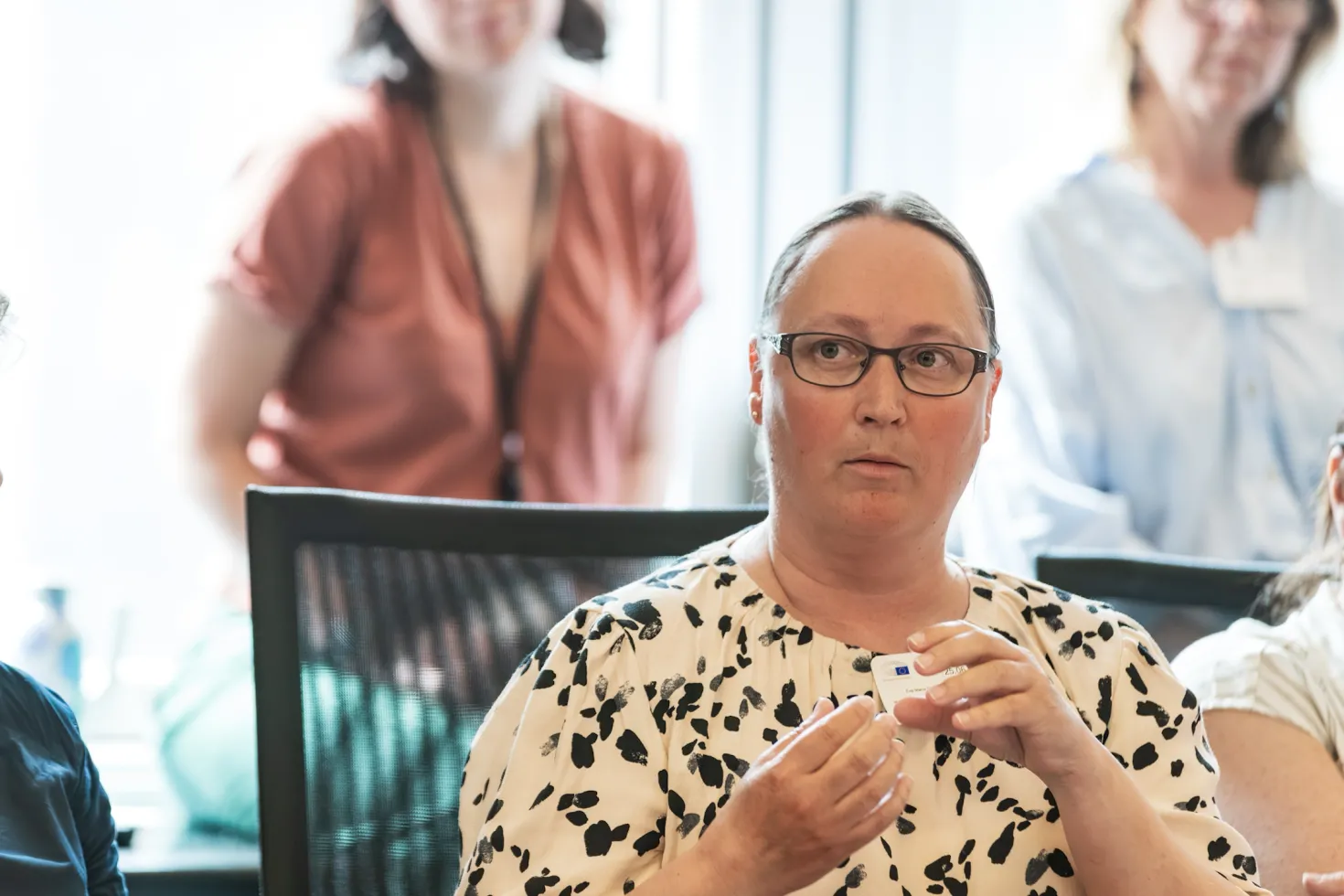
Eva Maria Strömsholm from Finland has experienced this several times, from different perspectives. Diagnosed with ovarian cancer at the age of 27, and later with thyroid cancer in Finland, she has experienced cancer care within a universal health system as a patient navigating diagnosis, treatment and long‑term follow‑up.
She later retrained as a nurse and today works in neurological care, while also serving as a policymaker and patient advocate. She is co‑founder of Gynecological Cancer Patients of Finland. She is also actively involved in several European and international cancer networks, including the International Gynecologic Cancer Society (IGCS) and the European Society for Medical Oncology (ESMO), both UICC members, as well as in Engage and the World Ovarian Cancer Coalition (WOCC), also a UICC member. She works closely with clinicians and policymakers to improve outcomes for women with gynaecological cancers.
Looking back, Eva‑Maria is clear that the health system she encountered was highly effective when it came to treatment – but support and rehabilitation services were deficient, if not absent. “My ovarian cancer was first detected through a routine student health check, when a nurse noticed something unusual and referred me for further examinations,” she shared with UICC. “I didn’t have any symptoms, and with ovarian cancer usually you don’t. By the time symptoms appear, it can already be too late. I was lucky in that regard.”
That chain of referrals and imaging led to surgery, where pathology later confirmed a rare form of ovarian cancer.
“In the beginning, the system worked very well,” she explained. “I was quickly referred, I had access to examinations, surgery and, later, chemotherapy. I felt that I was being taken seriously and that people knew what they were doing.”
That sense of being closely supported continued throughout active treatment, when contact with specialists and nurses was frequent and intensive, but afterwards the nature of care changed abruptly.
“Suddenly the follow‑ups became less frequent, and after a few years they stopped,” she said. “I was expected to go back to normal life, but I was still dealing with fatigue, pain, fear, and – with my second diagnosis – menopause symptoms. I didn’t really know where to turn.”
Eva-Maria’s later thyroid cancer diagnosis highlights this further. After a lesion had been monitored by clinicians for several years, and given her cancer history and her professional experience as a nurse, she insisted on a biopsy despite initial reassurances that the finding was benign.

This channel gathers content related to women and cancer, including cancers that affect women, gender barriers in cancer control, women-centred approaches to care and more.
“Even the doctor was surprised when the results came back and it was cancer again. It just felt like such as struggle to get someone to hear and respond to my concerns. Too often women must advocate for themselves to access the diagnostic services that they are entitled to, particularly when they are young or present with non-specific symptoms – and later the specific support services that a woman might require.”
Why women’s needs are often missed after treatment
For Eva‑Maria, this transition exposed a major gap in the availability of services, showing that even in well‑resourced health systems, cancer care is still often organised around episodes of acute treatment rather than the full continuum of care. While the system was designed to detect and treat cancer, it was far less equipped to support people living with the long‑term physical and psychological consequences of treatment.
The result is a disconnect between survival and survivorship, a gap that disproportionately affects women, particularly those diagnosed young or with gynaecological cancers.
Even in countries such as Finland and Sweden, rehabilitation is often considered optional, Eva-Maria said. “It should be a core part of care, starting early and addressing physical, psychological, and functional needs. Every person affected by cancer should have a rehabilitation plan from the beginning.”
She emphasised how essential are rehabilitation, fertility counselling, and structured psychosocial support to recovery and quality of life. “If that support is there early on, many long‑term problems can be prevented. Instead, you often only realise what you are missing years later, when the follow‑ups have ended and you feel completely on your own.”
Without early rehabilitation, side effects can become long-term challenges. After chemotherapy, Eva-Maria experienced chronic fatigue, which affected her ability to return to full-time work. Ulimately she decided to retrain as a nurse.
“Support gaps are especially pronounced for young women with gynaecological cancers. Decisions about fertility preservation, organ removal, and early menopause are often made under intense pressure, with limited guidance. I was told the situation and asked to decide,” she said.
Follow-up care tends to focus on recurrence, while long-term effects, including psychological distress, are often left to primary care providers, who may have limited experience in cancer survivorship.
When it comes to rarer cancers, these challenges are often compounded by limited information and support. “Even clinicians may have little experience with these conditions, making patient organisations an important source of guidance and community,” Eva-Maria said.
This gap led Eva Maria to co-found Gynecological Cancer Patients of Finland six years ago, the country’s first dedicated association for patients with these cancers. At the European level, her work with EURACAN has contributed to the development of patient information materials for rare gynaecological cancers, now available in multiple languages. “Patients need clear information about rare cancers,” she said. “That’s something advocacy can help improve.”
Throughout her journey, Eva-Maria highlights the central role of nurses in making cancer care more accessible. “Nurses play a key role,” she said. “They are the most consistent point of contact, helping patients navigate the system, manage side effects, and access additional support.”
To improve not only quality of life but also increasing the chances of successful long-term treatment, Eva-Maria insists that health systems need to invest more, not only in diagnostics and treatment, but also in rehabilitation, psychosocial care, patient information, advocacy, and the health workforce that supports patients throughout their journey.
Last update
Tuesday 28 April 2026