Access to cancer care starts long before treatment
Caroline Kisia, Director of Project ECHO Africa, explains why improving access to cancer medicines alone is not enough, and why strengthening every step of the cancer pathway will be critical to improving outcomes across Africa.
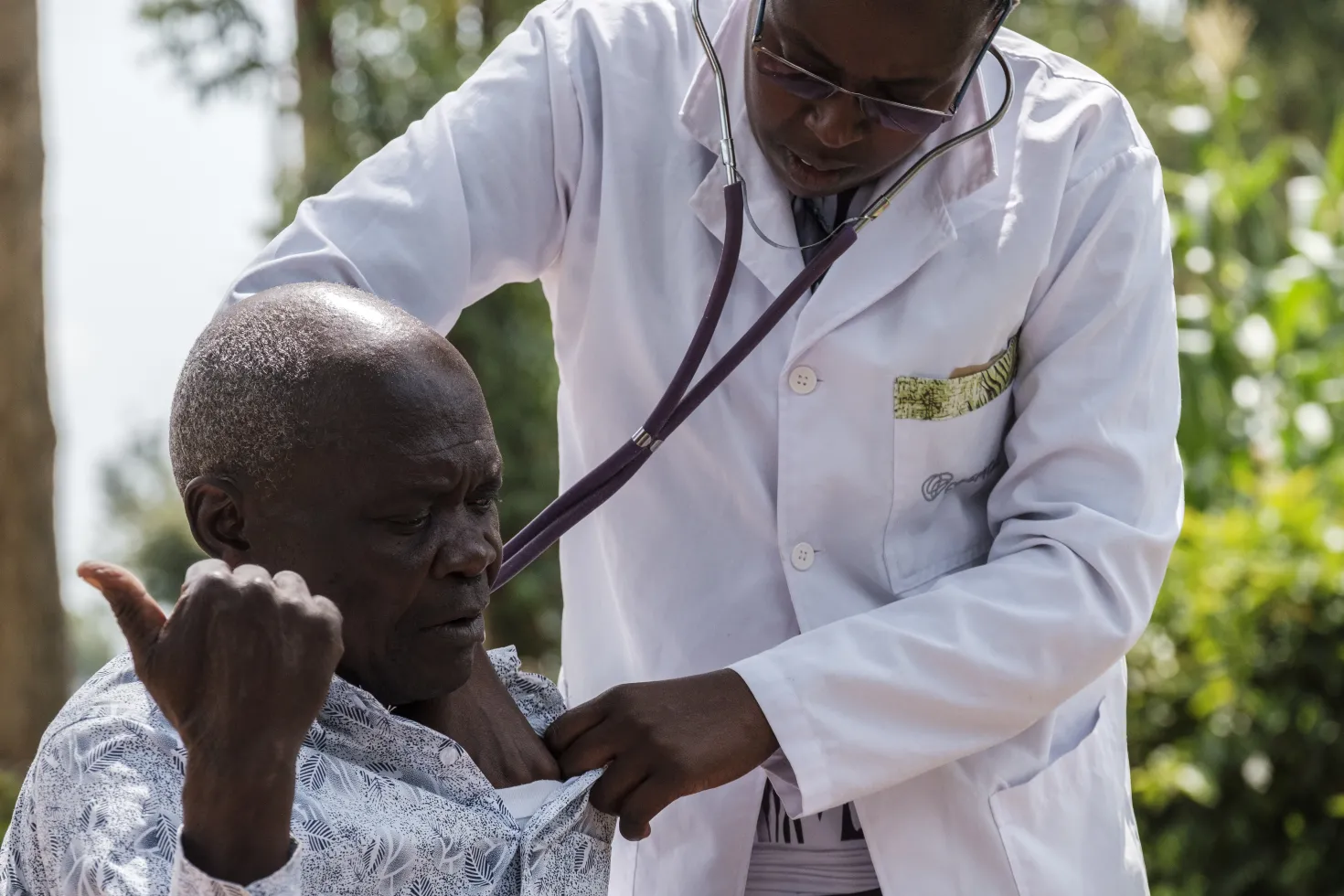
Project ECHO has trained healthcare workers across the globe, including here in western Kenya, to spot early warning signs and symptoms of cancer.
HIGHLIGHTS
- Caroline Kisia, a doctor, public health specialist and Director of Project ECHO Africa, says too many people still lack confidence that a cancer diagnosis will lead to timely and effective care.
- Late diagnosis remains one of the biggest barriers to better outcomes, increasing treatment complexity, costs and suffering for patients and families.
- Through Project ECHO, specialist knowledge is shared through virtual learning networks with frontline health workers across Africa, helping to improve early detection, referral, and diagnosis.
- Improving access to cancer medicines requires a systems approach that strengthens awareness, screening, diagnostics, referral pathways and treatment services.
Despite the extraordinary progress that has been made in detecting and treating cancer, there is still a great degree of fear associated with the disease. And in many parts of the world, some of that fear may be justified, as too many people still lack access to essential cancer services.
“I’d rather live in ignorant bliss,” is a statement that Caroline Kisia, Director of Project ECHO Africa, has heard many times from people when discussing cancer in Kenya. This fatalism is, for her, a sign of a broken system and reflects a lack of confidence that a diagnosis will lead to timely and effective care.
Too often, she says, people encounter a system where cancers are diagnosed late, specialist services are difficult to access, and treatment may be unavailable, unaffordable, or too far from home.
A medical doctor and public health specialist based in Nairobi, Caroline Kisia recently lost a brother to cancer. A doctor himself, she said, he understood the disease and the realities of navigating the health system, but his experience reinforced for her how much work remains to ensure that people can access timely care.
“We have seen important improvements in Kenya, with expanded financing for cancer medicines and treatment, and new oncology centres that are bringing services closer to communities,” Kisia explains. “But the benefits of those investments are often undermined by late diagnosis.”
A cancer that has advanced or metastasised is more complex and more expensive to treat, and has poorer outcomes. “It can be very traumatising for patients and for their families,” Kisia says. “It’s not just the cost of medication and treatment and everything else, but also cost in terms of loss of work hours, and especially the cost in terms of pain and suffering for the patient, their family, and loved ones. And late diagnosis feeds on itself. When people repeatedly see friends and relatives diagnosed only once the disease is advanced, cancer becomes something that instills a very real fear.”
“We are now dealing with a double epidemic,” says Kisia. “We are still dealing with communicable diseases, but we also are dealing with an epidemic of non-communicable diseases, with cancers being a major component of that.”
The question for Caroline Kisia is, therefore, how to help people enter the system sooner. “People need to understand cancer risks and symptoms, know when and where to seek help, and have access to screening services that can identify disease before it has spread,” she explains. “Kenya has recognised community health workers and formally integrated them into the healthcare system, for instance. They are particularly effective in raising awareness and getting people into screening and care.”
Diagnosis itself is another weak link. “Equipment, reagents, trained staff and specialist expertise all have to be in place for cancer to be correctly identified,” she explains. “In many places, patients are treated for more common illnesses several times over before anyone suspects cancer.”
Kisia points to childhood cancers as an example. In western Kenya, healthcare workers taking part in Project ECHO programmes have been trained to spot early warning signs and refer children for testing sooner. Some of those children had previously been treated for malaria repeatedly before a cancer diagnosis was even considered. As more clinicians became aware of signs and symptoms, referrals increased, and more children reached specialist care before the disease advanced.
This has been the core mission of Project ECHO since its inception more than two decades ago, when Dr Sanjeev Arora, an Indian-American liver disease specialist working in New Mexico, was frustrated that he was only treating a tiny fraction of Hepatitis C patients in the state. He started asking how they could get high-quality care closer to home, instead of having to travel long distances to overstretched referral centres.
Project ECHO was founded to connect specialists with frontline health workers through regular virtual sessions, moving knowledge instead of patients. Case-based learning and peer-to-peer discussions help build a stronger workforce, share knowledge faster, and improve care quality, especially in underserved areas.
The network now operates in more than 30 African countries and supports hundreds of programmes, linking clinicians in county and district facilities with specialist teams, and reducing the isolation of health workers in places with limited access to expertise.
“When you combine this with the fact that Kenya is opening new oncology centres in county hospitals, and training community health workers, you see the different building blocks are being put in place,” Kisia says. “There are multiple different interlinked issues, and a systems approach is essential to addressing these issues and to see real progress. It’s really encouraging.”
Project ECHO also works with partners in the UCC-led Access to Oncology Medicines (ATOM) Coalition, which seeks to improve access to quality cancer medicines in low- and lower-middle-income countries. “For people to receive the right treatment at the right time is not just about making the medicines available. It requires strengthening the health systems so effective diagnostics and referral pathways, as well as trained healthcare workers and treatment services, are in place.”
Last update
Wednesday 09 September 2026