Improving cancer care for older adults without waiting for more specialists
Drawing on experience gained through a UICC Technical Fellowship at the University of Colorado Cancer Center, Dr Mildred Medina-Palma is strengthening cancer care for older adults in Mexico through multidisciplinary care, geriatric assessment, and the development of a specialised geriatric oncology clinic.
HIGHLIGHTS
- Dr Mildred Medina-Palma, a geriatrician at TecSalud, part of the Tecnológico de Monterrey in Mexico, completed a UICC Technical Fellowship at the University of Colorado Cancer Center, a UICC member, to study how care for older adults with cancer is organised there.
- She concluded that the biggest gap between the two systems was not so much funding or equipment, but coordination – how consistently oncologists, geriatricians, and other specialists are able to work as a team around the same person.
- Mexico has around ten geriatric oncology specialists nationally and no domestic training programme in the field, so Dr Medina-Palma is training oncologists at her hospital to use a geriatric assessment tool that requires neither.
- She is now working to establish Monterrey's first dedicated geriatric oncology clinic, and continues a research collaboration with her Fellowship mentor that has produced a study accepted for the European Geriatric Medicine Society Congress.
More than half of all new cases of cancer are diagnosed in adults aged 65 and older, which means about 10 million worldwide in 2024. The human body naturally accumulates genetic damage as it ages and suffers from a weakening immune system over time. This makes it harder for the body to repair itself, significantly raising the risk of developing various health conditions such as cancer.
As populations age so will the need to care for an increasing number of patients, particularly in low- and middle-income countries. In addition to having to respond to this growing burden, health systems have to implement an approach to delivering care that addresses the specific needs of this population.
“Decisions about how to treat cancer in older adults are often shaped more by a number – their chronological age – than by their actual health, their capacity to tolerate treatment, or their preferences in terms of quality of life,” says Dr Mildred Medina, a geriatrician at the School of Medicine and Health Sciences at TecSalud in Mexico.
Her interest in geriatric oncology developed notably during a year of social service that Mexican medical graduates must complete before qualifying, which she spent in 2018 in palliative care at a public hospital in Mexico.
It was there that she met Dr Enrique Soto Pérez de Celis, who at the time was building the geriatric oncology unit at the Instituto Nacional de Ciencias Médicas y Nutrición Salvador Zubirán (INCMNSZ), where Dr Medina-Palma observed that older adults had special needs in terms of cancer treatment and care.
Dr Soto, a UICC Young Leader and currently Associate Professor of Medical Oncology at the University of Colorado, a UICC member organisation, remained at INCMNSZ until 2024 and became Dr Medina-Palma’s mentor.
Specific challenges, tailored solutions: teamwork, not technology
By Dr Medina-Palma’s own estimate, there are only around ten geriatric oncology specialists in all of Mexico. “The number is growing, but it's not a well-known specialty,” she says. “Even oncologists often don't know it exists. There is no specific training programme for this speciality, we have to go to another country.”
Cancer cases in Mexico are rising quickly, with an estimated more than 200,000 new cases in 2024, while in 2022 the national statistics agency, INEGI, estimated 147,000 new cases, according to Dr Medina-Palma.
There are some specialised clinics, notably the multidisciplinary geriatric oncology unit at INCMNSZ set up by Dr Soto, and the National Cancer Institute (INCan), which treats patients over 70 using comprehensive geriatric assessments. They are, however, both located in Mexico City.
Many older adults with cancer in Mexico face several specific obstacles as a result. They may live far from the clinics – though telemedicine is beginning to close some of that gap – and symptoms of cancer may be normalised as a routine part of ageing, which delays diagnosis and referral to a geriatric clinic.
“There is also a lingering assumption that older people are not worth treating,” says Dr Medina-Palma. “Why look for treatment, the thinking goes, when someone that age is likely to die soon regardless.”
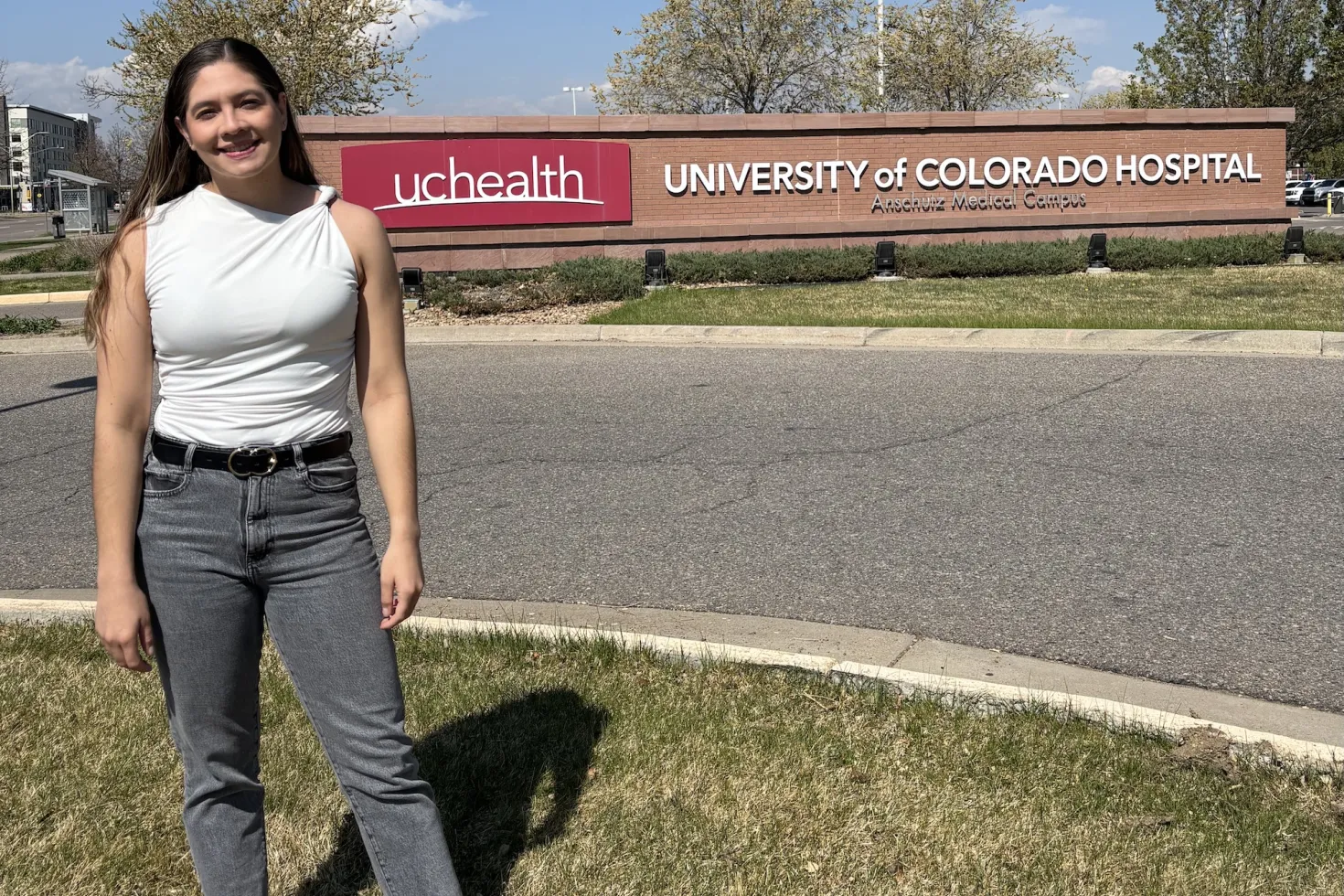
To gain a better understanding of how to change this approach, Dr Medina-Palma applied for a UICC Technical Fellowship. She worked alongside Dr Soto from March to April 2025 at the geriatric breast oncology clinic at the University of Colorado Cancer Center, where he has been working since 2024.
“This is when I really understood how treatment decisions for older adults should not be guided by type of tumour, the stage of the cancer when it was diagnosed, and the person’s age. We need a fuller picture of the person facing treatment. We need to ask, ‘What their background? How independent and mobile are they? Do they have support at home and to travel? How healthy are they, mentally and physically – what is their biological age? And what are their priorities in terms of outcomes, what matters most to them: quality of life or aggressive treatment to maximise chances of survival’.”
This was not about resources, she realised, but teamwork. She observed during her fellowship that patients saw not only a specialised oncologist, but also nurses, physical therapists, and occupational therapists, all in one day,” she explained.
Bring care closer to the person
Since returning to Mexico, Dr Medina-Palma has worked with the comprehensive geriatric assessment (CGA) tool, which does not depend on having more geriatric oncologists to use it.
“When you have limited resources, you need a tool that is very quick and very easy to apply,” she explains. “The CGA is a structured evaluation of an older person’s function, priorities, and support network, which any oncologist can carry out. It provides a 360-view that can guide decisions on the best course of treatment and supportive care for the patient.”
Her goal is for the assessment to become routine beyond her own hospital and specialty. She has introduced an oncogeriatric consult service at her hospital in Monterrey, in northern Mexico, and is pushing for the kind of multidisciplinary teams she saw in Colorado to become standard practice for older people across specialties, not just in cancer care.
A more long-term goal is a dedicated geriatric oncology clinic in Monterrey. “It’s about assembling the right team, and that takes time. Implementing this clinic would be how I measure the impact that my fellowship had,” she says.
The Fellowship did produce, however, a more immediate outcome: a continued research collaboration with colleagues in Colorado, including a study on older adults with cancer, which has been accepted for presentation at the European Geriatric Medicine Society Congress in Reykjavik this September.
Last update
Thursday 13 August 2026