
IARC releases GLOBOCAN 2024: rising cancer burden exposes gaps in prevention and care
New GLOBOCAN 2024 estimates from IARC show cases rising and persisting stark regional inequities. The figures, previewed at the IARC's 60th anniversary event, underline how far health systems remain from being able to track and curb, the disease.
HIGHLIGHTS
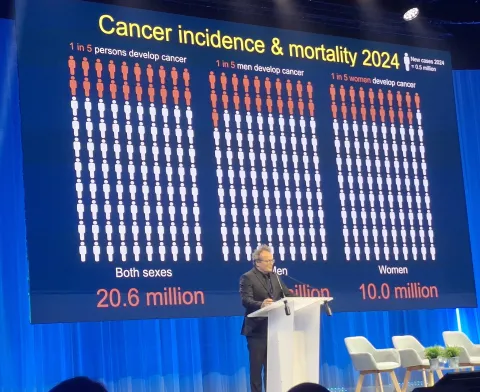
- An estimated 20.6 million new cancer cases and 9.8 million cancer deaths occurred worldwide in 2024, with around one in five people expected to develop cancer in their lifetime. At current trends, new cancer cases are projected to reach 34 million a year by 2050, with deaths rising to 17.5 million – unless incidence and mortality rates fall.
- China alone accounts for one in four cancer cases and deaths worldwide, while Europe, with 9.2% of the global population, accounts for more than 20% of global cancer incidence.
- Lung cancer remains the leading cause of cancer death and incidence worldwide; excluding China, breast cancer is the most commonly diagnosed across all levels of the Human Development Index.
- Only one in three countries currently reports high-quality cancer incidence data, and just one in four reports reliable mortality data.
The International Agency for Research on Cancer (IARC) released yesterday GLOBOCAN 2024, its latest global estimates of cancer incidence and mortality. The interactive website offers the most comprehensive picture to date of how cancer affects populations across regions, income levels, age groups, and gender. The data were previewed at IARC’s 60th anniversary event in May and officially released today.
According to the new estimates, there were 20.6 million new cancer cases worldwide in 2024, 10.6 million among men and 10 million among women, which corresponds to a lifetime risk of around one in five of developing cancer. There were an estimated 9.8 million cancer deaths, 56% of cancer deaths occurring in men, and 44% in women.
“One in nine men and one in 13 women die from cancer. This reflecting the variation in cancer types between men and women and the generally poorer prognosis of cancers affecting men.”
– Freddie Bray, Head of the Cancer Surveillance Branch, IARC
The 2024 data reveal profound geographic inequalities in cancer burden, driven by population size, ageing, exposure to risk factors and unequal access to prevention and care. China alone accounts for one in four cancer cases and one in four cancer deaths worldwide, while Europe, with just 9.2% of the global population, accounts for over 20% of global cancer incidence.
Standardised incidence rates vary up to three‑fold between countries, while mortality rates vary as much as five‑fold. The highest incidence rates are seen in countries such as Australia and Denmark, while some of the lowest are observed in parts of sub‑Saharan Africa. Mortality rates are highest in Eastern Europe and Melanesia, with specific countries standing out due to particular cancer profiles, including liver cancer in Mongolia and cervical cancer in Zimbabwe.
According to Freddie Bray, these differences highlight not just variation in risk of developing the disease, but also inequalities in early detection, diagnosis, and access to effective treatment that lead to differences in cancer outcome.
Cancer patterns shaped by sex, development, and infection
Breast cancer is one of the most commonly diagnosed cancer; excluding China, it is the first most diagnosed across all levels of the Human Development Index. Lung cancer remains the leading cause of cancer death, particularly among men, and is the major cause of cancer mortality in 89 countries. Prostate cancer is now the most commonly diagnosed cancer among men in 123 countries, driven in part by diagnostic testing.
Among women, breast cancer ranks as the most frequently diagnosed cancer in 164 countries and the leading cause of cancer death in 122 countries. In sub‑Saharan Africa, breast and cervical cancer together account for more than half of all cancers among women, with infection‑related cancers responsible for around 80% of preventable cancers in the region.
While mortality has begun to decline in some high‑income countries, driven by prevention, early detection, and improved treatment, incidence continues to rise in most settings. Tobacco use, persistent global inequities in cancer control, and population ageing are expected to fuel further increases in both cases and deaths.
“To simply maintain current numbers of cases and deaths, we would need a 2% decline in both incidence and mortality every year – and we are nowhere near that.”
– Freddie Bray, Head of the Cancer Surveillance Branch, IARC
By 2050, the number of new cancer cases is expected to reach 34 million, a 67% increase compared with 2024, while cancer deaths are projected to rise to 17.5 million, an increase of nearly 80%.
GLOBOCAN is produced by IARC’s Global Cancer Observatory using the best available data from population‑based cancer registries and vital statistics systems worldwide. However, major gaps remain. Only one in three countries currently reports high‑quality incidence data, and just one in four has reliable mortality data.
For UICC, the latest GLOBOCAN estimates reinforce the urgent need to strengthen national cancer control plans, invest in prevention, early detection, and diagnosis, and close the gaps in cancer surveillance that undermine effective action. Half of all cancer deaths are considered avoidable, through proven measures including tobacco control, vaccination, screening and equitable access to treatment.
As cancer increasingly becomes one of the leading causes of premature mortality worldwide, turning high‑quality data into decisive, equitable action will be essential to reduce avoidable suffering and save lives.
Global status report on cancer 2026
Drawing on data from Globocan 2024, WHO also released yesterday its Global status report on cancer 2026, providing the most comprehensive picture ever assembled of the world's progress against cancer. Key insights:
- Progress is uneven, with major gaps in access to prevention, diagnosis and treatment
- Health system constraints continue to limit timely care in many countries
- Data gaps remain a critical barrier to effective cancer control
- Lived experiences highlight financial hardship and late diagnosis
Last update
Thursday 09 July 2026