The bus bringing mammograms to communities
Breast cancer is the most common cancer for women in the US. On average, every two minutes a woman is diagnosed with breast cancer. And one in 43 will die from the disease.
Mothers, sisters, grandmothers, and friends are all among those who are impacted by breast cancer, whether they experience it first-hand or support someone who has received a diagnosis. Yet many cases can still go under-diagnosed or diagnosed late, often due to a lack of access to breast screening services, as inconvenient appointment times, distance, or the time it takes to get to an imaging location, can deter women from attending routine mammograms.
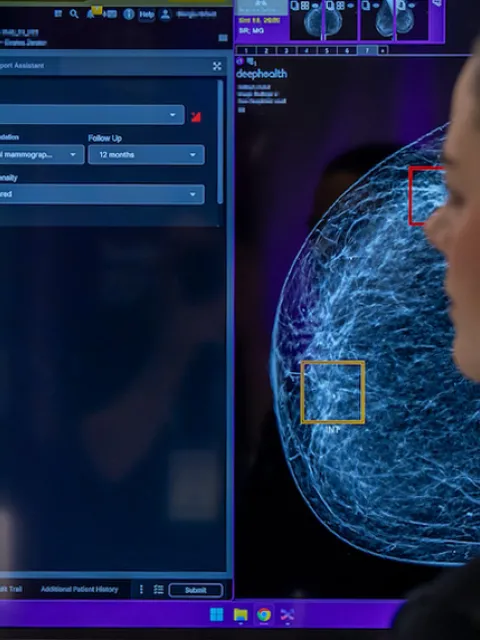
While statistics show survival outcomes are improving overall, staying up to date with breast cancer screening can catch cancer earlier, reducing the need for more aggressive treatment. Breast screening is known as a mammogram, which involves taking low-dose X-rays of the breasts. These X-rays can highlight abnormal areas in breast tissue and help reveal the possibility of breast cancer before symptoms – such as a lump in the breast – begin to show.
Corewell Health is working to help increase women's access to mammograms through its mobile mammography unit. "We can pick up and diagnose localised cancer with an early mammogram done in a timely manner," says Arashdeep Litt, physician and medical director at Corewell Health. It can be lifesaving, so getting that mammogram done can lead to an early diagnosis." According to Litt, women in the US should start breast screening at 40, and continue annually until 75, with risk-based adjustments on either end.
The mobile mammography unit is equipped with tomosynthesis digital technology, a form of mammography that produces three-dimensional images using a low-dose X-ray system. With the capacity to scan around 5,000 patients a year and roughly 10% of those women needing a follow-up appointment, 7% of which lead to a diagnosis of cancer, it functions as an earlier diagnostic resource for the community.
"Every year, once I've had my mammogram and gotten my results, I feel at ease," says Elizabeth, a Corewell Health patient. The initiative can offer people like Elizabeth a lifeline, not only for breast cancer, but other cancers too. Corewell Health has used the bus as a springboard for wider cancer screening, providing education about cervical cancer treatments, and on one occasion scheduling women who attended the More Life, Más Vida event, for cervical cancer scans later in the year.
The bus covers as much ground as possible. It travels an estimated 12,750 miles (20,520km) every year and visits 41 locations across southwest and west Michigan as well as the Upper Peninsula, the latter through an ongoing collaboration with the Inter-Tribal Council of Michigan. It also serves a Hispanic community through More Life, Más Vida, Corewell Health's programme to try to reduce healthcare disparities in minority communities.
The partnership has taken shape over many years, but for the past three years its impact has significantly grown. The bus has scheduled visits to this community on three Saturdays during the summer months, which has proven more convenient for some women, as distance and inconvenient appointment times had previously limited their access to breast screening services.
"If I had to go to the clinic or the doctor, I had to miss a day of work," says Elizabeth, who works as a cleaner. "I'm a single mother and missing a day of work makes a huge difference to my finances."
The day of the mammogram can be slightly daunting for some women, but for Elizabeth, whose family has a history of cancer, it has become something she actively encourages other women to seek out.
"One of my friends who went to one of the bus’s appointments was a little younger than me," she says. "She was scared because of all the information she had seen online [about breast cancer] so she didn't want to go and get tested as she was afraid it would come back positive. But I told her it was better to go."
The bus, often referred to as "mamacita" by the women, says Kenia Cruz Sanches, a community health worker at Corewell Health, is a more accessible form of breast screening for the community, from its location to how the patients pay for the service.
"The mobile mammography bus is funded through philanthropy," says Litt. "We have wonderful support through our west Michigan philanthropists who have made generous donations to the bus."
Each time it visits, it is stationed in a central part of the area, meaning patients don't have too far to travel to their appointments. It also has an interpreter on board, so those who speak other languages can still receive the care they require.
"The majority of the patients [at the More Life, Más Vida breast screening event] are immigrants, struggling with many things," says Cruz Sanches, whose day-to-day role at Corewell Health involves chronic disease prevention, including heart disease, diabetes and cancer prevention. "But this mobile mammogram screening is like a gift that comes every year, and it means a lot to them."
Cruz Sanches grew up in a small village in Central America, where early detection and cancer care were more limited. She has a history of thyroid cancer and is currently at high risk for breast cancer following genetic testing, experience that shapes how she shows up for patients with extra care, compassion and support. "I'm part of that crew as well, not just as a community health worker, but as another patient trying to prevent breast cancer," she says.
Cruz Sanches is an integral part of the event, from scheduling appointments and assisting the patients during screening sessions to engaging the community by stressing the importance of attending mammograms. On any given day, the bus has 22 appointments available and for those who may not have been able to secure a slot, Corewell Health works to organise breast screening at patients closest imaging centres. Walk-in appointments are often accommodated too, to ensure as many patients as possible are seen.
Navigating patients' appointments is just one part in creating a safer, trusting and comfortable environment. Cruz Sanches, who has become a familiar face on the More Life, Más Vida breast screening days, often finds that approaching the women as a regular friend helps ease their worries. "I'm not just a community health worker, I'm more than that," she says. "I also like to make sure that the patient has someone with them when they receive their results… that they will have a care plan and someone to support them."
The entire process is explained clearly to the patients, from the steps they need to take prior to their appointment, to what will happen once they receive their results, ensuring that they feel supported. "The people [on the mobile mammography bus] are really kind and explain things to us," says Elizabeth.
As the partnership grows and outreach events continue, Cruz Sanches anticipates this year will be busier than the last, a sign of how much trust has been built with the community over time. That trust is the result of consistent, dedicated work, as the bus returns to the same Hispanic community each summer while continuing its weekly runs across southwest and west Michigan.
For patients like Elizabeth, who may not previously have had immediate access to early diagnostic services, that dedication makes all the difference. "Each year after the mammogram I feel peace, knowing that there isn’t anything wrong," says Elizabeth. It also connects patients with community health workers like Cruz Sanches, forming a more supportive, trusting network of women, and contributing to the future of more accessible, collaborative healthcare services.
"Cancer doesn't have a bias," says Litt. "It is very important that all women above 40 in the US get an annual mammogram done."
Article funded by Corewell Health and produced by BBC StoryWorks as part of their partnership agreement.
Last update
Monday 29 June 2026Share this page