From scars to action: When women speak, cancer care must listen


Earlier this year, Canadian Olympic ice dancer Piper Gilles shared a photograph of her scar from ovarian cancer as part of #ReachForTheScars: “These scars are my stars. They remind me every day that I survived, that I am still here, and that every medal I win, I win for every woman who carries the same story.”
For an elite athlete, the relationship with your body is everything. You learn to know it, trust it and push it. Cancer changed that relationship for Piper. When she returned to Olympic ice at Milano Cortina in 2026, she did so as a different athlete and a different person. Cancer was not something she had simply left behind. It had become part of her story.
When Piper made one part of that story visible, hundreds of people answered with their own. More than 300 women, caregivers and supporters shared scars and experiences through #ReachForTheScars, including Shabnam. Some scars were physical. Others could not be photographed: fear, grief, uncertainty, changes in relationships and sexuality, or the feeling that life after cancer was not quite the life they had known before.
Not every story was about resilience. Nor should it be. Some women come to see their scars as symbols of strength; others do not. No one should have to turn cancer into a triumph story for her experience to matter.
As both a physician and an ovarian cancer survivor, I’ve written and spoken about the parts of survivorship that traditional measures of success do not always capture, and about the difference between being heard and having influence.
That same message came through #ReachForTheScars: Women talked about knowing something was wrong, asking questions, trying to be heard, and facing consequences of cancer and its treatment that were not always recognised by those around them.
Speaking up is only half the equation
We rightly encourage women to know the symptoms of ovarian cancer, trust their bodies, and advocate for themselves. But the answer to women not being heard cannot simply be to ask them to speak louder. Health systems must listen better too. And that listening cannot stop at diagnosis.
Cancer happens in the middle of a life. It affects fertility, sexuality, relationships, mental health, work, finances, and a woman’s sense of herself. Clinical outcomes matter enormously, but they cannot tell us everything about whether cancer care has been good care. A statistic can tell us that diagnosis was delayed; a woman can tell us what it was like to spend months knowing something was wrong and not being heard. Data can tell us whether treatment worked; a woman can tell us what that treatment changed in the rest of her life.
We need both.
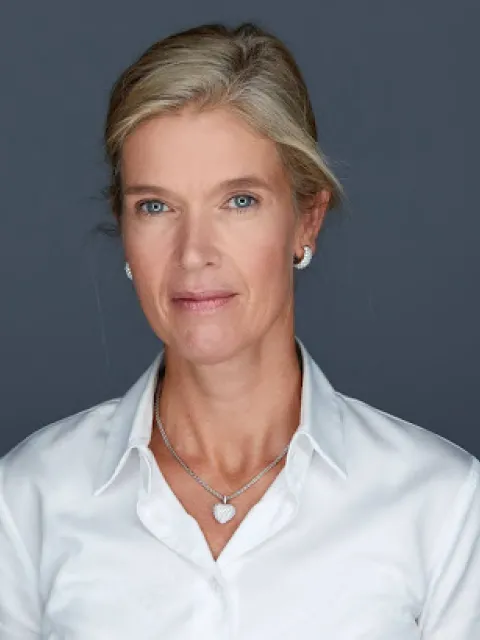
This is where our perspectives meet. I, Shabnam, know ovarian cancer from both sides of the consultation room: as the doctor listening to the patient, and as the woman hoping to be heard. As clinicians, we are trained to look for what can be measured: tumour markers, imaging results, surgical margins, survival curves. Yet some of the consequences that matter most to women cannot be captured in a scan or a statistic.
And I, Christel, hear from women and patient organisations across countries and health systems. From both perspectives, the message is the same: Lived experience is not an addition to the evidence. It is part of the evidence.
From listening to action
#ReachForTheScars began with Piper choosing to make something usually hidden visible. What she unleashed was more than a collection of powerful stories. Women made visible what cancer had changed in their lives, where they felt heard, where they did not, and what they wished had been different.
Now we need to listen on a much larger scale.
In 2027, the World Ovarian Cancer Coalition will launch the next edition of the global Every Woman Study™, the largest global initiative exploring the lived experiences of women with ovarian cancer. Thousands of women around the world will have the opportunity to tell us what diagnosis, treatment and life with and beyond ovarian cancer are really like: what worked, what did not, and what needs to change.
We want as many women with ovarian cancer to take part. We want patient organisations, healthcare professionals, and cancer organisations to help women find and participate in the study. And we want researchers, policymakers, and health systems to pay attention to what they tell us.
Because gathering these experiences is only the beginning. The harder part is acting on them.
If women tell us they struggled to be heard before diagnosis, we need to ask what needs to change. If they tell us that treatment left consequences they were unprepared for, we must rethink what we mean by good cancer care. And if women in different parts of the world tell us that where they live still determines the care and support they can access, we must use that evidence to challenge those inequalities.
Listening should not happen only after decisions have already been made. It is a fundamental element of good cancer care, and it needs to happen early. Lived experience should not be invited in only once services, research priorities, or policies are already designed or implemented.
Women affected by ovarian cancer must have a place at the table while priorities are being set and solutions shaped. Their insights are not an add‑on; they are essential to building systems that respond to real needs.
Piper made one scar visible, and hundreds of women responded with their stories. The Every Woman Study™ gives us the opportunity to hear thousands more and to turn lived experience into evidence for change.
Our call to the cancer community is simple: Help women share their experiences, listen to what they tell us, and use what we learn to change ovarian cancer care. Because being heard matters. But what changes because women were heard matters even more.
Last update
Monday 14 September 2026