
Efforts by FEMAMA lead to Brazil expanding public access to genetic testing, improving early detection
FEMAMA President Dr Luiz Ayrton Santos Junior explains how a UICC-funded advocacy effort helped secure BRCA1/2 testing in Brazil’s public health system, opening the door to earlier, more personalised breast and ovarian cancer care.
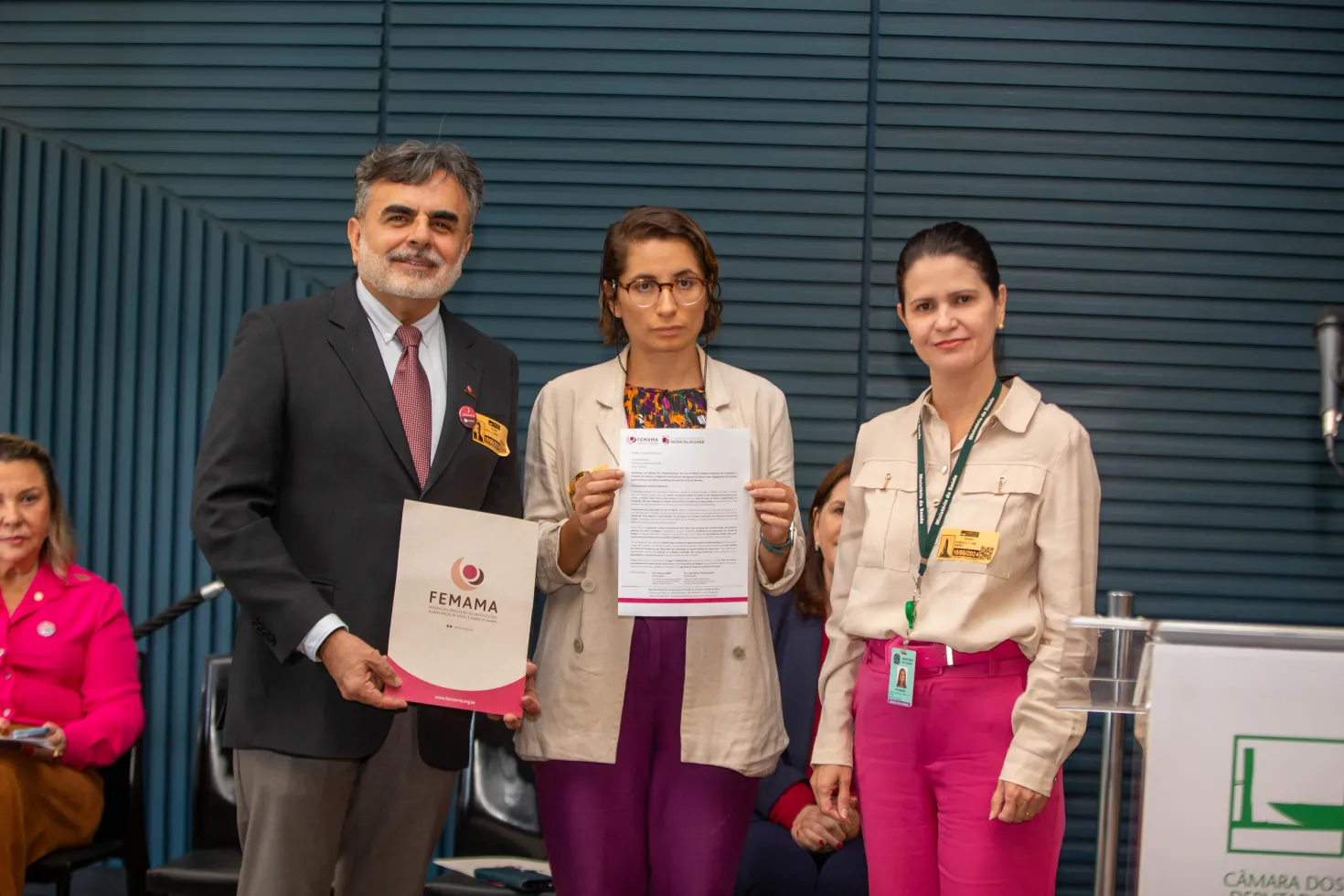
Dr Luiz Ayrton Santos Junior, President of FEMAMA, explains how years of advocacy by the organisation led to the approval by the Brazilian government for women in the public health system to have access to genetic testing for breast and ovarian cancers.
HIGHLIGHTS
- FEMAMA, a UICC member, played a central role in securing approval of BRCA1/2 testing within Brazil’s public health system (SUS).
- A UICC grant supported the shift from advocacy to policy change, enabling evidence generation and engagement with decision-makers.
- Public access to testing will allow earlier identification of hereditary risk, shaping prevention, screening, and treatment for breast and ovarian cancer.
- Implementation – including counselling, care pathways, and family-based follow-up – will be key to translating policy into impact.
FEMAMA (the Brazilian Federation of Philanthropic Institutions for Breast Health), a UICC member, has consistently advocated for actions to improve the timely diagnosis and treatment for breast cancer. It has notably worked to address gaps in access to risk assessment, screening, and more personalised approaches to care within the public health system.
Its latest success was achieved earlier this year when the Brazilian government agreed in May 2026 to expand access to genetic testing for breast and ovarian cancers, a key tool for identifying hereditary cancer risk and improving the ability to detect cancers earlier.
In this interview, FEMAMA President Dr Luiz Ayrton Santos Junior explains how years of advocacy by the organisation led to this inclusion of BRCA testing in the public health system. He also highlights the role of a UICC grant, which supported FEMAMA’s advocacy efforts across municipal, state and national levels, alongside the practical steps now needed to make this access a reality across the country.
“For over ten years, I have advocated for national access to genetic testing because I believe that the right treatment starts with the right information. When we deny genetic testing to those at high risk, we miss the opportunity not only to optimize care for one patient, but also to protect entire families from cancer. Precision medicine is not just about treating disease—it is about preventing it whenever possible.”
– Dr Maira Caleffi, Founder and former President of FEMAMA, Head Of Department of the Breast Center at Hospital Moinhos de Vento
Could you describe your role at FEMAMA and your involvement in the project to expand access to genetic and genomic testing for breast and ovarian cancer in Brazil?
I am the current President of FEMAMA and have been involved in the organisation’s efforts to expand access to genetic testing for breast and ovarian cancer in Brazil since the very beginning. FEMAMA was a pioneer in bringing this issue into the advocacy agenda in the country, promoting discussions on the topic as early as 2013, under the former President and Founder, Dr Maira Caleffi. In 2018, FEMAMA officially adopted this as one of its advocacy priorities, advocating for the inclusion of genetic testing as a right for all patients.
What gap in breast and ovarian cancer prevention was FEMAMA trying to address by expanding access to genetic and genomic testing through Brazil’s Unified Health System [Ed. note: Sistema Único de Saúde, or SUS)?
The identification of hereditary mutations in the BRCA1 and BRCA2 genes, which are associated with breast and ovarian cancer, enables prevention, early diagnosis, and personalised treatment. While patients covered by private health insurance have had access to these tests for years, women relying on the public healthcare system did not have the same opportunity. The main gap identified by FEMAMA was the inequality in access to precision medicine between SUS patients and those receiving care in the private sector.
How do these tests change the prevention and early detection pathway for women at higher risk?
Knowledge of an increased hereditary risk for breast and ovarian cancer allows physicians and patients to begin monitoring at an earlier age, perform screening tests more frequently, adopt preventive strategies to reduce the likelihood of developing the disease, and alert family members who may have inherited the same genetic predisposition. Rather than waiting for cancer to develop before diagnosing it, healthcare providers can anticipate risk and take preventive action. When cancer has already been diagnosed, these tests also help estimate disease behaviour, assess recurrence risk, and guide more precise treatment decisions.
From a policy and advocacy perspective, what were the key factors that helped turn scientific evidence into a national decision?
We can confidently say that FEMAMA worked closely with the Brazilian Society of Mastology (SBM), which officially submitted the request for incorporation of the technology into SUS, helping to overcome barriers to access. FEMAMA also played an active role in the development and support of Bill No. 265/2020, which provides for the coverage of genetic testing within SUS. As a result of advocacy efforts by the FEMAMA Network, the bill was approved by the Chamber of Deputies in October 2025 and is currently under review in the Federal Senate.
In 2021, FEMAMA also launched the free online course “The Importance of Genetic Testing in the Diagnosis of Hereditary Cancer” on its website. In 2024, the policy paper “Implementation of Public Policy for Access to Genetic Testing for the Detection of BRCA Mutations in SUS” was launched during an event organized by SBM in partnership with FEMAMA as part of the Brazilian Breast Cancer Symposium (BBCS). All these initiatives contributed significantly to advancing the cause.
What does the acceptance by CONITEC (the National Committee for Technology Incorporation) of this technology mean in practical terms for women who depend on the public health system?
For women receiving care through SUS, this decision paves the way for more equitable access to tools capable of identifying hereditary cancer risk earlier, expanding opportunities for prevention, and supporting diagnosis at earlier stages of the disease.
UICC provided a grant for FEMAMA’s project. What role did this support play in helping FEMAMA advancing from advocacy to policy impact?
The UICC grant supported FEMAMA’s advocacy efforts for the incorporation of genetic testing into Brazil’s public healthcare system through multiple channels at the municipal, state, and national levels. It enabled the generation of technical evidence, stakeholder engagement (including physicians, government representatives, civil society organisations, and healthcare leaders), and direct participation in the regulatory process. FEMAMA took part in the CONITEC meetings that ultimately led to the incorporation of this technology into SUS. Today, the inclusion of BRCA testing in SUS is the result of more than a decade of continuous advocacy with concrete achievements along the way.
Why is it significant that breast surgeons and oncologists, not only geneticists, can now request these tests?
Allowing BRCA1 and BRCA2 testing to be requested by physicians other than geneticists within SUS is essential to accelerating the initiation of cancer treatment, facilitating cancer prevention among family members, and improving the patient journey. When access is restricted to geneticists, patients must undergo screening consultations with multiple specialists before receiving a testing referral. If the mastologist or oncologist who is already closely following the patient can request the test directly, the process becomes much faster and more efficient.
Implementation is often the hardest step: what needs to happen next to ensure this access is equitable across Brazil?
FEMAMA is closely following and supporting the efforts of the Brazilian Society of Mastology to create and implement a comprehensive care pathway for BRCA1 and BRCA2 assessment for both breast and ovarian cancer within SUS. This is a complex undertaking, but it is essential to enable family testing and the adoption of risk reduction strategies aimed at preventing cancer.
How can SUS ensure women receive not just the test, but appropriate counselling, follow‑up, and family‑based prevention when needed?
The incorporation of BRCA1 and BRCA2 genetic testing into SUS was officially approved on May 13, 2026. From that date, SUS has up to 180 days – extendable by an additional 90 days – to make the technology available to the population.
Implementation is expected to occur in phases: first, the development of the care pathway; second, the establishment of genetic counselling protocols and family testing procedures. At the same time, Bill No. 265/2020 remains under consideration in the Federal Senate, further reinforcing the need for advocacy efforts aimed at ensuring patients’ effective access to this technology. FEMAMA continues to monitor these developments closely.
Looking ahead, how could this decision change breast and ovarian cancer outcomes for women in Brazil over the next decade?
The incorporation of BRCA1 and BRCA2 genetic testing into SUS represents a historic milestone in Brazilian public oncology. In the coming years, it will facilitate the transition from reactive medicine to precision medicine, helping reduce mortality from breast and ovarian cancer through personalised treatment and family-based prevention strategies.
The measure is expected to expand access to targeted therapies, such as PARP inhibitors, significantly increasing treatment effectiveness for women who have already been diagnosed with cancer. Testing will also strengthen surveillance programs, support risk-reducing surgeries, and enable family screening, making it possible to detect disease at earlier stages – or even intervene before cancer develops.
Last update
Monday 22 June 2026