
UICC member Istishari Arab Hospital sustains cancer care in the West Bank despite severe constraints
Atef Rimawi of UICC member Istishari Arab Hospital reports worsening access to cancer services in the West Bank due to movement and funding barriers, with Gaza patients unable to reach treatment. Radiotherapy exists in Ramallah, but delays, shortages, and late-stage diagnoses worsen outcomes.
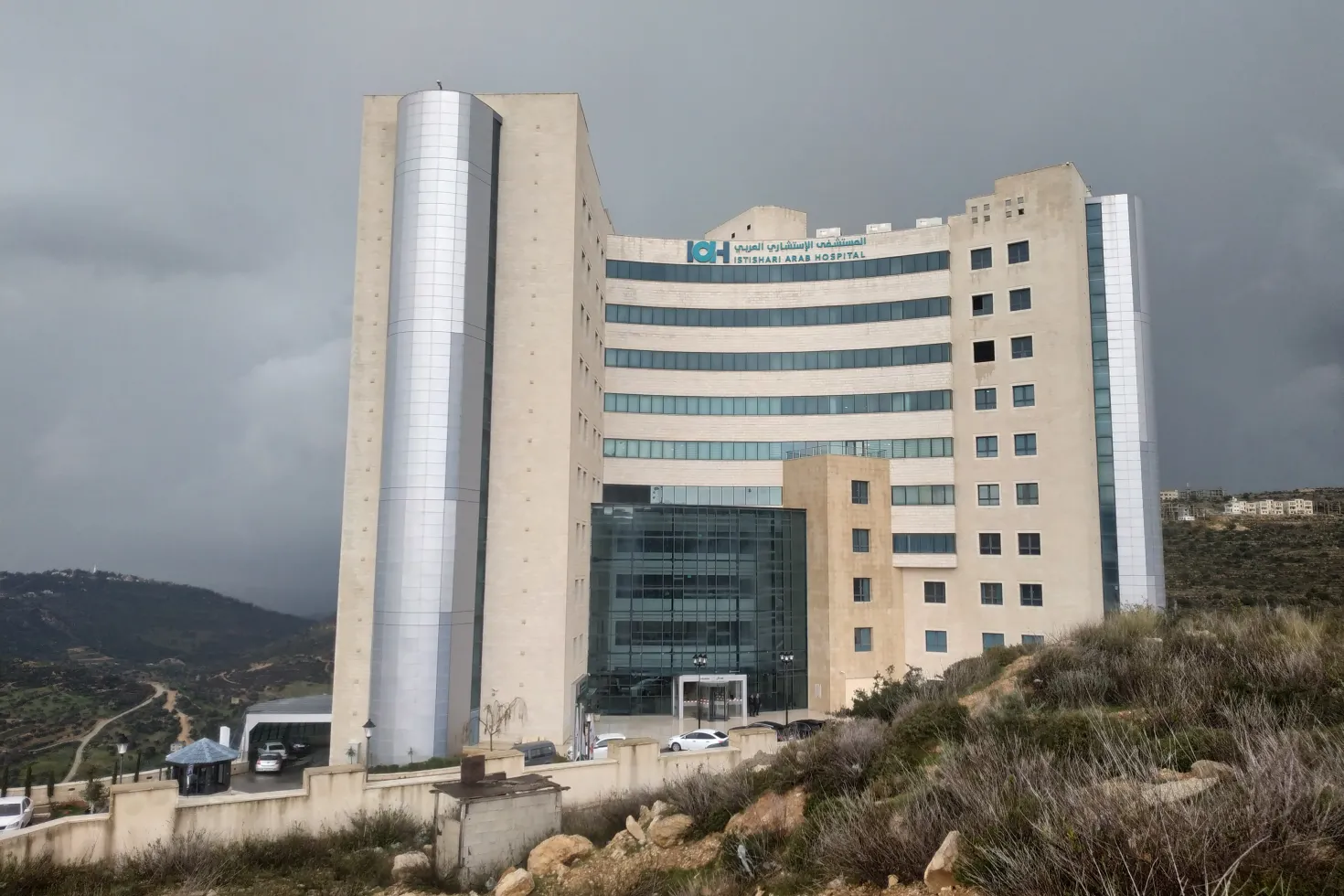
“Wherever you are, whoever you are, cancer is cancer… The disease does not recognise nationality or background. Health does not build walls – it builds bridges.” – Atef Rimawi, CEO of Istishari Arab Hospital, a UICC member based in Ramallah, West Bank, Palestine.
HIGHLIGHTS
-
In a conversation with UICC, Atef Rimawi, CEO of Istishari Arab Hospital highlighted the expansion of cancer services in Ramallah, including new radiotherapy and nuclear medicine capabilities introduced in 2025.
-
Movement restrictions, however, especially since October 2023, severely disrupt access to cancer services, while Gaza patients face near-total barriers to care.
-
Hospitals operate under acute financial strain, with delayed government reimbursements forcing reliance on loans and leaving staff unpaid for months.
-
Late-stage diagnoses and limited supportive care reflect worsening economic hardship, with many people affected by cancer unable to prioritise screening or access psychosocial support.
Hospital leaders, clinicians, and other health workers in the West Bank who provide cancer services – from prevention and screening to treatment and supportive care – operate under conditions that complicate nearly every step of treatment. Daily they are required to balance medical needs with logistical, financial, and humanitarian challenges.
Atef Rimawi, CEO of Istishari Arab Hospital, a UICC member based in Ramallah, oversees one of the institutions responsible for delivering specialised cancer services in the Palestinian territories. The hospital is part of a group that includes facilities in Nablus, Jenin, and Ramallah, as well as a dedicated cancer centre. The facility provides secondary and tertiary care across a range of specialties, including oncology.
“Cancer care in the Palestinian territories has long faced structural limitations, including gaps in specialised services and financial pressures on the health system,” Rimawi said in an interview with UICC. “For Palestinians in general, cancer is a true challenge from a financial point of view and from the availability of care – the comprehensiveness of the care.”
For many years, cancer treatment in the Palestinian territories relied largely on surgery and drug-based therapies such as chemotherapy, immunotherapy, targeted therapies, and hormone therapy. “Radiotherapy – an essential component of treatment for many cancers – only became available locally in 2005 at Augusta Victoria Hospital in East Jerusalem. Patients from both the West Bank and Gaza were referred there for treatment.”
More recently, new services have been established in the West Bank. The cancer centre in Ramallah completed its radiotherapy and nuclear medicine capabilities in 2025, adding to medical and surgical oncology services introduced earlier. Patients now have the option of receiving radiotherapy either in East Jerusalem or in Ramallah.
Reaching those services remains a challenge for many people, however. “Movement between cities in the West Bank has been further restricted since October 2023. Checkpoints and road closures mean that travel between cities can take hours longer than before, complicating treatment schedules that often require repeated hospital visits,” Rimawi said.
For people living with cancer in the Gaza Strip, access to care in the West Bank has effectively stopped. According to Rimawi, a limited number of people with cancer have been transferred to hospitals in neighbouring countries such as Egypt and Jordan, but he said these transfers cover only a small fraction of the need.
Around 11,000 people are currently living with cancer in Gaza, while diagnostic and treatment capacity remains extremely constrained. Gaza lacks radiotherapy and nuclear medicine services and has only a small number of diagnostic imaging devices available.
Financial strain and system pressure
Beyond access issues for people living with cancer in the West Bank, hospitals themselves are facing growing financial pressure.
In the Palestinian health system, oncology treatment is covered by national insurance and reimbursed by the Ministry of Health. “In practice, hospitals often continue delivering treatment while waiting for payments that are delayed or only partially made. We absorb the costs of medicines, equipment, and staff,” said Rimawi, adding that at Istishari Arab Hospital, the financial pressure has become severe enough that staff has now gone three months without salaries.
To continue providing treatment, hospitals rely increasingly on bank loans to purchase medicines and equipment, leading to rising monthly payments in bank interest, according to Rimawi.
Private and NGO hospitals also play a central role in oncology care in the Palestinian territories. Rimawi estimates that together they manage more than 75% of cancer cases, partly because the public sector lacks radiotherapy and nuclear medicine services.
At the same time, hospitals are coping with shortages of medicines and medical supplies, as well as rising prices for equipment and other essential materials. Rimawi describes the challenge of balancing financial realities with the needs of people receiving care. “I meet with my staff. I tell them, ‘I have one million dollars – you tell me, do I buy medication for patients or pay your salaries?’” he said. “They tell me to buy the medication.”
Delayed diagnosis and gaps in supportive care
Movement restrictions and economic hardship are also affecting early detection efforts. Awareness campaigns and screening programmes for cancers such as breast and colorectal cancer have become much more difficult to maintain.
Rimawi said financial hardship and travel restrictions mean many families are no longer able to prioritise screening or preventive care. “People here in a very difficult financial situation,” he said. “They are not thinking about doing a mammogram. They are thinking about how to bring food home.”
The consequences are increasingly visible in hospital clinics. “Two-thirds of the cases we see are in the third and fourth stages,” Rimawi said. This further adds to operational costs, as late-stage diagnoses require more complex and costly treatment and care.
Supportive care is another area where needs often exceed available resources. While national insurance covers medical treatment, it does not fund many aspects of supportive care, such as wigs for people experiencing hair loss during chemotherapy or topical treatments for radiotherapy-related skin reactions.
Hospitals also struggle to provide sufficient psychosocial support. At Istishari Arab Hospital, two psychosocial workers support people with cancer and their families.
“The size of the tragedy is not only the disease,” Rimawi said. “It is all the context in which the person with cancer is living. The pressures facing many families extend far beyond the illness itself.”
Rimawi described one case of a woman receiving chemotherapy whose rapid heartbeat initially appeared to be a cardiac problem. Doctors brought in a cardiac team to investigate, but tests showed no underlying heart condition.
After speaking privately with a psychosocial worker, the woman explained that she was worried about the five children she had left at home while travelling for treatment. With no one to support them, her eldest daughter – just 13 years old – had been left to care for the younger siblings.
Cases like this are not unusual, Rimawi said. Many people receiving cancer treatment must also cope with family responsibilities, financial hardship, and the difficulty of travelling long distances for care. “We know that supportive care, psychosocial services are needed, but they require resources – and right now we must focus on treatment.”
Despite these challenges, Rimawi emphasised that medical professionals maintain hope and try to keep their work focused on care rather than politics.
“Wherever you are, whoever you are, cancer is cancer,” he said. “Palestinian clinicians have historically maintained professional cooperation across communities. They have trained and participated in academic exchanges with physicians in many countries in the region, including Israel. The disease does not recognise nationality or background. Health does not build walls – it builds bridges.”
Last update
Thursday 30 July 2026