
UICC's Cancer Planners Forum 2026 highlights pathways from planning to implementation
Cancer planners from around the world met in Geneva to share lessons on turning national cancer control plans from policy documents into funded, implemented action.
HIGHLIGHTS
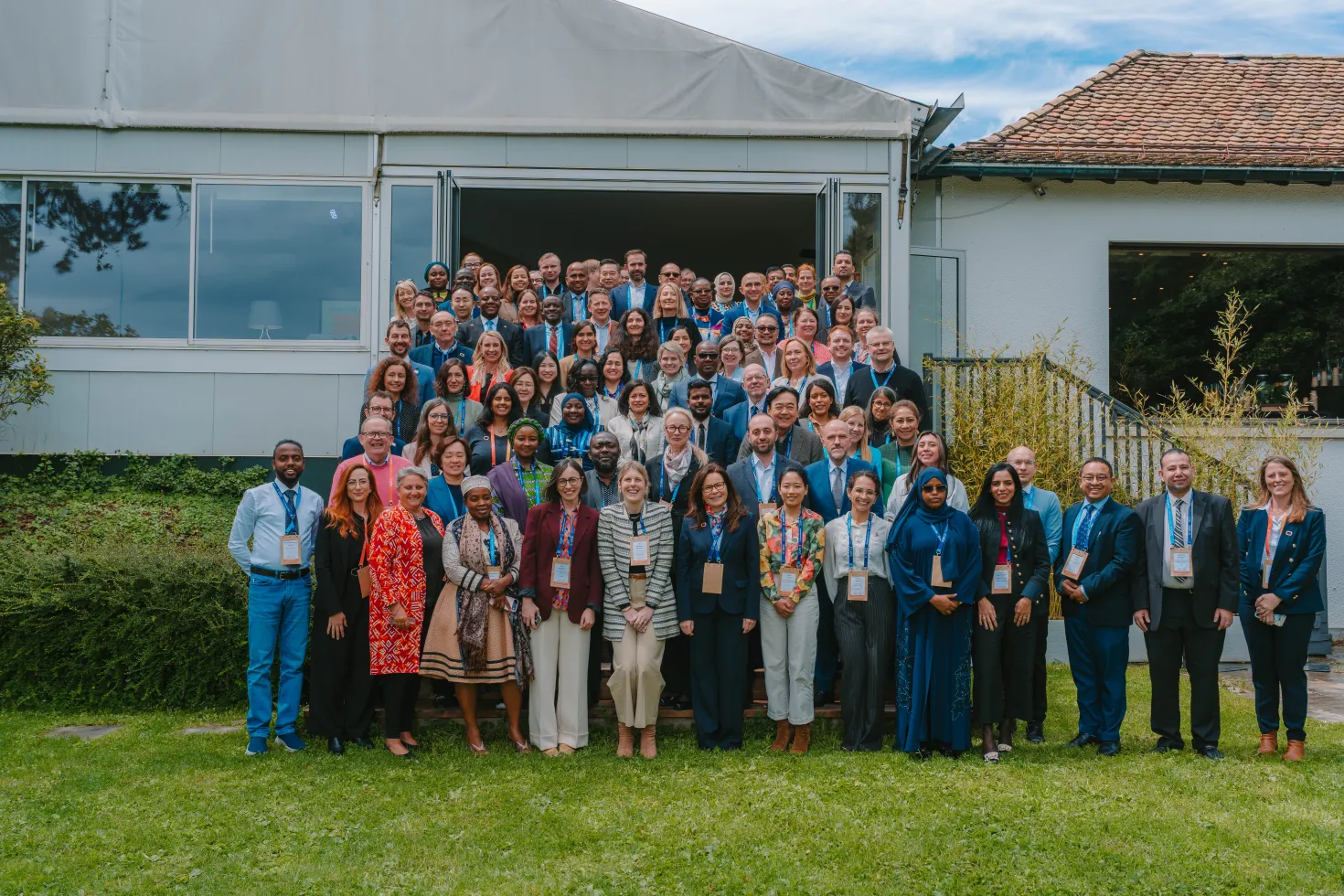
- UICC’s Cancer Planners Forum took place 13-15 May in Geneva, bringing together 120 participants from 54 countries. It focused squarely on implementation, stressing that costed, legally embedded cancer plans are essential to move from ambition to delivery.
- Countries shared practical examples of how governance, law, and political commitment can enable or block effective cancer control.
- Participants reframed cancer control as a long‑term investment in health systems and human capital, not a cost.
- Strong data systems and meaningful engagement of people affected by cancer were highlighted as critical to accountability, equity and impact.
The second edition of UICC’s Cancer Planners Forum concluded in Geneva last week, bringing together 120 participants from 54 countries, including 45 cancer planners from 42 countries. Over three days, they examined how better to develop and implement costed and effective national cancer control plans (NCCPs) as long‑term investments in health systems and national development.
Held from 13–15 May 2026 at the Pavillon Gallatin, the invitation‑only event built on the momentum of its inaugural edition in 2025, offering a dedicated global space for those directly responsible for developing, implementing and evaluating NCCPs to share practical experience, confront common challenges and identify solutions grounded in real country experience.
Organised by UICC in close partnership with the World Health Organization (WHO), the International Agency for Research on Cancer (IARC), the International Atomic Energy Agency (IAEA), and the International Cancer Control Partnership (ICCP), the Forum reinforced the critical role of cancer planning in achieving equitable, sustainable progress against cancer worldwide.
Discussions at the Forum consistently returned to the central challenge of implementation. While most countries now have cancer plans, implementation was repeatedly described as complex and non‑linear, requiring adaptive approaches, sustained political commitment, and institutional coordination.
“Laws can determine whether a cancer control plan remains an aspirational document or becomes an operational tool. Without legal integration, even the strongest plans can struggle to move from ambition to implementation.”
— Hayley Jones, Director, McCabe Centre for Law and Cancer
A cancer plan as a strategic investment – tools to guide implementation
Positioning cancer control as a strategic investment was a strong theme throughout the Forum. Sessions highlighted how countries are reframing cancer spending by developing costed implementation plans, using evidence to demonstrate return on investment, and preparing “bankable documents” to support infrastructure development, including radiotherapy.
Sessions notably emphasised the need to make deliberate choices about which cancers, interventions, and populations to focus on within available resources, not only to manage limited resources, but also to achieve measurable impact and save lives.
Participants explored how national priorities can be aligned with global guidance, including WHO Best Buys, the World Cancer Declaration, and the Sustainable Development Goals, while recognising that strong objectives alone do not eliminate complexity. Implementation is rarely a straight path.
New ICCP Portal tool for cervical cancer elimination
Speakers at the Forum highlighted recent updates to the ICCP Portal to strengthen implementation of cancer plans, including a new interactive map providing access to publicly available national cervical cancer elimination strategies.
Representatives of Eswatini, Gambia, Australia, Zimbabwe, Egypt, and Uganda provided country examples that illustrated how legal and policy frameworks can either enable or constrain delivery. These case studies reinforced the importance of embedding cancer control plans within wider governance and accountability structures.
Presentations from OECD and IAEA experts showed how robust data systems and international support mechanisms can help countries mobilise resources and address inequities, while moderated table discussions explored how to build durable political and financial support across diverse national contexts.
“Cancer control is not a cost, it is an investment in a country’s human capital.”
— Essy Maradiegue, paediatric oncologist and former Executive Director of Cancer Prevention and Control, Ministry of Health, Peru
The essential role of people with experience with cancer
Sessions on the second day focused on issues of accountability, lived experience, and learning. Participants underscored the importance of engaging people affected by cancer, not only during the planning phase but also throughout implementation, and of ensuring that participation meaningfully influences decision‑making over time.
“Meaningful engagement is not defined by consultation alone, but by whether participation influences implementation over time.”
— Carolyn Taylor, Founder and Executive Director, Global Focus on Cancer
Examples from England, Guinea, the Maldives, Mexico, Thailand, and the US demonstrated different approaches to stakeholder engagement. These examples highlighted the value of trust, transparenc,y and coordination across government, civil society and clinical communities.
Data and monitoring were also identified as foundations for effective cancer control. Population‑based cancer registries play an essential role in informing planning, tracking progress, and reducing inequalities, while acknowledging the significant gaps that persist globally.
“Reliable and trusted data ultimately contributes to saving lives.”
— Freddie Bray, Head of Cancer Surveillance, IARC
Participants explored practical approaches to strengthening monitoring and evaluation frameworks, with Sri Lanka, Slovenia, and others providing insights into the value of keeping systems simple, focused on a small number of indicators and embedding regular review cycles to support learning and course correction.
Emerging discussions also addressed opportunities and risks associated with the use of artificial intelligence in cancer control.
“What stood out most over these three days was the openness and practicality of the exchange. Cancer planners came not to showcase success, but to learn from one another and share what works, what doesn’t, and what it really takes to turn national cancer plans into action and have an impact.”
– Cary Adams, CEO, UICC
Last update
Wednesday 20 May 2026