Challenges and progress in addressing women’s cancers in Francophone Africa
Over 60 participants from 12 French-speaking African countries as well as regional and financial partners, took part recently in a UICC Regional Dialogue on women’s cancers in Abidjan, Côte d’Ivoire.
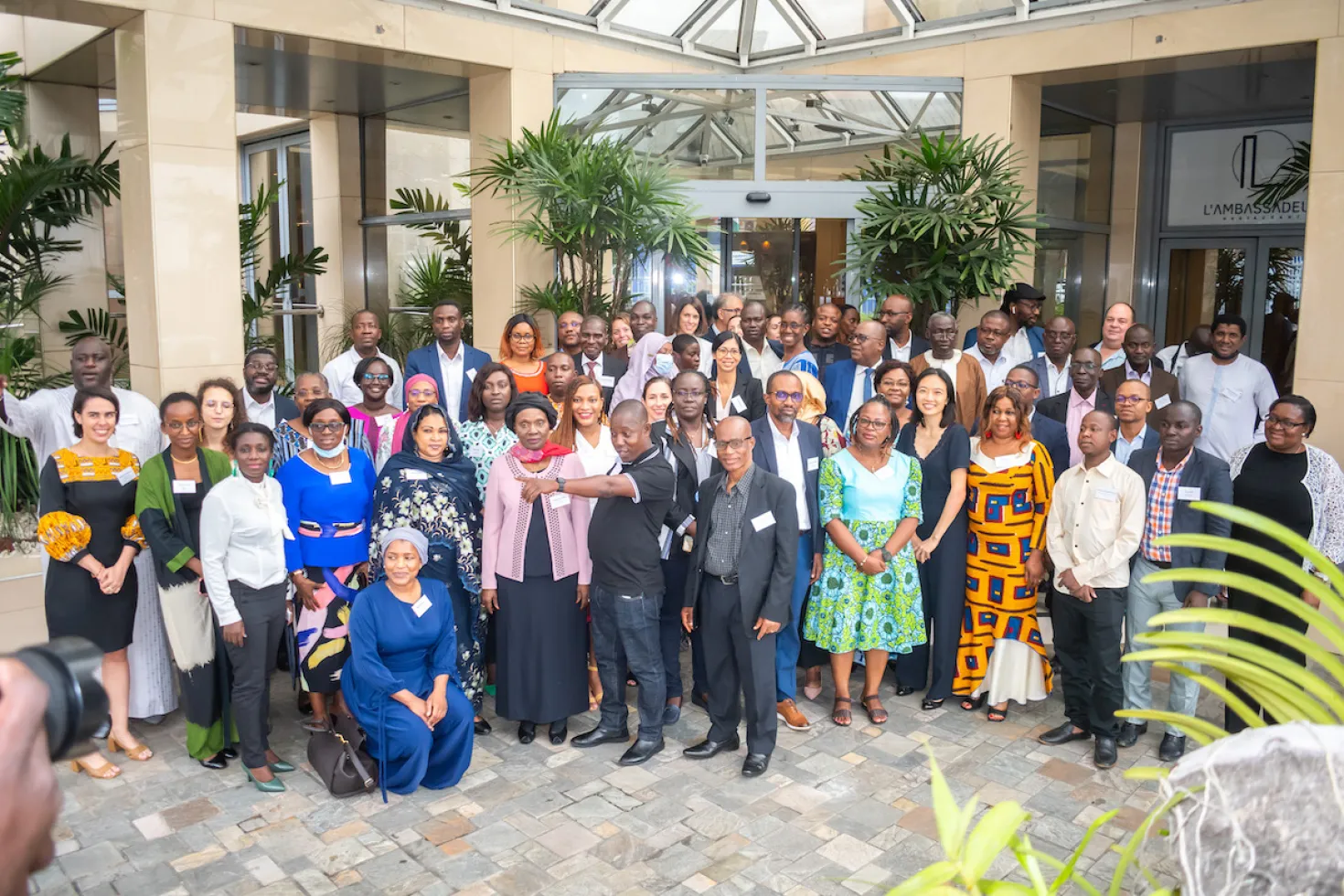
In July, UICC organised a Regional Dialogue to support the work of governments and civil society to improve the prevention and treatment of women’s cancers in Francophone Africa. It was comprised primarily of representatives of the cancer community from 12 French-speaking African countries – Benin, Burkina Faso, Burundi, Chad, Congo-Brazzaville, Côte d’Ivoire, Democratic Republic of Congo, Guinea, Mali, Niger, Senegal and Togo – as well as civil society actors and public authorities from the HIV community recognising the importance of integrated approaches to expand care.
“The challenges are immense and we won’t make it if we act in isolation. It is essential that we work together, coordinate our respective actions and take partnership approaches if we hope to have a real impact on the lives of women and cancer patients.”
– Maître Fatoumata Fadika, President COLCC-CI
Participants outlined several steps that need to be taken, starting with mapping existing initiatives, identifying best practices, listing technical assistance activities and regularly organising events where people can exchange questions and insights.
Most participants in the Regional Dialogue agreed that lack of information on cancer, insufficient public financial resources and the persistent stigma surrounding women’s cancers were amongst the more significant challenges.
There are also geographical and financial barriers to accessing screening, diagnosis and treatment services, which lead to major inequities in healthcare and place additional burdens on vulnerable populations.
Systemic challenges include the fragmentation of services, a lack of support for integrated approaches, and insufficient political will to mobilise endogenous resources and implement cancer plans.
However, participants felt that there are promising signs of a growing commitment to improve care in the region, as demonstrated by the creation of cancer programmes and the adoption of new cancer plans in the majority of countries, including in some cases the provision of free access to treatment.
The Regional Dialogue in Abidjan was held in partnership with the SUCCESS ('Scale-up Cervical Cancer Elimination with Secondary prevention Strategy') project, which is funded by Unitaid, and led by Expertise France in collaboration with Jhpiego and UICC. It was also supported by UICC’s Breast Cancer Programme and hosted by UICC member organisations in Côte d’Ivoire – the National Cancer Control Programme (PNLCa) and the civil society coalition against cancer in Côte d’Ivoire (COLCC-CI).
The event builds on a workshop held in May prior to the World Health Assembly in Geneva, which highlighted in particular how partnerships and integrated approaches can leverage existing infrastructure to expand and finance services for women's cancers in Francophone Africa.
Last update
Friday 24 March 2023