Navigating the evolution of cancer care


In the Erz Mountains on the Czech-German border, 22 World Heritage-listed mine sites rise up from the foothills of Europe as monuments to global cancer control, although they are rarely recognised for this reason.
In the decades leading up to the 1930s, scores of miners died of cancer in the picturesque region, not knowing that it had been caused by the inhalation of radioactive materials.
In an article published in the American Journal of Cancer in 1932, Pirchan et al. describe the case of a young miner identified as ‘Jos. S.’, who was examined by doctors in early 1929 after complaining of heart pain and gastric problems, and died later that year after lung cancer spread to his liver and spine.
The study was one of the first to link exposure to uranium and other harmful substances to cancer.
Not long after, in 1933, an article published in a newspaper in Queensland, Australia, praised medical progress in the field of cancer, printing the story alongside a quarter-page ad for the state’s ‘finest’ tobacco leaf.
When early cancer leaders from around the world voted unanimously at a medical congress in Madrid, Spain, to establish UICC in that same year, they could not have imagined how our knowledge of cancer and its causes would change over the course of 90 years.
In 1989, at the age of 30, I started my first day of work for a non-profit cancer society, based in the city of Brisbane, Australia. I joined just as the organisation was preparing to open the doors of its first wig library, using hair pieces donated by the public.
That same year, an Expert Committee of the World Health Organization called for action on cancer pain relief and palliative care, describing the situation of cancer: “Although more than half of the world’s cancer patients live in developing countries, less than 10% of the resources committed to cancer control are available to them.”
Even in Australia, a land of opportunity, the disparities in cancer care between rich and poor, and from city to country, were ubiquitous – and remain so today.
At a high level, however, one thing has changed, the adoption of Universal Health Coverage (UHC) as a focus of the UICC’s work – a goal that would have seemed impossible in 1933.
The milestones of our clinical progress have also been impressive, from the development of hormonal therapies in the 1940s, combination chemotherapies in the 1950s, and cancer-related chromosomal and viral discoveries in the 1960s.
But what is less obvious, to many, is the tremendous progress we have made in striving to situate the patient – the thinking and feeling person – at the centre of care.
Writing in the Journal of the American Medical Association in 1927, Francis W. Peabody M.D., commented: “When a patient enters a hospital, one of the first things that commonly happens to him is that he loses his personal identity.”
Cancer is, undeniably, like a pathological form of identity-theft and a profound shock to one’s mortality – threatening our lives, our liberty, and certainly our pursuit of happiness. Over recent years evidence has amassed confirming that, for many of us, the emotional, spiritual and psychological angst caused by cancer can be as painful as the clinical symptoms, and are often just as hard to treat.
Reflecting through this prism, our navigation of cancer’s course through history has revealed a new spectrum of light in cancer care, emboldened by our efforts to personalise medicine, not just through the design of highly individualized clinical treatments, but through the provision of a quality of care, and the equality of care, that every patient deserves. That is, treating the psychological pain and distress of cancer as well as the biological condition.
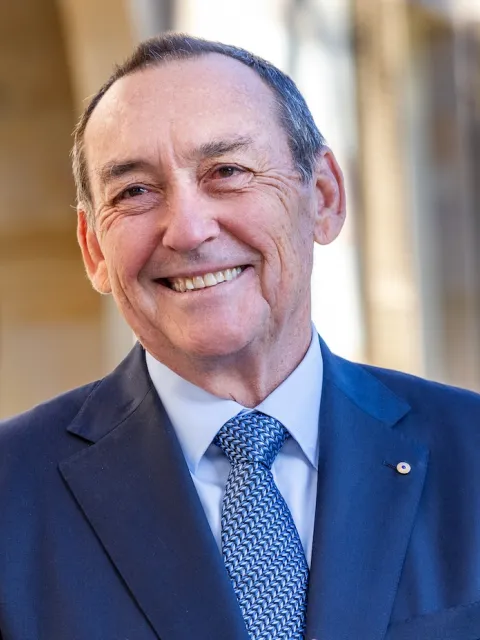
As the current President of the UICC and the recipient of an autologous stem-cell transplant, I can attest that we have progressed remarkably, and must continue our progress on this path, so that no person feels alone in their struggle. Equally, we must redouble our efforts to accelerate the pace of research, leaving no stone unturned in our search for the answers that will help us end the pain of cancer.
Without a doubt, the great hope of my own survivorship resides in the imagination of a world without cancer, and our work as UICC to help make it a reality.
Last update
Wednesday 04 October 2023