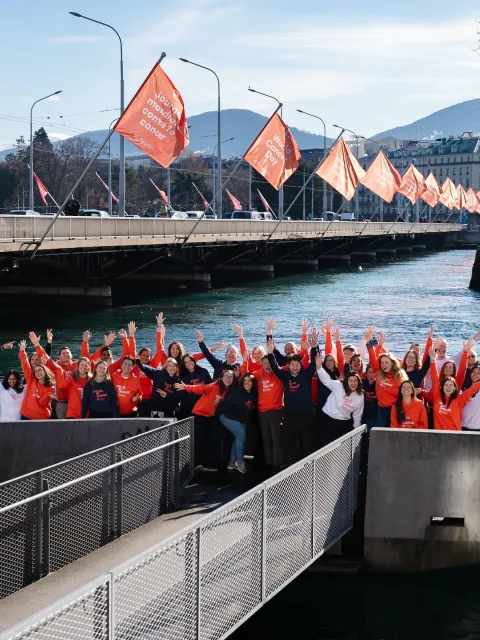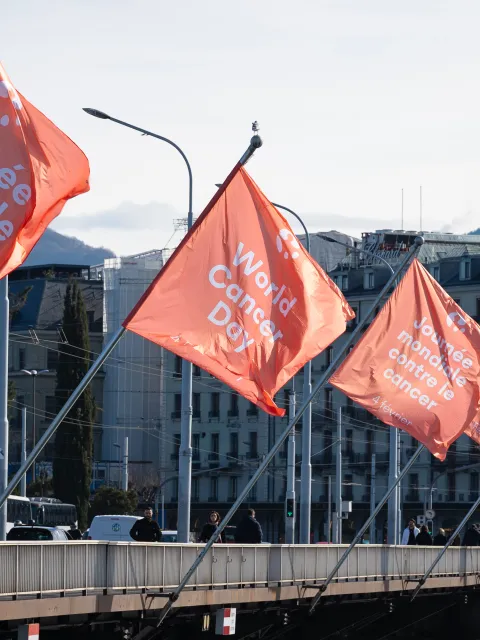
Bridging the cancer care gap together
"Where a person lives, or the things that make up who they are, such as race or gender, far too frequently determine access to cancer care, the quality of care available, and ultimately, outcomes. This has to change."
The need to unite the worldwide community in the fight against cancer has never been greater. The past few decades have seen breakthrough advances in cancer care, however there is still an alarming upward trend in global cancer incidence and mortality, particularly in low- and middle-income countries (LMIC).[1] In 2012, 65% of global cancer-related deaths occurred in LMICs; this is predicted to rise to 75% by 2030.[2] When we consider that the vast majority of urban population growth over the next 30 years is expected in LMICs, we are faced with an even greater challenge.[3]
This is just one example of cancer inequity. Where a person lives, or the things that make up who they are, such as race or gender, far too frequently determine access to cancer care, the quality of care available, and ultimately, outcomes. This has to change.
Since 2022, the UICC’s World Cancer Day initiative has been shining a spotlight on global cancer disparities through its ‘Close the Care Gap’ campaign. Bringing together thousands of individuals and organisations, World Cancer Day has driven much-needed awareness of the care gap, the impact on individuals, communities and societies, and united the worldwide community behind the urgent need for collaborative action to make sustainable and long-term change happen.
While 2024 is the last year of the ‘Close the Care Gap’ campaign, it is vital that the efforts towards closing the care gap do not stop. This is something we are steadfastly committed to at Roche.
As an integrated healthcare company, we have been playing our part in advancing cancer care by continuously innovating in diagnostics, medicines and digital solutions, and partnering with multiple stakeholders to close the care gap and ensure patients can have the best outcomes in their healthcare journey. We stand ready to further enhance this contribution.
Powerful collaborations lead to powerful change
In order to make real, sustainable change for people’s health, societies and economies, we must work together. At Roche, we foster strategic partnerships and collaborations to truly make a difference across a range of stages in the patient journey. Examples of this include:
- In the Philippines, 11 women die from cervical cancer daily.[4] We know that establishing population-based screening, focused on prevention, early diagnosis and standard of care interventions, are crucial for effective cancer care, but awareness and access barriers hinder progress. To tackle this in the Philippines we have collaborated to roll out simplified HPV self-testing, contributing to the screening of thousands of women in just six months.
- Healthcare workforce capability and capacity building are also pivotal to ensure specialised patient-centric cancer care. In Indonesia, a pioneering public-private partnership is transforming oncology nursing training, benefiting patients and growing to over 50 committed organisations.
- Around the need to foster sustainable financing and investment in healthcare, our partnerships showcase the efforts to improve healthcare access and quality through an insurance cost-sharing model in Nigeria, and commencing a universal health programme for oncology in Georgia. These initiatives aim to bridge coverage gaps and ensure that all individuals, regardless of income or insurance status, can access necessary healthcare interventions.
These examples are just a handful of impactful initiatives that are happening across the globe. None of these are possible alone. By fostering strategic partnerships between governments, global organisations, public authorities, healthcare professionals, civil society and industry – to name a few – and by understanding and addressing patients' needs throughout their healthcare journey, we can drive systemic change towards finally closing the cancer care gap.
Real change requires more
The need for action does not stop here. To embed these changes, governments need to develop and implement policies that enable better patient outcomes and move towards achieving universal health coverage. Investment in healthcare is also essential: innovation not only results in better outcomes for patients, but also benefits societies, by giving people the opportunity to return back to work or education, and strengthening the economy while doing so.
Together we must drive this change. We call for collaborative partnerships and we believe in working with absolute dedication to improving patients’ lives. Only then can we make truly long-lasting change for a healthier future for all, no matter who you are or where you live.
__________________________________________________________________
References
- Pramesh CS, et al. Priorities for cancer research in low- and middle-income countries: a global perspective. Nat. Med. 10.1038/s41591-022-01738-x.
- Shah SC, et al. Cancer Control in Low- and Middle-Income Countries: Is It Time to Consider Screening? J Glob Oncol. 10.1200/JGO.18.00200.
- Lincoln Institute of Land Policy. Patterns of Global Urban Expansion. [Internet; cited January 2024]. Available from: https://www.lincolninst.edu/publications/articles/patterns-global-urban-expansion.
- HPV information Centre. Philippines Human Papillomavirus and Related Cancers, Fact Sheet 2023. [Internet; cited January 2024]. Available from: https://hpvcentre.net/statistics/reports/PHL_FS.pdf?t=1593852267479#:~:text=Current%20estimates%20indicate%20that%20every,and%2044%20years%20of%20age.
Last update
Friday 16 February 2024