Practical guidance for people who’ve received a cancer diagnosis
Jim Tennermann’s draws on his experience with cancer since his first of eight cancer diagnoses in 1995 to share practical strategies for emotional and physical well-being amidst the cancer experience.
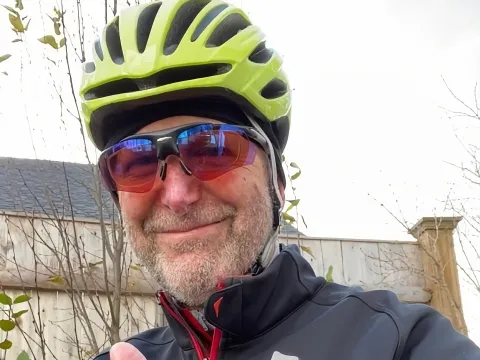
“When you're busy engaging in self-pity, you're not able to draw on other internal strengths,” says Jim Tennermann, who has faced eight cancer diagnoses and currently living with two rare cancers that are considered uncurable.
HIGHLIGHTS
- Jim Tennermann, who has faced eight different cancer diagnoses, shares advice on how to navigate the emotional and physical challenges in a new guide aimed to help others cope with their diagnosis.
- The guide offers practical advice to reinforce the power of a positive mindset and improve quality of life.
- Tips include focusing on reframing thoughts, delegating responsibilities, and maintaining communication with a support network.
Jim Tennermann, from Boston, Massachussets, has been diagnosed and treated for eight different types of cancer since 1995, when he was first diagnosed with a brain tumour. Jim has undergone multiple surgeries and treatments and is currently living with two rare cancers that are considered uncurable.
He has now released a practical guide for people newly diagnosed with cancer and their families: Practical Steps for Dealing With Cancer. This small booklet is available for free at his website and is filled with words of support and advice to help people living with cancer improve their emotional and physical well-being by addressing feelings of disbelief, sadness, anger, self-pity and fear that can accompany a cancer diagnosis.
“The handbook is aimed at empowering patients to become their own advocates, clearly express their needs, and guide them on simple and effective ways to improve their quality of life after a cancer diagnosis. It aims to encourage people to take active roles in their care, seek support, and maintain hope and positivity throughout their cancer journey.”
– Jim Tennermann, diagnosed and treated for eight different cancers, author of Practical Steps for Dealing With Cancer,
When asked what initially prompted Jim to transform his experiences into a practical guide, he explained that it was partly inspired by an encounter he had at a hospital, when he witnessed a man in an elevator break down after revealing his cancer diagnosis.
Despite his own “never-ending experience of bad news,” at the time Jim felt unable to respond, and this incident highlighted for him the need for more personal support and guidance for those facing such a challenge.
The guidebook emphasises the importance of managing emotions, particularly by avoiding self-pity and fostering a positive outlook, as such attitudes significantly impact recovery and well-being.
“When you're busy engaging in self-pity, you're not able to draw on other internal strengths,” says Jim Tennermann.
Listen to the Let's Talk Cancer Podcast
Jim Tennermann also shared his experiences with Cary Adams, CEO of UICC, in an episode of Let’s Talk Cancer.
One of the key techniques Tennermann believes can have a profound impact is the practice of reframing, which is about looking at a situation in a new light to find a more hopeful angle. Telling oneself ‘It could be worse’ is “like opening a window in a stuffy room to let fresh air in,” Jim says. “Even though things are tough, they can always be worse. When you realise this, you will appreciate that you're not at rock bottom. This opens the door to feeling gratitude, a positive emotion that offsets anxiety. In general, shifting one’s perspective and discovering things to be thankful for can help generate a positive state of mind,” says Jim.
Other practical guidance includes reassessing and delegating personal responsibilities to reduce stress and maintaining clear lines of communication with a supportive network. The handbook also addresses how to handle prognoses by focusing on present well-being rather than fixating on the uncertainty of the future.
Additionally, the handbook discusses how the language used to describe cancer can influence perceptions and decisions, advocating for empowering terminology over words that suggest battle or defeat.
VISIT JIM TENNERMANN’S WEBPAGE FOR MORE DETAILS AND TO DOWNLOAD THE BOOK
In sharing his experiences and explaining why he is making the handbook available free of charge, Tennermann hopes to provide a glimmer of hope and practical guidance to those facing similar challenges. “There are literally millions of people like me dealing with cancer. If I can help other people by sharing what I’ve learned, even just a little bit, then it’s a big win for all of us. Not everything is about money.”
Last update
Wednesday 03 April 2024