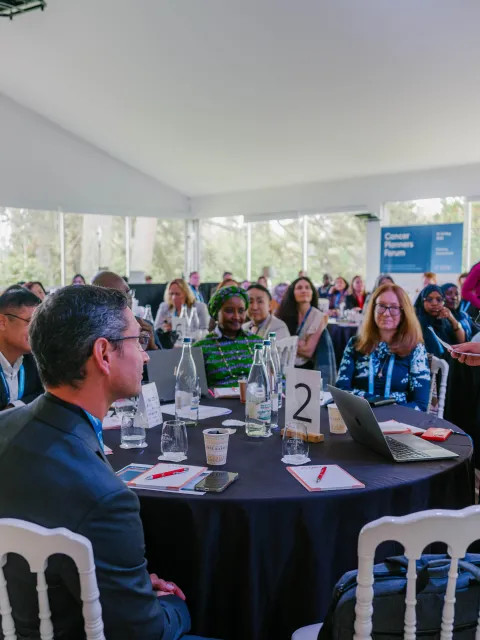
Looking back on WHA72 – Key takeaways for the cancer community
This past World Health Assembly (WHA) saw delegates from all 192 WHO member States, along with civil society and other observers come together to discuss key global health issues.
With a solid spotlight on Universal Health Coverage (UHC), UICC was keen to address the misconceptions that cancer is excessively expensive or too complex for some countries to incorporate inside their UHC packages and the significance of the key measures that must be taken to address the growing cancer burden in order to achieve UHC.
Data is the key to UHC
For the first time, UICC was given the opportunity to host an official side event together with other NGO's titled ‘Leaving no one behind? Tracking ‘Health for All’ from rhetoric to reality’.
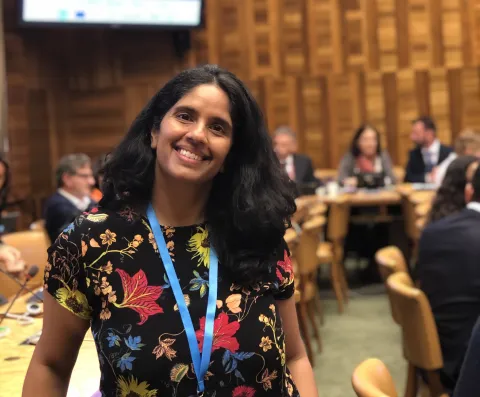
This official side event was chaired by Dr Cary Adams, CEO of UICC and focused on the strong need for increased data in order to improve equitable access to cancer services.
“Unfortunately, less than 10% of low- and middle-income countries have quality data from such cancer registries. Not knowing which types of cancer are the most frequent ones in a country makes it impossible for a government to know which drugs to invest in.”
– Dr Marion Pineros, scientist at the International Agency for Research on Cancer (IARC)
Read more about the official side event here
Increased investment in core services is essential for cancer and NCD’s
As weak health systems continue to undermine progress, UICC called for further investment in prevention, early detection, treatment and palliative care which will help accelerate progress towards the health-related Sustainable Development Goals.
“The upcoming meeting on UHC is a critical opportunity to set out an ambitious and comprehensive framework to coordinate action to ensure that ‘nobody is left behind’. Cancer is the second leading cause of mortality globally, claiming 9.6 million lives a year but it is also a disease of inequity and so we urge member states to accelerate action on cancer to fulfil the promise of UHC”.
– Rosie Tasker, Global Advocacy Manager, Union for International Cancer Control
Medicines, vaccines and health-related technologies – the most debated issue at WHA72
The draft resolution on improving the transparency of markets for medicines, vaccines and health-related technologies was the most debated issue during the 72nd WHA with a resolution only being agreed upon on the last day of the assembly.
Key outcomes were:
- Each country can voluntarily disclose research and development costs, especially clinical trial data shared by pharmaceutical companies. This was particularly important as these costs are often used to justify high prices by different actors.
- WHO is to provide assistance to Member States on request, especially in the collection and analysis of information on economic data across the value chain and data for relevant policy development and implementation.
Read more about the Medicines, vaccines and health-related technologies issue here
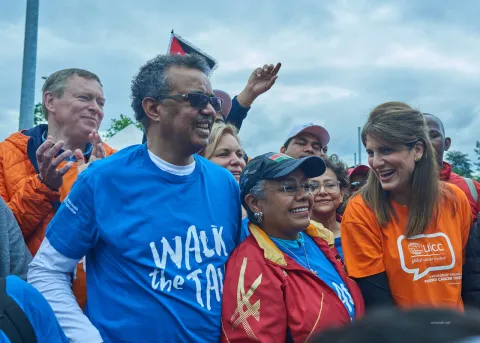
UICC’s President took to the Walk the Talk stage to stress the importance of early detection and making healthy choices to reduce the risks of cancer
HRH Princess Dina Mired, was honoured to once again take part in the second edition of the 'Walk the Talk: Health for All Challenge' event a day before WHA officially started and seized the opportunity to address the crowd with a powerful speech to highlight the importance of early detection, signs and symptoms and healthy lifestyle choices.
‘Cancer prevention and early detection is absolutely essential if we want to avoid millions of unnecessary deaths around the world. Many of those unnecessary deaths, are of women who didn’t recognise or understand early signs of cancer due to lack of information.'
– HRH Princess Dina Mired, UICC President
For further information take a look at the full WHA report from UICC’s Knowledge, Advocacy and Policy team here.
Last update
Wednesday 22 July 2026