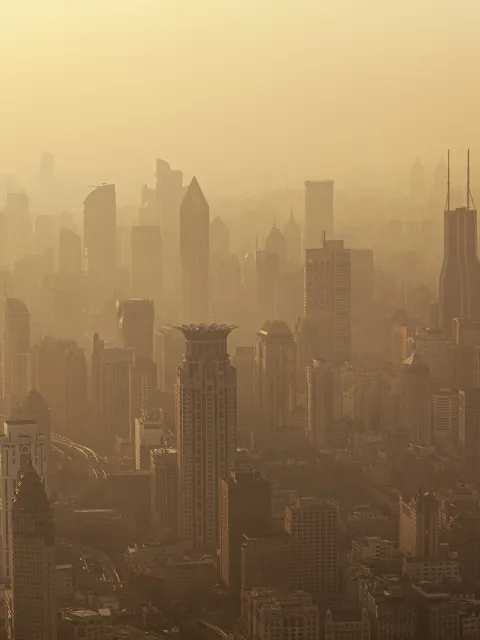
Clean Air Day: protecting the most vulnerable from pollution’s deadly impact on health
Marking Clean Air Day on 7 September, UICC highlights evidence on the need to protect people from air pollution's harmful effects. In particular, children, low-income communities, and certain workers face disproportionate risks, including cancer, from exposure to air pollutants.
HIGHLIGHTS
-
Air pollution causes over 8 million deaths annually and costs the global economy USD 4.6 trillion per year.
-
Long-term exposure to air pollutants, particularly PM2.5, increases risks for multiple cancers, including lung cancer.
-
Children and low-income communities are disproportionately impacted by air pollution, exacerbating health disparities.
-
UICC is releasing reports at the World Cancer Congress to drive global action on air pollution, linking it with cancer outcomes and economic burdens.
Air pollution is now responsible for over eight million deaths per year, the second leading cause of death behind high blood pressure, according to The Lancet Commission on pollution and health, and the leading environmental cause of disease and premature death worldwide. 99% of the world’s population now breathes unsafe air.
The economic burden of pollution is also staggering, with The Lancet Commission on Pollution and Health estimating the economic costs and negative impacts on human wellbeing caused by pollution at over USD 4.6 trillion annually, equivalent to 6.2% of global economic output. These ‘negative impacts’ include: Direct healthcare costs for treating pollution-related diseases, lost productivity due to illness and premature death, and damages to ecosystems and natural resources.
Research has shown a clear association between long-term exposure to air pollutants, particularly fine particulate matter (PM2.5), and an increased risk of developing lung cancer. A study of over 66,000 Hong Kong residents found that for every 10 μg/m3 increase in PM2.5 exposure, the risk of dying from any cancer rose by 22%.
Furthermore, nearly half of lung cancer cases in people who have never smoked are estimated to be related to air pollution (see UICC’s dedicated page on air pollution and cancer).
Beyond lung cancer, air pollution has been associated with other types of cancer as well. Research has indicated potential links between air pollution and breast, liver, pancreatic, colorectal, and prostate cancers and this list is continuing to grow as data collection and analysis improves.
Studies also suggest that people with cancer who live in areas with high pollution levels often experience poorer cancer outcomes.This may be due to the inflammatory and oxidative stress effects of air pollutants, which can potentially interfere with cancer treatments and promote tumour growth.
“It is important, of course, to highlight air pollution as a risk factor, how it can lead to someone developing cancer. But it is equally important, to emphasise the immediate health crisis of how people currently living with cancer may see their treatment complicated, and therefore their survival potentially compromised, by poor air quality.”
– Dr Sonali Johnson, Head of Knowledge, Advocacy, and Policy, UICC
Vulnerable populations even more vulnerable to air pollution
Data from the Royal College of Paediatrics and Child Health (RCPCH) indicates that children are particularly susceptible to air pollution's impacts. Their higher respiratory rates and proximity to pollution sources such as vehicle exhausts mean they inhale more pollutants relative to their body weight than adults. This increased exposure during crucial developmental stages can have lifelong health consequences.
A recent report from HEI, IHME and UNICEF suggests that 15% of all deaths globally in children under the age of five are linked to air pollution. Of these, over 500,000 are the result of indoor air pollution from cooking with solid fuels such as wood, charcoal, coal etc. Older children are also significantly affected.
“Exposure to air pollution is associated with worse mortality among children diagnosed with cancer in the US,” says Leticia Nogueira, Scientific Director of Health Services Research at the American Cancer Society.
Indeed, a recent study from the US shows that polluted air lowers the chances of survival for people living with cancer, even in locations which meet current US Environmental Protection Agency standards – but not at levels recommended by the World Health Organization, which better align with current scientific evidence of the detrimental impacts of air pollution on health.
This highlights the need for the cancer community to help champion stricter air quality standards to better protect patients, including children, from the impacts of air pollution now and in the future.
Low-income communities, both within and between countries, are disproportionately exposed to higher levels of air pollution, compounding their existing health and socioeconomic vulnerabilities.
According to The Lancet, 92% of pollution-related deaths occur in low- and middle-income countries, where industrial emissions and vehicular exhaust are rampant. These disadvantaged populations face a situation of “vulnerability on top of vulnerability,” as their economic challenges not only force them to live in areas with poor air quality but also push them into jobs in industries with minimal environmental controls.
This dual exposure to pollution and poverty exacerbates health disparities and deepens the cycle of poverty and illness, making it increasingly difficult for these communities to mitigate risks and access adequate healthcare.
Workers in industries such as fossil fuel extraction and processing are another population at heightened risk of exposure to carcinogenic pollutants, according to the report Detox Development: Repurposing Environmentally Harmful Subsidies by the World Bank. Reforming fossil fuel subsidies, which promote the continued use of polluting energy sources, could lead to substantial improvements in air quality and public health.
Shortly after Clean Air Day, UICC is releasing a landscaping report providing a comprehensive summary of the evidence on the burden of air pollution, highlighting key cancer types, economic impacts, and the scale of the issue. This report will be complemented by a policy and advocacy report set to be unveiled at the World Cancer Congress, which aims to galvanise global action against this preventable cause of disease and death.
Learn more about air pollution and cancer at the World Cancer Congress
For more information, articles, and podcasts on cancer and air pollution
Last update
Monday 04 May 2026