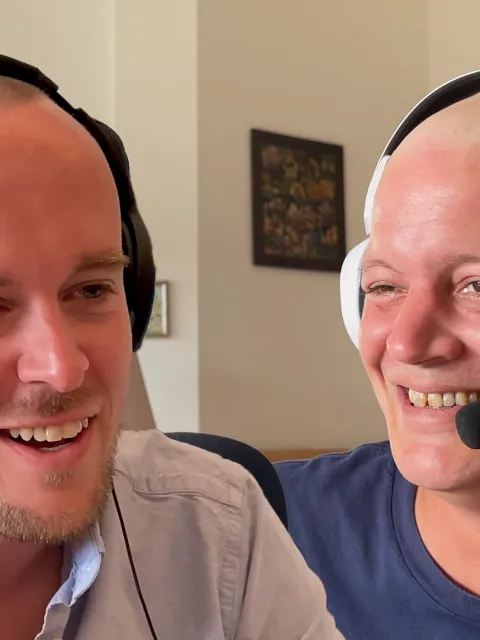
UICC strengthens peer learning and cross-regional collaboration amongst its members
UICC is funding PEER (Participation, Exchange, Education, and Reach) visits for member organisations to learn directly from one another through hands-on experience, exchanging knowledge and tools across a range of thematic areas.
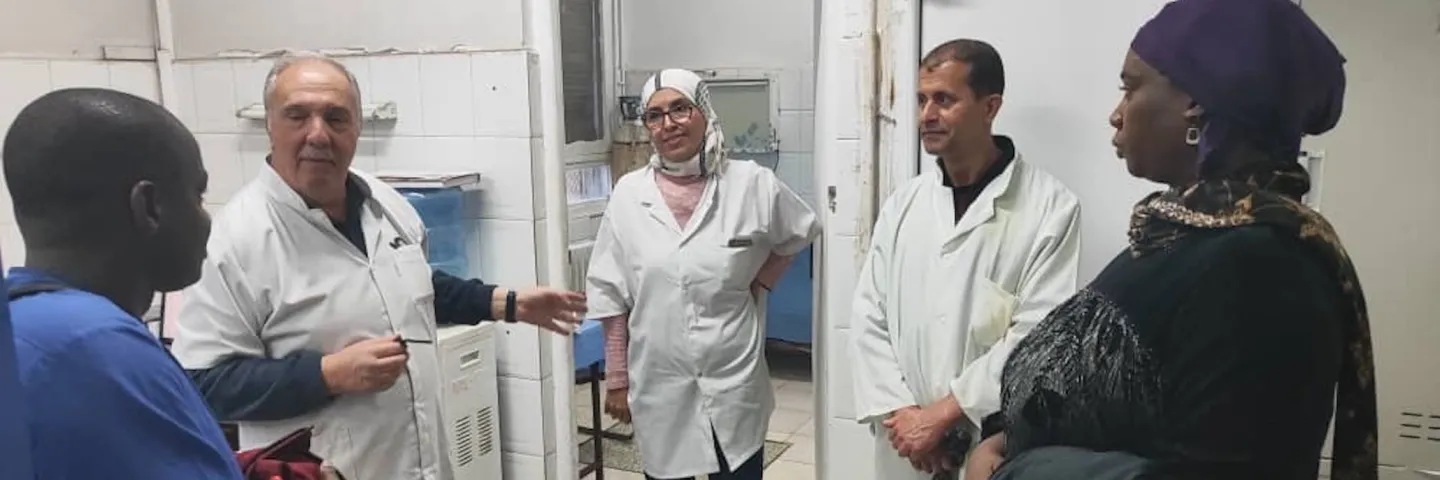
Hope Life, Côte d'Ivoire on a PEER (Participation, Exchange, Education, and Reach) visit to Association El-Amel in Algeria. UICC awarded ten PEER visits in November 2025, and more are planned for 2026.
HIGHLIGHTS
- In November 2025, UICC awarded ten PEER (Participation, Exchange, Education, and Reach) visits for member organisations to engage in practical, experience-based learning, across different thematic areas such as psychosocial support, patient navigation, and cervical cancer advocacy.
- Exchanges provided insights into practical, context-appropriate models that can be adapted to different settings, including community-based screening, simplified education tools, and patient navigation programmes.
- Participants highlighted the value of observing services and advocacy programmes first-hand, noting its importance in designing realistic improvement plans.
- Additional visits are planned for 2026 with a focus on supporting patient groups and civil society organisations working on breast and cervical cancer.
As part of UICC’s cohort-based programmes, UICC has introduced a new opportunity for its members, in particular, civil society organisations and patient groups, to engage in PEER (Participation, Exchange, Education, Reach) visits. Through short, structured exchanges of up to two weeks, one organisation visits another to gain hands-on experience, share practical solutions, and build skills that can be applied in their respective settings.
In 2025, UICC awarded ten PEER visits to organisations across Africa and the Eastern Mediterranean participating in UICC’s Patient Group Mentoring programme and Cancer Advocates programme, connecting organisations working on psychosocial support, patient navigation, and advocacy for cervical cancer prevention and early detection.
Each visit is co-designed by the visiting and peer organisations, with support from UICC, to ensure the learning activities reflect clearly defined learning goals and priorities. Participants are able to observe programmes in action, engage with staff and volunteers, and discuss how to adapt effective approaches to their own settings.
For example, Baheya Foundation for Early Detection and Treatment of Breast Cancer in Egypt hosted Humanity at Heart International, Cameroon and the Patient’s Friends Society Jerusalem to share experience in patient navigation and psychosocial care. Visiting teams explored how to structure support services, engage volunteers, and tailor clear and accessible patient educations materials to their local needs.
“A life’s work realized in a single visit. It is a powerful reminder that when we share knowledge, we don't just improve care – we change lives, including our own.”
– Dr Aya Sakr, Clinical Navigation Manager, Baheya Foundation, Egypt
Following its PEER exchange, Humanity at Heart launched a programme to transform its patient navigation services based on lessons learned from its peers. Among its planned actions, the organisation will be migrating to a digital dashboard to track patient’s journeys, introducing a smart calling protocol for follow-up, formalising a training-of-trainers model to ensure sustainability, and advocating for the integration of patient navigation modules into medical school curricula and the country’s national cancer control plan.
The Baheya Foundation and Humanity at Heart are also part of the American Cancer Society’s BEACON Initiative, further strengthening their patient navigation services.
In West Africa, the Coalition Burkinabè Contre le Cancer (COBUCAN) hosted peers from neighbouring countries to demonstrate community-based approaches to cervical cancer screening. Organisations from Niger, Cameroon, and Côte d’Ivoire observed fixed and mobile screening models, community mobilisation strategies, and coordination between civil society groups, health authorities, and referral hospitals.
Participants were also able to explore data and registry systems, and discuss how to adapt models for different settings. These exchanges reinforced the importance of integrating community leaders, strengthening data collection and follow up, and building collaboration across different sectors.
“This visit confirmed to me that every policy decision in favour of health is a victory for better cancer care. Government, civil society, and communities move forward together, with a shared vision centred on equity and access to care.”
– Fatou Fadika Coulibaly, President, Coalition of Cancer Control Organizations (COLCC), Côte d’Ivoire
Across all visits, organisations emphasised the value of observing systems first-hand. The exchanges created space for discussions about shared challenges, practical adaptations for different contexts, and long-term opportunities for exchange and training. Many participants are continuing their collaboration and joint activities beyond the visits.
By further investing in peer-to-peer learning, UICC is helping to build a more connected community of patient groups and civil society advocates, united by shared goals and mutual support.
Last update
Wednesday 25 February 2026