UICC at WHO tobacco control meetings marking 20 years of global tobacco control
COP11 and MOP4 in Geneva marked 20 years of progress under the WHO FCTC, with calls for stronger laws, sustainable funding, and action against industry interference.
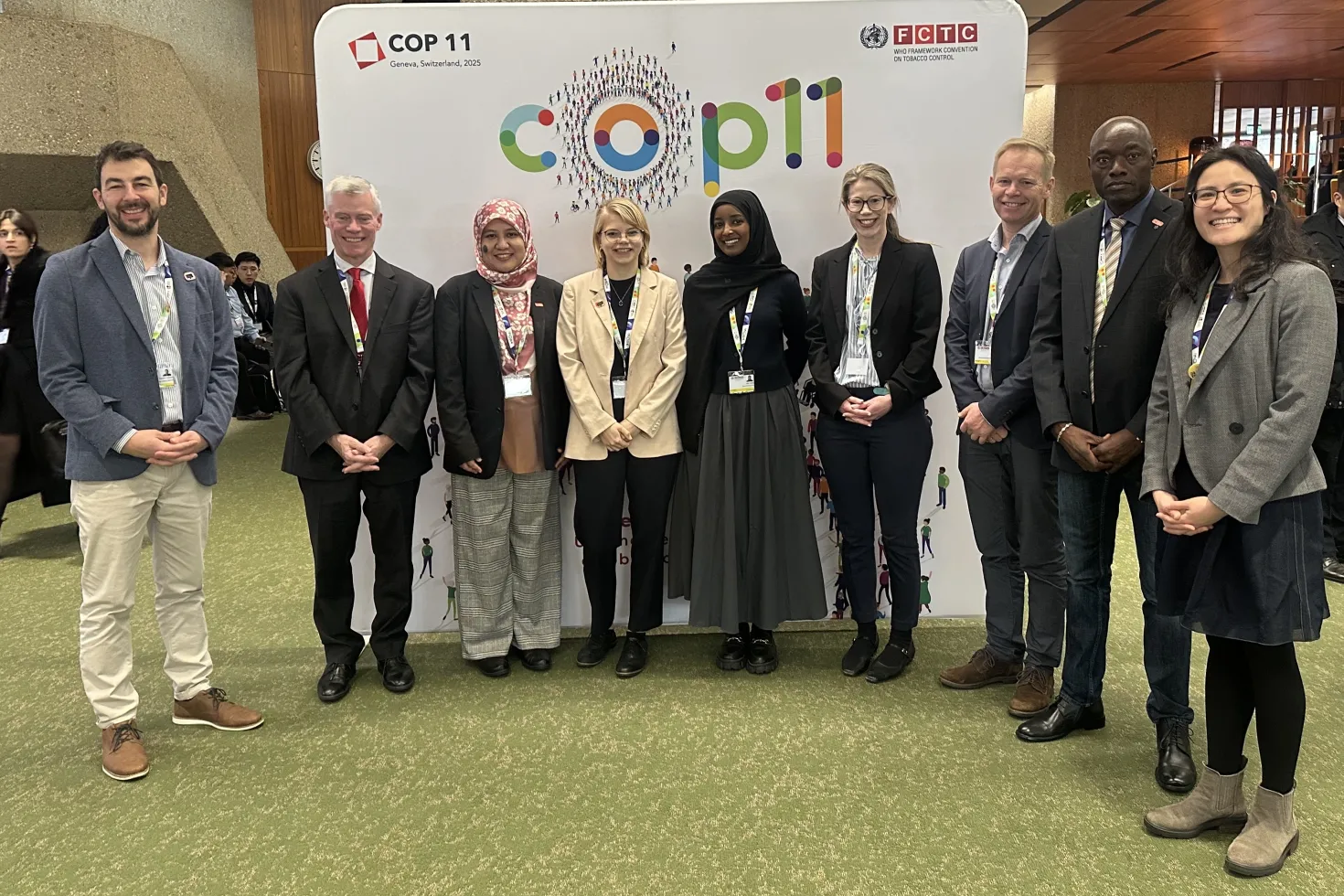
From left to right: Yannick Romero (UICC), Rob Cunningham (Canadian Cancer Society), Sharifah Saffinas Syed Soffian (Cancer Survivors Malaysia), Emily Norma Joynes (UICC), Habiba Adan (Cancer Research UK), Clare Slattery (McCabe Centre for Law and Cancer), Niels Them Kjaer (Danish Cancer Society), Maxime Compaoré (Norwegian Cancer Society), Suzanne Zhou (McCabe Centre for Law and Cancer).
HIGHLIGHTS
- Since the WHO Framework Convention for Tobacco Control came into force in 2005, global tobacco use has dropped from 29.3% to a projected 19.8% in 2025, saving over 37 million lives, driven by the implementation of the Framework and WHO’s MPOWER measures such taxation and package labelling.
- This progress is unevenly shared, with low- and middle-income countries facing major barriers to progress due to industry interference, weak enforcement systems, illicit trade, and limited resources.
- COP11 and MOP4 tackled illicit trade, regulatory gaps, and environmental harms of tobacco, stressing industry accountability and generational health protection. Delegates agreed on the need for domestic financing, stronger legal frameworks, and environmental regulation of tobacco waste.
Government officials from 162 State Parties, technical experts, tobacco control advocates, and other civil society representatives gathered in Geneva, Switzerland from 17–26 November 2025, for two major global tobacco control meetings: the eleventh Conference of the Parties (COP11) to the WHO Framework Convention on Tobacco Control (FCTC) and the fourth Meeting of the Parties (MOP4), to the Protocol to Eliminate Illicit Trade in Tobacco Products.
As an accredited NGO observer, UICC was represented at COP by a delegation of six member organisations: Breast Care International from Ghana, the Canadian Cancer Society, Cancer Survivors Malaysia, the Danish Cancer Society, the International Institute for Legislative Affairs (IILA) from Kenya, and the Norwegian Cancer Society, as well as the McCabe Centre for Law and Cancer from Australia.
The WHO FCTC came into force 20 years ago, and can boast considerable success in the past two decades. The number of people using tobacco globally has declined from 29.3% in 2005 to a projected 19.8% in 2025, with more than 37 million lives saved.
This is largely due to strengthened tobacco control measures – such as higher taxes, smoke-free laws, and large pictorial health warnings – provided for under the WHO FCTC and aligned with ‘MPOWER’ package:
- Monitor tobacco use and prevention policies
- Protect people from second-hand smoke
- Offer means help people quit tobacco use
- Warn about the dangers of tobacco, notably through awareness campaigns and package labelling
- Enforce bans on tobacco advertising, promotion, and sponsorship
- Raise taxes on tobacco.
This progress has contributed to a slowdown in the rise of lung cancer incidence and overall cancer mortality, especially in high-income countries, where improved prevention and early detection have further reduced smoking-related diseases and preventable cancers, notably lung cancer, the most commonly diagnosed cancer worldwide.
However, this progress is far from equally shared around the world. There are still 1.3 billion smokers around the world, most of whom live in low- and middle-income countries. Their governments continue to face significant obstacles to effective tobacco control, including limited financial and technical resources, weak regulatory and enforcement systems, and aggressive interference by the tobacco industry.
COP11 and MOP4, which took place in Geneva these past two weeks, both looked to address these challenges. The COP11 focused on strengthening the implementation of measures to reduce tobacco use and industry interference with the theme ‘Healthy Planet, Healthy Future: Uniting for Tobacco-free Generations’. For its part, MOP4 concentrated on legal and enforcement responses to illicit trade in tobacco product, with the theme ‘Justice and Prosecution: Strengthening Legal Action to Eliminate Illicit Trade in Tobacco Products’.

The Tobacco Control room is a dedicated space for professionals, researchers, activists, and advocates who are passionate about combating tobacco products use and its harmful effects.
“By bringing together governments, civil society and technical experts, the WHO FCTC COPs reinforce global commitments to equitably protect populations from tobacco harms and nicotine addiction, advancing the right to health for all. Tobacco remains one of the leading preventable risk factors for cancer, making civil society’s and UICC’s role critical in supporting countries implement the WHO FCTC and exposing industry interference.”
– Yannick Romero, Senior Manager of Knowledge, Policy, and Advocacy at UICC
Civil society engagement and pre-COP advocacy
In the lead-up to the meetings, UICC and its delegation actively participated in regional pre-COP consultations to help shape national positions and ensure that civil society perspectives would be represented.
UICC notably co-hosted a pre-COP briefing on 11 November at its Geneva offices in collaboration with the Global Alliance on Tobacco Control (GATC), NCD Alliance and the World Heart Federation. The event brought together Geneva-based missions to discuss agenda items and share key advocacy messages.
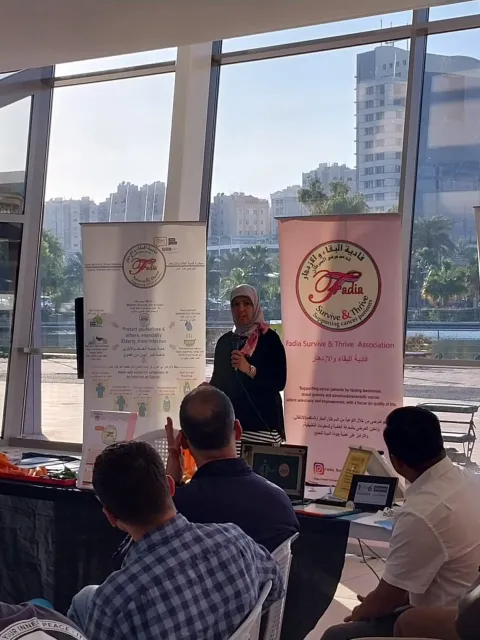
During the COP, UICC also led and supported a series of side events that emphasised the importance of cross-sector collaboration.
Tobacco taxation: driving policy for public health
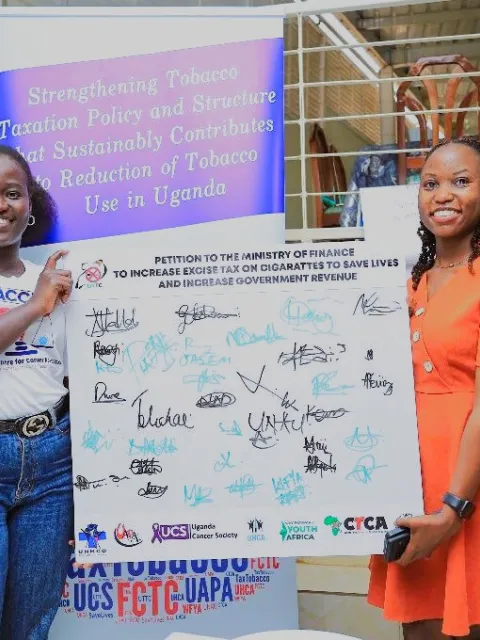
Speakers from ministries of health and finance of Kenya, Uganda and Brazil, along with experts from Cancer Research UK and the WHO FCTC Knowledge Hub on Tobacco Taxation, highlighted how strong collaboration between civil society organisations, ministries, researchers, and knowledge hubs has led to the implementation effective tax policies on tobacco. Taxation is one of the most effective tools to reduce tobacco consumption and therefore prevent cancer, as well as generate revenue for a country’s health system.
Aligning the WHO lung health resolution with the WHO FCTC
Representatives from Malaysia, Brunei Darussalam, The Union and the McCabe Centre for Law & Cancer explored how FCTC guidelines can be embedded within the recent WHO resolution on lung health. The session underscored the importance of aligning tobacco control with broader lung health strategies and demonstrated the value of collaboration between different stakeholders. The integrated lung health resolution was highlighted as a significant opportunity to accelerate the implementation of the WHO FCTC across many countries. By mutually reinforcing each other, they aim to benefit everyone affected by lung diseases, particularly people living with lung cancer.
UICC also co-hosted several additional sessions during the meetings. A youth-led discussion, led by the European Network for Smoking and Tobacco Prevention (ENSP), focused on countering tobacco and nicotine industry narratives to support tobacco-free generations. Another session, led by the NCD Alliance, focused on the role of tobacco control in meeting Sustainable Development Goal 3.4 on noncommunicable diseases.
The World Heart Federation led a session on strengthening the implementation of cessation support under Article 14 of the WHO FCTC. Canada, with co-hosts including Australia and UICC, led a session on innovative labelling and packaging approaches, under the theme ‘Warning by design’.
UICC staff met with members and partners throughout the event, sharing updates on upcoming initiatives and discussing opportunities for collaboration.
Key commitments and next steps
Among the key outcomes of COP11, was the agreement by the Parties to address the environmental impact of tobacco and nicotine products. These include plastic filters, disposable devices, and electronic components, which contribute significantly to global pollution. Parties committed to exploring comprehensive regulation of these components in response to the widespread contamination caused by trillions of discarded cigarette butts and associated toxic waste.
Delegates also highlighted the need for sustainable financing of tobacco control efforts. Recognising that lasting public health outcomes require reliable funding, Parties underlined the importance of mobilising domestic resources to support long-term implementation of the WHO FCTC.
Parties were also encouraged to strengthen legal frameworks to facilitate civil and criminal liability for harms caused by the tobacco industry. The aim is to enable more effective legal action against industry misconduct and limit harm to consumers and the wider public.
In line with Article 2.1 of the FCTC, Parties were also encouraged to implement more advanced measures. An example is the generational ban on the use and sale of tobacco and emerging nicotine products, including e-cigarettes, heated tobacco, and nicotine pouches.
Parties further reaffirmed their commitment to Article 5.3 on protecting public health policy from interference by the tobacco industry. This remains a core safeguard for the integrity of tobacco control measures.
Collectively, these decisions aim to strengthen tobacco regulation, support innovation in public health policy, and reinforce international cooperation. A shift in tone was noted from several delegations, with some, including the Maldives, calling for efforts to phase out tobacco entirely rather than continue to regulate it.
Some discussions were deferred to the next session of the Conference of the Parties, to be held in Yerevan, Armenia, in 2027. These include proposals for stronger regulation of all tobacco and nicotine products, and expanded requirements for monitoring and disclosure of product contents. While widely supported, these measures were delayed due to opposition from a small number of Parties that repeated industry arguments about reduced harm from newer products.
Last update
Monday 04 May 2026