
From surviving cervical cancer to driving elimination
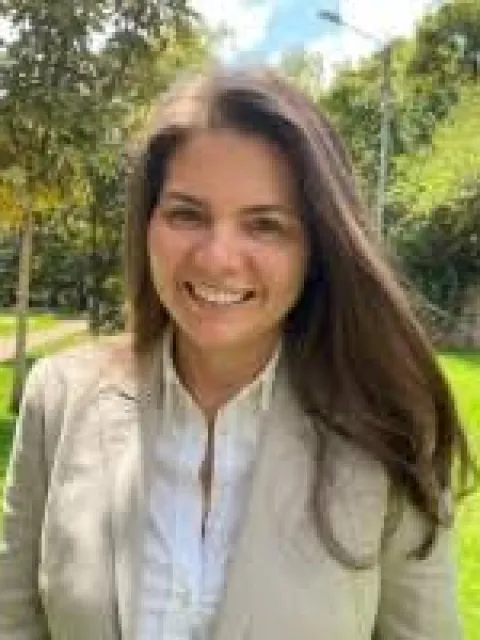
Marking Cervical Cancer Awareness Month this January, Bertha Liliana Borrero shares how her experience led to found Fundación SalBo and drive a multisectoral strategy using education, media, and partnerships to close critical gaps in cervical cancer prevention.
Surviving cervical cancer marked every aspect of my life and the life of my family. That deeply personal experience inspired the creation of the SalBo Foundation (Fundación SalBo), a collective response to ensure that many women can follow paths different from the one I went through: late diagnoses, decisions made without sufficient information, and prevention opportunities that never arrived in time.
Even with access to information and health services, I was unaware of the existence of HPV DNA testing as a key tool for early detection. This reality raises an inevitable question: if this happens to women living in urban settings, what is happening to those who live in rural areas or in vulnerable contexts? SalBo was created to close that gap, so that women are informed, aware, and able to fully exercise their right to health and prevention.
Speaking publicly about personal details is emotionally demanding for me; I prefer for that story to be expressed through the Foundation’s daily work. From that place, my experience inspires without occupying the centre of the narrative and becomes the driving force behind a shared mission: to contribute to the global initiative to eliminate cervical cancer as a public health problem, led by the World Health Organization (WHO).
The Region of the Americas continues to bear a high burden of cervical cancer. The age-standardised incidence rate stands at approximately 11.5 cases per 100,000 women, according to recent estimates from the International Agency for Research on Cancer (IARC), well above the WHO elimination threshold of 4 per 100,000. These figures represent lives at risk and reflect deep inequities. January, globally recognised as Cervical Cancer Awareness Month, offers a strategic opportunity to highlight these contrasts and align prevention actions, in line with UICC’s priorities in cancer control.
At SalBo, we have responded with a strategy that goes beyond isolated campaigns. We designed a multisectoral, civil-society-led model that integrates mass media campaigns, digital health education with a gender perspective, and initiatives linked to the Sustainable Development Goals. This strategy is built on accumulated experience: years of dialogue with medical communities, territorial health authorities, patients, caregivers, families, academia and civil society. In every interaction, we gather insights that allow us to translate technical language into simple, actionable information. The result is an approach that turns evidence into concrete decisions: attending screening, requesting HPV vaccination, and insisting on timely referral.
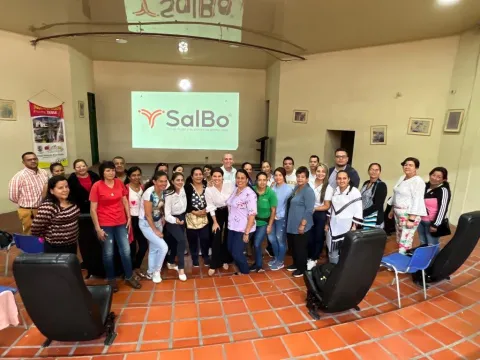
Behind this initiative stands the organisational structure of the SalBo Foundation, supported by a team of volunteer physicians. They are joined by communication, design and strategy teams who understand local contexts and the most effective channels to reach people. Together, we develop content for radio, national television and social media, using narratives that reduce fear and stigma without oversimplifying clinical complexity. This combination of technical expertise and communication creativity has enabled us to reach approximately 7.8 million people through large-scale awareness activities. Within this strategy, we have directly engaged around 3,347 people across eight countries and, through intersectoral coordination and public health actions, have specifically reached approximately 2,140 people. Each of these interactions seeks to ensure that information generates real value for decision-making.
Partnerships with territorial authorities, scientific organisations, medical institutions, academia and the productive sector transform this strategy into a prevention ecosystem. Rather than acting solely within the health system, we identify decision points in everyday life: the school where an adolescent receives information about HPV, the company that creates space for educational sessions, the local government that leads measurable actions toward cervical cancer elimination in its territories. SalBo’s innovative approach is to support each actor in translating scientific evidence into measurable actions within their own sphere, aligning health, education, gender equity and sustainable development agendas in low- and middle-income settings.
Looking back on this journey, I see more than a national experience: I recognise a collectively built roadmap that can be useful for organisations in different contexts. SalBo’s strategy is grounded in the combined knowledge of health teams, communicators, educational institutions, territorial authorities and companies that share a common conviction: cervical cancer can be prevented and eliminated. From this perspective, our work seeks to engage in dialogue with UICC’s global network and with those advancing elimination efforts worldwide, offering an adaptable model deeply rooted in territorial realities. We aspire for partnerships, awareness spaces and clear messages to strengthen communities’ capacity to exercise their right to information and prevention. The true achievement will come when initiatives recognise and reinforce one another and, through this shared effort, cervical cancer is no longer a present threat but a lesson in what coordinated and solidarity-based action can achieve.
Last update
Friday 23 January 2026