People-centred care remains more principle than practice
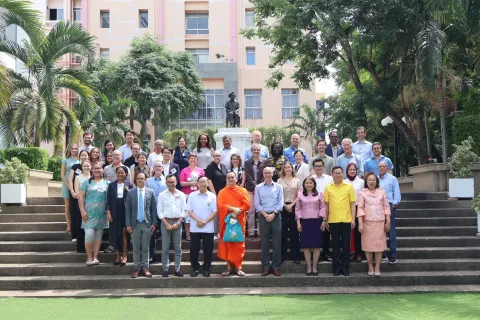
Members of The Lancet Global Health Commission on People-Centered Care for Universal Health Coverage in Bangkok, August 2025, for their second meeting (see full list of Commissions and their affiliations).
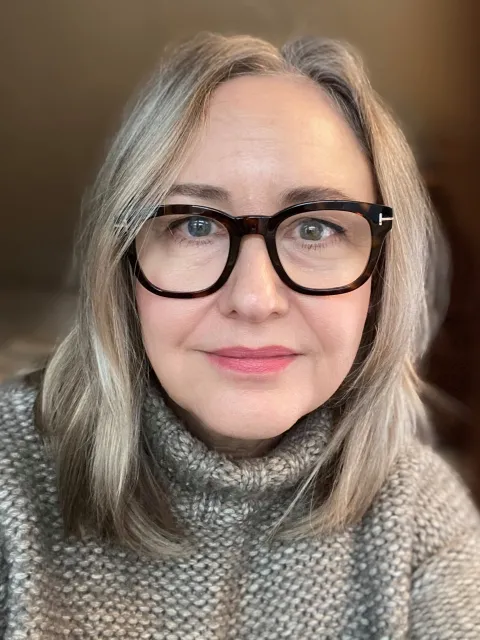
Carolyn Taylor of the Lancet Commission on People-Centred Care shares her views ahead of World Cancer Day on why healthcare systems must move beyond slogans to truly prioritise the lived experiences of people affected by cancer.
In my work across low-resource settings, as well as in my own lived experience of cancer, I have seen the same disconnect play out across health settings: health systems talk about “people-centred care,” yet they rarely deliver it.
Globally, people encounter long waits, confusing care pathways, limited psychosocial support, financial strain, and fragile trust in systems. Caregivers, who shoulder the emotional and logistical burdens, are often invisible in policy. Even in well-resourced settings, people describe feeling unheard, unsupported, or reduced to an appointment slot. These stories highlight a reality we all know: technical excellence alone does not guarantee humane care.
As we approach World Cancer Day, these experiences underscore the fact that care is still too often shaped around the system, not the person.
People-centred care (PCC) is not a new idea. The World Health Organization has championed it for years. Yet PCC remains inconsistently defined, measured, and implemented across contexts. Without clarity and accountability, PCC becomes a slogan rather than a system.
This is why the Lancet Global Health Commission on People-Centred Care for Universal Health Coverage (UHC) was convened: to bring coherence and credibility to a concept widely endorsed but rarely operationalised.
Why PCC matters in the lived realities of cancer
Cancer affects far more than bodies. It disrupts lives, families, identities and futures. In low-resource settings, these pressures intensify. I have met families who sold their home to afford treatment; caregivers travelling hours each day; young people hiding their diagnoses out of stigma or fear of losing their jobs.
Cancer is not only a clinical condition, it is a deeply personal, social, emotional, and economic experience that unfolds within communities and health systems.
People-centred care recognises this and asks:
- Do people feel respected and heard?
- Are they partners in decisions that shape their lives?
- Are services responsive to cultural, social, and economic needs?
- Does care reduce — rather than reinforce — inequities?
When PCC is meaningfully applied, it strengthens trust, improves adherence, reduces distress, and ensures that care is not just technically excellent, but navigable and feasible in daily life.
This is at the heart of World Cancer Day’s “United by Unique” message: the uniqueness of each person must shape the way care is designed and delivered.
Clarity is the foundation for action
One of the Commission’s early findings is that PCC suffers from conceptual confusion. PCC can mean communication skills in one context, service design in another, governance, or community engagement in a third. Without shared meaning, shared action becomes impossible.
To address this, the Commission has undertaken a novel, realist-informed, and participatory conceptual analysis to:
- clarify what people-centred care actually means
- distinguish people-centredness (the philosophy) from PCC (the practice)
- identify the antecedents, characteristics and consequences
- develop an operational framework spanning point-of-care, system, and policy levels
This work is not prescriptive. Instead, it provides the conceptual scaffolding health systems need to meaningfully design, implement, and measure PCC.
Without clarity, there is no accountability, and without accountability, PCC remains an aspiration rather than a reality.
Learning from global evidence – and global gaps
The Commission is also synthesising evidence from around the world, not to create new tools, but to understand how PCC has been implemented, measured, and translated into policy. This includes reviewing:
- implementation strategies
- barriers and enablers
- existing measurement approaches
- policy implications
- illustrative examples where PCC contributed to measurable improvements
Across these analyses, a consistent theme emerges: PCC succeeds when systems are intentionally designed with people at the center.
Lived experience as evidence, not anecdote
A defining feature of the Commission is its commitment to meaningfully integrating people with lived experience (PWLE). PWLE have shaped the emerging definition of PCC, informed the operational framework, and participate through the Commission’s Forum for Lived Experience and Engagement (LEAF), a select group of lived experience experts as well as an open forum which will invite broader participation, share updates, and gather non-sensitive reflections from global communities. Their insights ensure that the Commission’s work reflects the realities of those most affected by health system decisions.
For me, as someone who came to this work through my own diagnosis – and through years listening to people in clinics and communities globally – lived experience reveals where systems fall short, where they create harm, and where they offer hope. It is evidence central to understanding what PCC must look like in practice.
A World Cancer Day call to action
From the Commission’s work to date, several messages are clear;
Clarity enables action.
Without a coherent definition of PCC, health systems cannot deliver or measure it.
PCC is integral to UHC.
Coverage requires dignity, trust, participation and responsiveness.
Systems must be redesigned around people.
PCC requires structural change, not surface-level gestures.
Lived experience strengthens systems.
People affected by cancer must be meaningfully engaged in shaping care and policy.
Measurement must reflect what matters to people.
Not just utilisation, but experience, respect, and trust.
As the world prepares to come together around the message of UICC's World Cancer Day campaign theme 'United by Unique', the Commission’s work underscores a simple truth: people-centred care becomes real only when systems recognise the humanity and uniqueness of the people they serve.
A shared effort for a shared future
People-centred care is not a single intervention. It is a commitment to dignity, trust, responsiveness, and partnership. Achieving it requires leadership, accountability, and a willingness to reshape systems around the people they exist to serve.
The Lancet Commission is offering one essential piece of that transformation: a clearer foundation on which countries, advocates, communities. and health systems can build.
As World Cancer Day approaches, my hope is that this work helps strengthen a global shift toward care that is not only clinically effective, but deeply human.
Last update
Monday 26 January 2026