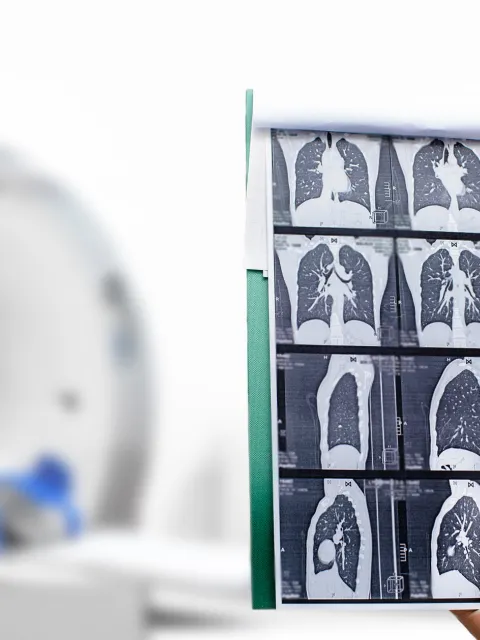
Approaching people-centred care in lung cancer

Reflecting on World Cancer Day, Israel Lowy, MD, PhD, Senior Vice President, Clinical Development Unit Head, Oncology at Regeneron, a UICC partner, shares his view on the future of personalised medicine in lung cancer and the importance of people-centred care.
Cancer is a relentless challenge that calls for careful listening, continuous innovation, and steadfast investment in research. Despite incredible strides made in treating this disease, continuing to prioritise advancements in areas like lung cancer is especially important. Even with significant improvements in treatment and survivorship, lung cancer still accounts for the highest incidence and mortality among all cancers globally.
This landscape reinforces why I made the decision over two decades ago to transition from academia to industry. Early in my career, I applied my training in molecular biology to research aimed at containing viruses, witnessing firsthand the transformative power of emerging therapies that converted fatal outcomes to chronically manageable states.
I was interested to explore new approaches to immunotherapy for AIDS and hepatitis C, and subsequently engaged in efforts to immunotherapy of cancer, where I led some of the world’s first clinical trials for checkpoint inhibitors. We focused on enhancing the immune response to treat tumours and potentially address unmet needs in cancer, including for challenging types like lung cancer.
I am optimistic that the progress I have seen in lung cancer survivorship during my career will continue to evolve, resulting in improved outcomes for the patients of tomorrow. To safeguard this future and deliver people-centred care for those living with lung cancer, there are a few imperatives we must follow.
Listen to the voices of people affected by cancer
Working directly with those living with cancer during my time as a physician taught me the profound importance of considering all aspects of the individuals I treated in order to address their unique needs. This means integrating their perspectives at key touchpoints of their journey.
Supporting patient education materials and programming developed by advocacy groups around the world is one such way to help people living with cancer make informed decisions about how best to manage their disease. Importantly, Regeneron and many other companies have created patient advocacy group advisory councils for lung cancer that provide invaluable input on everything from clinical trial designs to development priorities or how a company approaches data dissemination.
Being able to communicate pipeline updates and share information about their disease is especially important for lung cancer, which is typically caught at an advanced stage, when symptoms become more obvious. To truly advance access to lung cancer screening, biomarker testing, and innovative treatments that will help alter this harrowing reality, we must listen to those living with cancer about the barriers that exist for them to seek care.
We’ve seen firsthand the importance of sharing of clinical trial data for these groups. It’s imperative we work together to champion clinical trials, raising awareness on the invaluable contributions to scientific understanding these trials offer, and fostering collaboration across industry to ensure trial designs reflect the lived experience of people affected by cancer.
This includes critically evaluating whether our participants closely resemble the real-world patient population and exploring a broad range of patient characteristics to ensure that we are continually generating new evidence for groups that may have more advanced disease and fewer treatment options. For lung cancer, this could mean that we’re looking at those with brain metastases, never-smokers, or among populations that typically experience worse outcomes.
Personalise cancer care
Over the years, we’ve seen the incredible promise of personalised medicine and the power of harnessing the body’s immune system to fight cancer. At Regeneron, we recognise that, much like treating infectious diseases, there isn’t often a single approach that works across cancer types.
It’s widely understood that biomarkers are critical to personalised care in lung cancer; they have helped uncover a better understanding that effective treatment requires multiple, different antibodies and various immune responses. This philosophy – that every person living with cancer is unique – unites us in our approach to treatment.
I’ve been fortunate to be at the forefront of this evolution, working at Regeneron to develop therapies that enhance the body’s immune response. This has been a major focus for us at Regeneron and of our research in lung cancer. We continue to share long-term data from pivotal trials in this space, while also continuing to investigate additional therapies with the goal to improve personalised treatment options.
A future of hope
As we reflect on World Cancer Day earlier this month, it’s clearer than ever that amplifying the voices of people living with cancer, and reflecting unmet needs in clinical development are not just ethical imperatives, but also key drivers of scientific progress in lung cancer and across the spectrum of cancer care. The promise of a curated oncology approach, built on listening to the unique perspectives of patients and developing innovative treatment strategies, holds immense potential to improve survivorship among those with lung cancer.
What keeps me motivated is witnessing this dream. With education and continued innovation in screening and diagnosis, my hope is that we can catch cancer in earlier stages. By bringing these therapies into the treatment landscape earlier, we can significantly increase survivorship. Our commitment to this mission is unwavering, driven by the hope of a future where every person affected by cancer receives truly personalised, effective and compassionate care that meets their unique needs.
Last update
Thursday 12 March 2026